

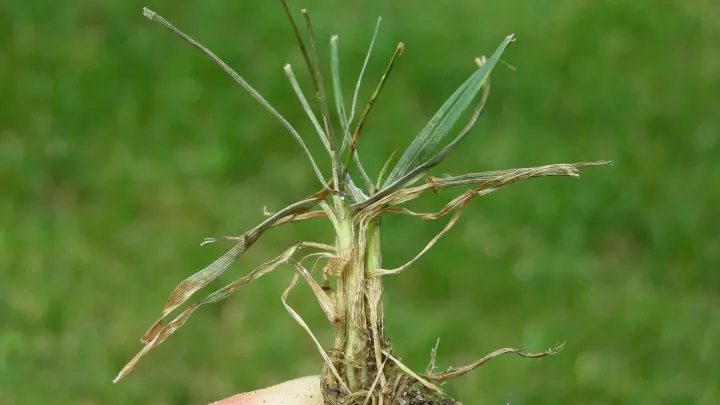
Description
Symptoms
The primary symptom of pythiosis is a general reduction in plant vigor, often manifested as stunted growth and chlorosis. Affected plants struggle to maintain their development despite sufficient nutrient availability.
Root system examination reveals severe browning and decay. The root tissues often become necrotic, soft, and mushy, frequently sloughing off and leaving only the vascular strand behind.
Plants frequently show significant wilting during the brightest part of the day as the decayed root system can no longer facilitate adequate water uptake to the foliage.
In high humidity environments, a subtle, whitish mycelial growth may appear on the surface of the growing media or around the root collar, signaling active infection.
Diagnosis can be difficult because the external symptoms often mimic other common root rot diseases, making laboratory confirmation a necessary step for accurate identification.
Pathogen
The causal agent of this disease is Pythium insidiosum, an organism belonging to the class Oomycetes. Although often discussed alongside fungi, these organisms are biologically distinct and behave more like algae in their requirements.
This pathogen is an aquatic microorganism that relies heavily on the presence of free water. Its life cycle involves motile zoospores that swim through water to locate and colonize the roots of susceptible host plants.
A unique aspect of Pythium insidiosum biology is its potential to infect not only a wide range of botanical hosts but also mammals, which necessitates rigorous safety protocols in agricultural management.
Infection begins when zoospores attach to the root surface. Upon attachment, they encyst and develop hyphae that penetrate the host tissue, initiating a rapid degradation of cells and root structure.
The pathogen is capable of surviving in the environment for extended periods by forming specialized resting structures, allowing it to persist in soil and water even when host plants are not present.
Conditions for development
The development of the disease is strictly linked to moisture levels. Excessive irrigation or poor drainage systems create the waterlogged conditions required for zoospore motility and spread.
Temperature plays a crucial role in the infection rate, with warmer environments generally accelerating the proliferation of Pythium insidiosum throughout the crop area.
Poor agricultural practices, such as excessive soil compaction or the use of contaminated water sources, are the most common drivers behind disease outbreaks in professional nurseries.
Plants grown in closed-cycle systems with recirculating water are at an increased risk, as the pathogen can spread rapidly through the irrigation network if proper filtration is missing.
High plant density, combined with poor ventilation, creates microclimates where moisture persists, fostering the perfect conditions for the pathogen to thrive and spread.
Why it matters
The primary damage caused by pythiosis is the total destruction of the plant's root system, which renders it unable to intake essential water and minerals from the soil.
This impairment results in reduced biomass, loss of harvest, and often the death of the crop, especially when infection occurs during the sensitive seedling stage.
Secondary infections are a major consequence; once the root system is compromised, opportunistic bacteria and other fungi easily colonize the tissue, accelerating the plant's decline.
The economic impact is significant due to crop loss, the cost of specialized chemical interventions, and the necessity to sanitize or replace the entire growing medium.
Due to its ability to spread via water and tools, a single infection point can compromise an entire greenhouse or field, requiring extensive and costly containment procedures.
Protection
The most effective strategy is the meticulous management of irrigation and drainage. Ensuring that the rhizosphere remains aerated and free from stagnant water is essential.
Strict sanitation protocols must be enforced, including the routine disinfection of containers, irrigation lines, and agricultural tools to eliminate any trace of the pathogen.
Chemical control must be targeted specifically at Oomycetes. Standard fungicides may be ineffective, so professional consultation for the appropriate chemistry is required.
Integrating biological control agents can help strengthen the root microbiome, creating a defensive barrier that inhibits the pathogen's ability to infect the roots.
- Installation of proper drainage systems.
- Use of clean, treated irrigation water.
- Regular sanitation of all growing facilities.
- Quarantine of suspected infected plant material.
Content graph
Connections · Pythiosis
Most often together:
Marketplace
Products · 1
Community
Discussion
No discussions yet — be the first.