
Wheat leaf rust
Puccinia triticina
Description
Symptoms
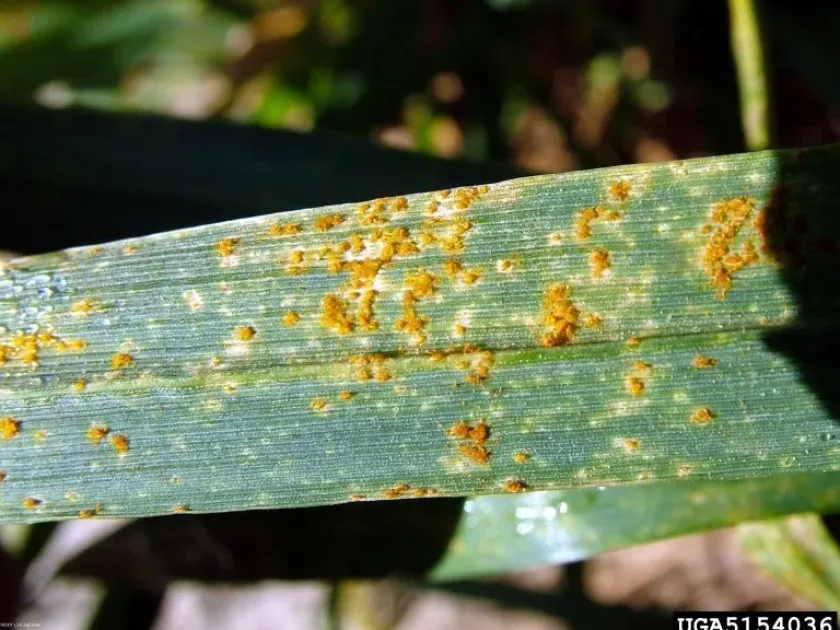
Symptoms initially appear as small, circular to oval, orange-brown pustules (uredinia) scattered across the leaf surface.
These pustules eventually rupture the leaf epidermis, releasing powdery spores that are easily detached by wind or mechanical contact.
In cases of severe infection, the pustules can spread to the leaf sheaths, though they are rarely found on the stalks themselves.
Late in the season, the fungus may transition to producing black teliospores, indicating the approach of dormancy or the end of the crop cycle.
Affected leaves often yellow, curl, and die prematurely, drastically reducing the total green leaf area of the canopy.
Pathogen
The causative agent of this disease is the basidiomycete fungus Puccinia triticina. It is an obligate parasite that specifically targets wheat crops.
The fungus produces masses of urediniospores that are wind-dispersed, allowing it to spread rapidly across large agricultural regions during the growing season.
In regions with mild winters, the pathogen persists as mycelium or urediniospores on volunteer wheat and alternate host grasses.
The pathogen is highly adaptable and genetically diverse, frequently developing new races capable of overcoming the resistance genes in current wheat cultivars.
As a foliar pathogen, it significantly limits the plant's ability to maintain energy production, which is crucial for grain development.
Conditions for development
Development of wheat leaf rust is favored by moderate temperatures, typically between 15°C and 25°C, and periods of high humidity.
Leaf wetness from dew, mist, or light rain is essential for spore germination and infection, requiring at least 4 hours of moisture on the foliage.
Warm and humid weather conditions accelerate the infection cycle, often leading to rapid epidemics in dense, well-fertilized wheat fields.
Poor airflow within the crop canopy and high planting densities contribute to the maintenance of the humid microclimate required by the fungus.
Extreme dry spells and temperatures above 30°C can effectively arrest the development of the pathogen, though it may recover when conditions improve.
Why it matters
The primary damage caused by leaf rust is the reduction of photosynthetic area, leading to decreased biomass accumulation and poor grain filling.
Plants infected early in the season often produce shriveled, low-test-weight grain, which negatively impacts milling and baking quality.
Yield losses can range from 10% to 30% depending on the timing of the initial outbreak and the overall susceptibility of the wheat variety.
Rust infection weakens the plant, making it more susceptible to lodging and secondary pathogens that take advantage of damaged tissue.
Economic damage is exacerbated by the cost of chemical control measures and the potential for total crop failure in highly susceptible fields.
Protection
The most effective and sustainable strategy for managing leaf rust is the deployment of wheat varieties with durable genetic resistance.
Integrated management practices include destroying volunteer wheat, adjusting planting dates to avoid high spore pressure, and maintaining balanced crop nutrition.
Fungicide application is the primary method for managing outbreaks in susceptible varieties, typically targeting the flag leaf and head stages.
- Apply systemic fungicides (triazoles, strobilurins) at the first sign of symptoms to prevent rapid spread.
- Monitor fields regularly to determine the optimal timing for chemical intervention.
- Rotate modes of action to prevent the development of fungicide-resistant pathogen strains.
Comprehensive scouting and regional monitoring networks are vital tools for predicting disease risk and minimizing pesticide use.
Discussion
No discussions yet — be the first.