
Pelargonium rust
Puccinia pelargonii-zonalis
Description
Symptoms
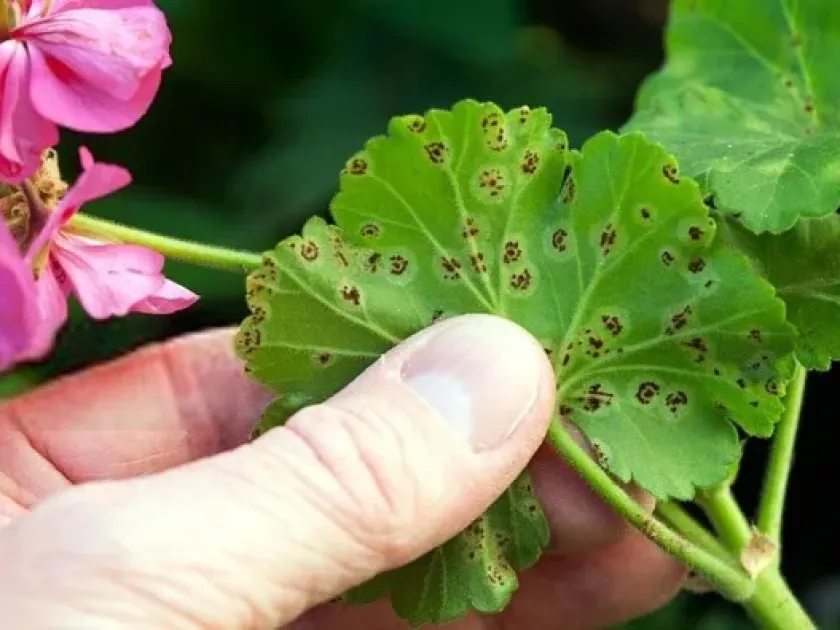
The first symptoms appear as small, subtle yellow or pale green spots on the upper surface of the leaf. Because these early signs are often non-descript, the disease is frequently overlooked until it progresses.
As the infection advances, characteristic raised pustules (sori) form on the underside of the leaves. These pustules are typically rust-brown or reddish, marking the clusters of developing spores.
Affected leaves eventually become chlorotic, wither, and drop prematurely. This leads to the characteristic thinning of the plant's foliage, starting from the lower leaves and moving upwards toward the younger growth.
Severe infestations can result in the appearance of pustules on petioles and stems. The plant loses its overall vigor, and the powdery residue of the spores becomes clearly visible upon shaking the foliage.
- Small yellow spots on leaf tops.
- Brown, raised pustules on the undersides.
- Premature leaf senescence and drop.
- Deformed growth of new shoots.
- Visible rust-colored spore dust.
Pathogen
The causative agent of this disease is an obligate parasite, the basidiomycete fungus Puccinia pelargonii-zonalis. This pathogen is highly host-specific, primarily infecting plants within the Pelargonium genus, especially zonal and ivy-leaved varieties.
The fungus is a rust pathogen that completes its cycle by producing urediniospores. These spores are easily dispersed by wind, water splashes, and physical contact, allowing the disease to spread rapidly through a greenhouse or collection.
The pathogen is capable of overwintering on plant debris or living tissue. In controlled indoor environments, it can maintain a persistent cycle of infection throughout the year if conditions remain conducive to spore germination.
The mycelium grows within the leaf tissue, systematically depleting the host plant's energy. As the fungus matures, it breaks the epidermis of the leaf to release mass amounts of spores, resulting in the characteristic powdery appearance.
Biological survival depends on specific environmental cues. Without the presence of surface moisture, the fungus struggles to penetrate the host, making water management a fundamental aspect of biological control.
Conditions for development
High relative humidity is the primary catalyst for Pelargonium rust. Persistent humidity levels above 70% create the optimal environment for spore germination and rapid fungal colonization of healthy tissue.
Temperatures ranging from +18°C to +25°C are ideal for the disease. In warm, poorly ventilated conditions, the fungus can complete its reproductive cycle in just a few days, leading to an epidemic within a greenhouse.
Overhead watering or rain creates a film of water on the leaves, which is essential for the fungal spores to germinate and enter the leaf pores. Dry foliage is significantly more resistant to initial infection.
Crowded planting layouts restrict air movement, preventing foliage from drying out after irrigation. This lack of airflow is a critical factor that allows the rust to establish and thrive across a collection.
Poor sanitation facilitates the spread of the pathogen. Spores are easily carried by contaminated tools, clothing, or even insects that move between infected and healthy plants during routine maintenance.
Why it matters
Pelargonium rust severely damages the aesthetic value of the plants, rendering them unsalable in commercial settings. The loss of foliage disrupts photosynthesis, leading to stunted growth and weakened plants.
Chronic infection drains the plant's resources, often preventing it from blooming entirely. If left untreated, the cumulative damage can lead to the death of the plant due to complete defoliation and tissue stress.
Economically, the rust can cause massive losses in commercial nurseries, sometimes requiring the destruction of entire batches to prevent further spread. The cost of chemical intervention also impacts profitability.
The disease leaves permanent scars on the foliage even after successful fungicide treatment. These necrotic spots and deformations reduce the overall quality and lifespan of the affected geraniums.
Furthermore, susceptible plants that survive an infection remain vulnerable to secondary pests and pathogens, as their overall defense mechanisms are severely compromised by the ongoing fungal invasion.
Protection
Immediate isolation of infected plants is the first line of defense. All heavily damaged leaves should be carefully removed, collected, and disposed of in a sealed bag to prevent spore drift.
Effective chemical control involves the use of systemic fungicides, particularly those containing triazoles. Treatments should be applied as a spray, ensuring thorough coverage of the underside of the leaves, repeated according to label instructions.
Implement strict irrigation practices by watering at the base of the plant only. Maintain good ventilation and increase air circulation to ensure that the foliage remains dry as often as possible.
Practice mandatory quarantine for all new arrivals for at least three weeks before introducing them to the general collection. This prevents the accidental introduction of the pathogen into your garden.
Regular sanitation of gardening tools using a disinfectant is vital. Keeping the workspace clean and monitoring for early signs of rust will significantly lower the risk of an outbreak.
Discussion
No discussions yet — be the first.