
Description
Symptoms
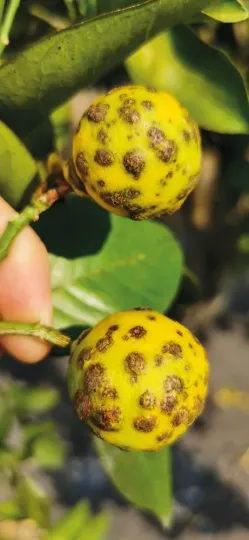
Early symptoms appear as small, chlorotic spots on the leaf surface. As the infection progresses, these spots expand, darken, and develop a distinct brown to grey necrotic center.
A notable feature is the yellow halo surrounding the necrotic lesions, which helps distinguish this disease from other similar leaf spot infections occurring in citrus groves.
Fruit infection leads to circular, depressed lesions. These spots can cause premature ripening or decay, rendering the produce unmarketable for both local consumption and export.
On the underside of infected leaves, a velvety, olive-grey fungal growth can often be observed. This growth consists of the sporulating structures of the fungus, usually visible under magnification.
Severe infestations cause defoliation, where the tree loses significant leaf mass. This leads to weakened branches, stunted growth, and a reduction in the plant's overall vigor.
Pathogen
The disease is caused by the pathogenic fungus Pseudocercospora angolensis. This pathogen is known for its ability to cause severe economic losses in various citrus species worldwide.
The fungus infects leaves, young stems, and fruits, utilizing these parts to complete its life cycle and produce new spores for further transmission within the orchard.
Transmission occurs through the dispersal of spores by wind, rain splashes, and physical contact during cultural activities. It thrives where environmental conditions allow for moisture retention.
Survival of the pathogen is largely dependent on its ability to persist in plant debris, such as fallen leaves and mummified fruit, which can serve as a reservoir for years.
Recognized as a significant threat, this pathogen requires strict adherence to agricultural biosecurity practices to prevent its spread into new geographic regions.
Conditions for development
Angular leaf spot is primarily driven by high humidity and moderate temperatures. It is most prevalent in areas with heavy seasonal rainfall and prolonged damp conditions.
The optimal temperature for fungal activity is between 20°C and 25°C. These conditions are conducive to rapid spore germination and the infection of fresh, succulent plant tissue.
Orchards with poor air circulation due to dense canopy growth or lack of pruning provide an ideal microenvironment for the fungus to establish and reproduce effectively.
Water-logged soils and excessive dew contribute to the persistence of moisture on the leaf surfaces, which is a critical factor for the pathogen to breach the plant's defenses.
Periods of active growth are particularly risky, as young leaves and new stems are less resilient than mature tissues and are easily colonized by the invading fungus.
Why it matters
The primary economic harm stems from yield reduction and fruit quality degradation. Infected citrus fruits are often distorted, making them unacceptable for quality markets.
Photosynthetic capacity is severely hampered due to early leaf drop, which reduces the tree's ability to store energy for the next growing season and future fruit production.
Young trees are especially vulnerable to the cumulative effects of the disease, which can lead to stunted development or, in extreme cases, the death of the entire plant.
Increased production costs are inevitable due to the need for frequent fungicide applications and the labor-intensive removal of infected plant materials from the orchard.
International trade restrictions often follow the detection of this pathogen, causing substantial financial strain on citrus-exporting regions and industries.
Protection
Effective management begins with quarantine protocols. Importing citrus nursery stock from verified, disease-free sources is the first line of defense against the introduction of the fungus.
Sanitation is critical; all symptomatic fruit and leaves must be regularly pruned and destroyed, preferably by burning, to reduce the overall inoculum load in the orchard.
Copper-based fungicides remain the standard for chemical control. These applications should be timed correctly, especially before anticipated rainy periods, to protect the foliage.
- Implementing regular pruning to ensure proper canopy ventilation and light penetration.
- Applying balanced nutrition to enhance the tree's natural defense mechanisms.
- Using drip irrigation to avoid overhead moisture on the leaves and canopy.
- Adopting an integrated pest management (IPM) plan to monitor disease presence.
Continuous monitoring and early detection allow for targeted management interventions, reducing the need for widespread chemical applications and protecting the orchard's ecosystem.
Pathogens and affected parts
Affects crops · 1
Discussion
No discussions yet — be the first.