

Description
Symptoms
Symptoms often appear on leaves in early spring as chlorotic spots, rings, or line patterns. These patterns are particularly visible when holding leaves against the light, serving as an early diagnostic indicator.
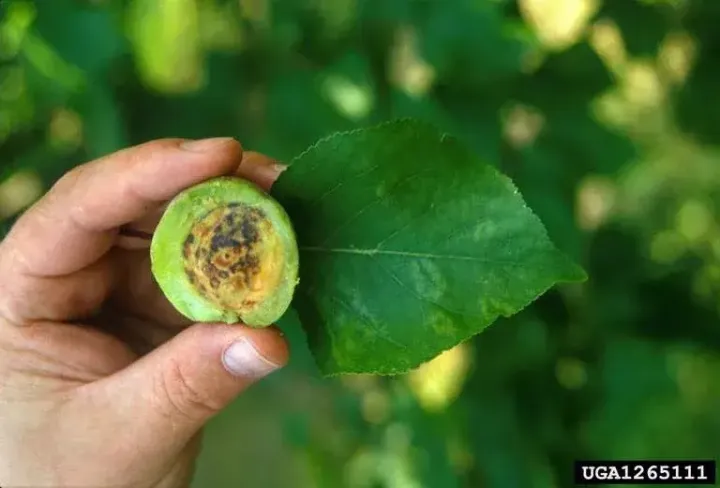
On fruit, PPV causes characteristic depressions, pits, and rings. The skin often displays discoloration, and the underlying flesh can become necrotic, corky, or develop gum pockets, rendering it inedible.
Some stone fruits exhibit ring patterns on their stones or pits, which are highly diagnostic for the disease even when external fruit symptoms are mild or absent during certain seasons.
Premature fruit drop is a common symptom of severe infection. Trees may show a decline in vigor, stunted growth, and a reduction in canopy density as the systemic infection impairs nutrient transport.
Varietal resistance or tolerance can lead to latent infection, where trees carry the virus without showing obvious symptoms. These trees act as silent reservoirs, spreading the virus unnoticed throughout the orchard.
Pathogen
Plum pox virus (PPV) is the causative agent of the disease known as Sharka. It is recognized as one of the most destructive viral diseases affecting stone fruit trees, categorized as a quarantine pathogen globally.
The virus has a narrow host range restricted to the genus Prunus. It primarily affects plums, apricots, peaches, nectarines, and almonds, significantly impacting commercial production and fruit quality.
Transmission occurs primarily through aphid vectors in a non-persistent manner. Species such as the plum aphid and green peach aphid can acquire the virus from infected tissues and transmit it to healthy trees within minutes.
Another major pathway for the spread of PPV is the movement of infected plant material. Propagating material such as scions and rootstocks taken from infected, symptomless trees facilitates the long-distance spread of the virus.
The virus is a member of the Potyviridae family. Once the virus enters a tree, it moves systematically through the phloem, causing systemic infection that persists throughout the entire lifespan of the host plant.
Conditions for development
The rate of virus spread is heavily influenced by the presence and activity of aphid populations. Warm, dry weather conditions during spring encourage rapid aphid reproduction and increased movement between trees.
The proximity of infected wild Prunus species or neglected orchards serves as a critical reservoir for the virus. Insects moving from these sources into commercial orchards initiate new infection cycles.
High-density planting systems can exacerbate the problem if the canopy environment becomes overly humid or shaded, which may favor the colonization of aphids within the inner parts of the tree.
The time of year significantly impacts detection. Symptoms are most clearly observed in spring and early summer; during high heat, symptoms may mask, making field surveys less effective.
Poor orchard sanitation and lack of weed control contribute to the stability of aphid populations, thereby indirectly increasing the chances of efficient virus transmission among cultivated trees.
Why it matters
Plum pox virus causes severe economic losses by reducing fruit yield and marketability. Once a tree is infected, it remains infected for its entire life, as there is no chemical cure.
The cosmetic damage to fruit, such as deformations and rings, makes the crop unsuitable for the fresh market. Even for processing, the poor texture and flavor caused by the virus are unacceptable.
The chronic stress caused by the virus weakens the trees, making them more susceptible to cold damage and secondary fungal or bacterial pathogens, ultimately shortening the productive life of the orchard.
Quarantine regulations associated with PPV can lead to total export bans for fruit from infested regions. This severely impacts the profitability of the fruit industry at a regional or national level.
In nurseries, the detection of PPV often requires the destruction of the entire block of plants. This leads to immediate financial loss and can threaten the stability of the entire supply chain.
Protection
The foundation of PPV control is the use of healthy, certified, virus-free planting material. Strict nursery certification programs are the primary defense against the introduction of the virus.
Rapid identification and systematic roguing of infected trees is essential. Infected trees must be removed and destroyed to reduce the inoculum load available to aphid vectors.
Management of aphid populations using targeted insecticide applications during critical periods is necessary to limit the spread within an orchard, though it cannot fully stop the virus transmission.
Stringent hygiene protocols for pruning and grafting tools are mandatory to prevent mechanical transmission. Tools should be disinfected between trees to minimize the risk of spreading the pathogen.
Developing and planting resistant or immune cultivars is the most effective long-term strategy for managing Sharka. Continued research in plant breeding is crucial for sustainable stone fruit production.
Content graph
Connections · Plum pox virus
Most often together:
Marketplace
Products · 1
Community
Discussion
No discussions yet — be the first.