
Downy mildew of umbellifers
Plasmopara crustosa
Description
Symptoms
Symptoms initially appear as chlorotic, pale yellow spots on the upper leaf surface, which gradually expand and become irregular in shape as the disease progresses.
A distinctive feature of this infection is the development of a downy, whitish-gray fungal growth on the undersides of the affected leaves, corresponding to the spots on the top.
As the disease advances, the infected leaf tissue begins to wither, turn brown, and become necrotic, eventually leading to premature senescence and death of the foliage.
In severe cases, the infection can spread to petioles and flower stalks, causing distortion, stunted growth, and potential failure in seed production for affected plants.
Root systems may also exhibit reduced vigor as a consequence of the loss of photosynthetic leaf area, resulting in significantly undersized or deformed harvestable crops.
Pathogen
The pathogen responsible for this disease is the oomycete Plasmopara crustosa, which specifically targets members of the Apiaceae (Umbelliferae) plant family.
The fungus-like organism survives in the soil and on infected crop debris in the form of oospores, which are highly resilient structures capable of overwintering for several years.
Infection is initiated when moisture is present, allowing zoospores to move and penetrate the host plant tissues through the stomata of leaves or young stems.
Once inside the host, the pathogen develops an extensive intracellular mycelium, drawing nutrients from the plant cells and causing them to degrade and eventually die.
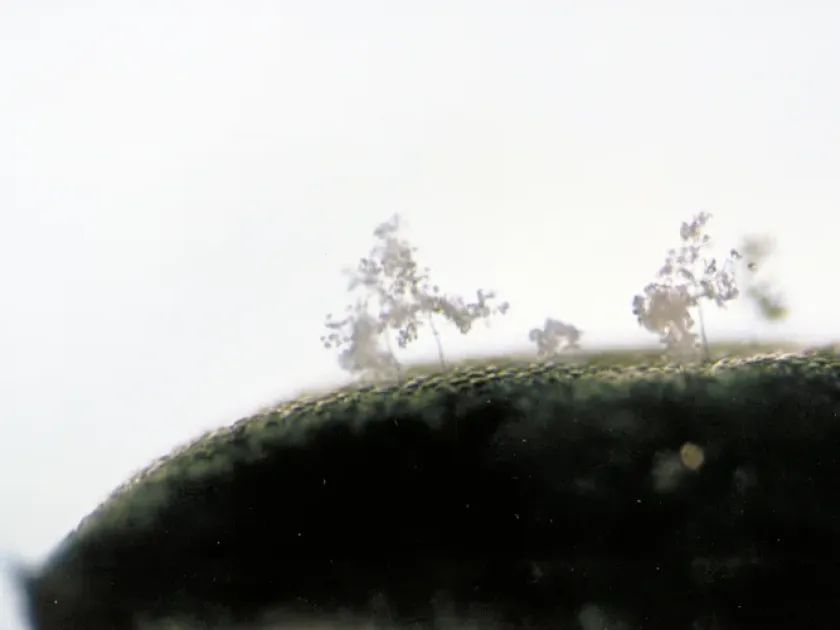
The cycle continues with the production of sporangia on the underside of leaves, which are easily dispersed by wind, rain splashes, and irrigation water to neighboring plants.
Conditions for development
The development of Plasmopara crustosa is strongly favored by cool to moderate temperatures, typically ranging between 15°C and 22°C.
High relative humidity and the presence of persistent leaf wetness, such as that provided by heavy dew, fog, or frequent rainfall, are essential for spore germination and infection.
Dense planting configurations that restrict air circulation significantly increase the duration of leaf wetness, creating an environment highly conducive to rapid disease spread.
Poor soil drainage, which keeps the humidity levels high around the base of the plants, further encourages the germination of oospores dormant in the soil surface.
Prolonged cloudy weather, which reduces the plant's ability to dry off after rain, often triggers sudden and widespread outbreaks of the downy mildew.
Why it matters
The primary economic harm is caused by the substantial reduction in total yield due to the extensive damage of the foliage, which limits the plant's energy production.
Root crops like carrots or parsnips often fail to reach marketable size and suffer from reduced quality, making them unsuitable for premium sales or long-term storage.
Secondary infections, such as soft rot, are more likely to occur on plants already weakened by downy mildew, leading to further losses during the post-harvest period.
For seed growers, the pathogen poses a severe threat by affecting the viability of the seeds and the overall health of the reproductive structure of the plant.
Without intervention, large-scale infections can result in total crop loss in highly susceptible fields, particularly during years characterized by high precipitation.
Protection
Implementing a strict crop rotation schedule, avoiding umbelliferous crops on the same field for at least 3-4 years, is the most effective cultural practice to manage soil-borne inoculum.
Thorough sanitation, including the complete removal and destruction of crop residues post-harvest, is vital to prevent the buildup of oospores in the topsoil.
Chemical control involving the timely application of fungicides, particularly those containing copper or systemic active ingredients, can help suppress disease progression during outbreaks.
Improving cultural practices such as optimizing plant spacing and row orientation can increase air flow and reduce the period of leaf wetness, hindering pathogen spread.
- Use of disease-resistant crop varieties where available.
- Monitoring weather patterns to predict and prepare for infection risk.
- Ensuring adequate soil nutrition, especially potassium, to boost plant immunity.
- Avoiding overhead irrigation that mimics rainfall and spreads spores.
Discussion
No discussions yet — be the first.