
Apple phyllosticta leaf spot
Phyllosticta solitaria
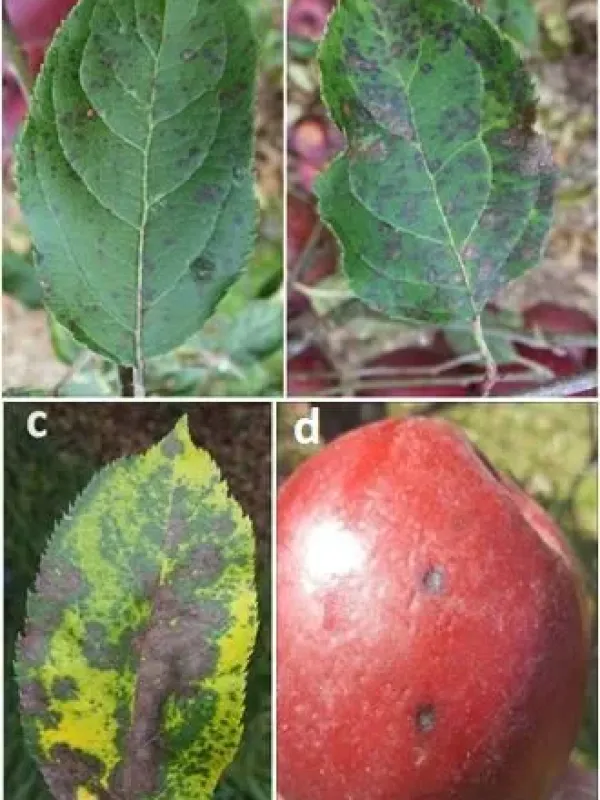
Description
Symptoms
The hallmark of the disease is the appearance of light brown or greyish spots on the leaves, usually surrounded by a dark brown or black margin.
In the center of these spots, one can observe tiny black fruiting bodies called pycnidia, which are a characteristic diagnostic feature of the fungus.
Severe infestations lead to the fusion of spots, causing entire leaves to turn brown, curl up, and fall prematurely from the tree branches.
Fruits can also be affected; the infection manifests as small, depressed, and sometimes dark-colored spots, which severely diminish the fruit's market value.
- Light brown leaf spots with dark borders
- Presence of tiny black pycnidia on the spots
- Premature defoliation of the apple tree
- Development of depressed spots on apple fruits
- Lesions on young twigs and branches
Pathogen
The disease is caused by the fungus Phyllosticta solitaria, a deuteromycete that specializes in infecting apple trees. It remains a significant concern for orchard health in various regions.
The pathogen overwinters as pycnidia on fallen leaves and infected twigs. When spring temperatures rise and rain occurs, the fungus releases conidia that serve as the primary source of infection.
Wind and water splashes facilitate the spread of spores to healthy foliage and fruit, where they penetrate the plant tissues through stomata or minor mechanical abrasions.
As the infection progresses, the fungus colonizes the leaf tissue and develops new pycnidia. This cycle can repeat throughout the summer whenever environmental conditions are favorable.
The biology of Phyllosticta solitaria is strictly dependent on moisture levels, making the disease highly dependent on specific weather patterns for successful transmission.
Conditions for development
The disease thrives in warm, humid climates. Prolonged periods of rainfall during the spring and early summer provide the essential moisture for spore germination.
Orchards with poor air circulation, often due to high planting density or lack of pruning, are significantly more susceptible to outbreaks of Phyllosticta solitaria.
Poor sanitation, such as leaving infected plant debris on the orchard floor, provides the fungus with a convenient reservoir for re-infection in the following seasons.
Conditions that keep foliage wet for long hours, such as overhead irrigation or low-lying orchard locations with high humidity, contribute to the rapid development of the disease.
Tree vigor plays a role; trees under stress from nutrient deficiencies or pest infestations are typically less capable of mounting a defense against the fungus.
Why it matters
Significant loss of photosynthetic area due to leaf spot and premature drop impairs the tree's ability to produce nutrients, negatively impacting overall growth.
The cumulative stress of seasonal defoliation weakens the tree's vigor and reduces the formation of fruit buds for the subsequent harvest cycle.
Fruit infection leads to surface blemishes, rendering the produce unfit for fresh market sales and shortening its shelf life during storage.
Weakened twigs and branches may become necrotic, creating entry points for secondary pathogens and further compromising the structural integrity of the canopy.
In commercial operations, the disease can lead to substantial financial losses due to lower crop yields and the necessity of intensive fungicide applications.
Protection
Strict sanitation is the primary control method: all fallen leaves must be collected and destroyed, or buried deep in the soil to disrupt the fungus's life cycle.
Pruning should be performed to open up the tree canopy, which promotes better air circulation and allows foliage to dry out quickly after rains.
Preventive spraying with copper-based fungicides during the early bud-break stage is highly effective in controlling the primary inoculum.
During the growing season, if symptoms appear, systemic fungicides may be necessary, provided that application intervals and pre-harvest restrictions are strictly followed.
Maintaining balanced tree nutrition and monitoring for other pests ensures the tree remains healthy enough to exhibit natural resistance to the pathogen.
Discussion
No discussions yet — be the first.