
Description
Symptoms
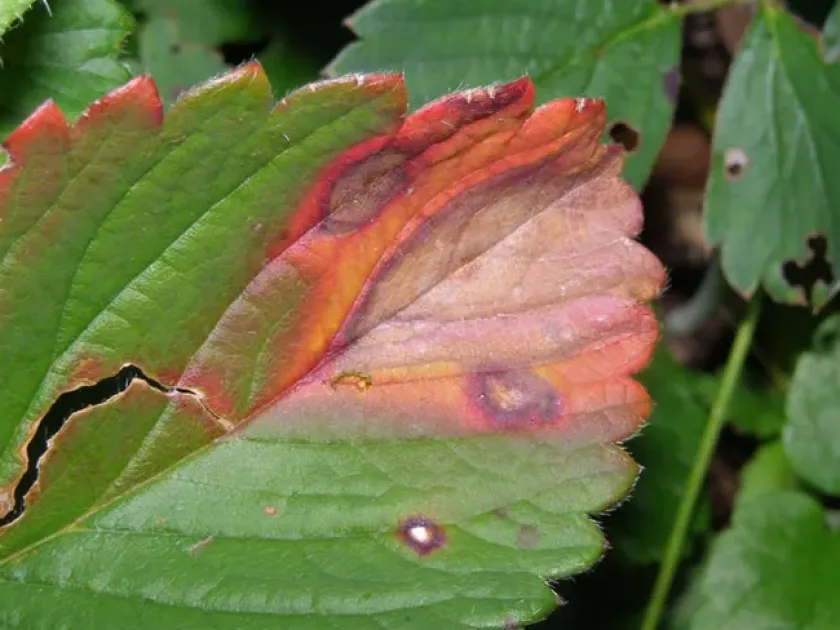
Phomopsis leaf blight typically manifests as circular or angular lesions on strawberry leaves, which initially appear as purple or reddish-brown spots.
Over time, these spots expand, often developing a V-shaped pattern extending toward the leaf margins, which is a classic symptom of this fungal infection.
As the infection progresses, the center of the necrotic tissue turns brown and brittle, eventually leading to the death of the affected leaf section.
Microscopic black structures called pycnidia, which house the pathogen's spores, appear as small dots within the centers of mature leaf spots.
In severe cases, the fungus spreads to petioles, runners, and floral stalks, causing these plant parts to wilt and turn necrotic, weakening the entire crown.
Pathogen
The disease is caused by the fungus Dendrophoma obscurans (formerly known as Phomopsis obscurans), which is specialized in colonizing strawberry tissue.
This pathogen survives the winter in infected leaf debris and older plant structures left on the field, acting as a reservoir for the next season.
The fungus produces spores in pycnidia, which are released during periods of moisture and disseminated by splashing rain, irrigation, and wind currents.
Once spores land on susceptible strawberry tissue, they germinate and penetrate the leaf surface, leading to the establishment of the mycelial network.
The continuous production and dispersal of spores throughout the growing season allow the pathogen to cause repeated cycles of infection in strawberry fields.
Conditions for development
Phomopsis leaf blight thrives in environments characterized by high humidity, frequent rain, and moderate to warm temperatures throughout the season.
Dense planting patterns that restrict airflow create a humid microclimate around the canopy, significantly promoting spore germination and rapid disease spread.
Plants with lush, succulent growth due to excessive nitrogen application are more susceptible to invasion by the fungal mycelium due to weaker cell walls.
Any physical injuries to the strawberry plant, such as those caused by insects, equipment, or foot traffic, serve as easy entry points for the pathogen.
Poor field sanitation, specifically the failure to remove infected foliage, ensures a high inoculum load that can lead to severe epidemics in following years.
Why it matters
The primary impact of the disease is the reduction of the functional leaf surface, which limits photosynthesis and negatively affects fruit yield and quality.
Infected plants show reduced vigor and decreased ability to survive winter conditions, leading to poor growth and stand reduction in the subsequent spring.
Blossom infection can cause poor fruit development, misshapen berries, or even premature fruit drop, which significantly decreases the marketable harvest.
Chronic infections lead to the premature depletion of the strawberry plant's energy reserves, reducing the lifespan of the strawberry plantation.
Management of this disease requires additional labor and chemical inputs, increasing the total cost of production for the strawberry grower.
Protection
Integrated pest management starts with cultural practices such as using disease-free planting stock and maintaining adequate spacing for proper ventilation.
Regular sanitation, including the removal and destruction of infected leaves, is critical to reduce the source of inoculum before it spreads across the field.
Balanced fertilization and careful irrigation management help maintain plant health and prevent the excessive moisture that favors fungal proliferation.
Fungicide applications may be necessary in high-pressure situations, targeting key growth stages and following label instructions for safety and efficacy.
- Use resistant strawberry varieties.
- Implement proper crop rotation.
- Practice thorough field cleanup after harvest.
- Monitor fields for early signs of lesions.
Pathogens and affected parts
Affects crops · 1
Discussion
No discussions yet — be the first.