
Description
Symptoms
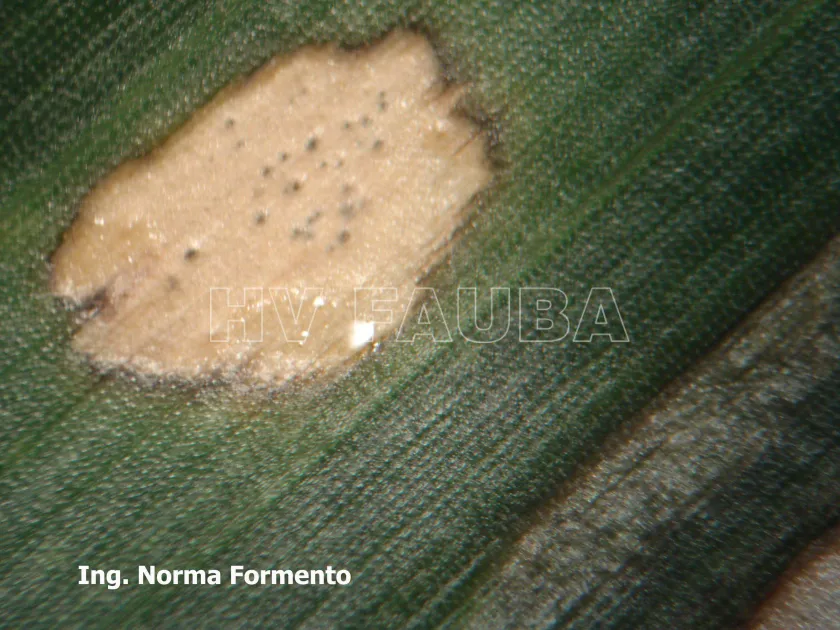
A hallmark sign of the disease is the appearance of round or oval spots on the leaves, which are straw-yellow to light brown in color. Over time, small dark structures known as pycnidia may appear in the center of these spots.
As the disease progresses, these spots often coalesce into larger necrotic zones, leading to premature drying and wilting of the leaf blade. Symptoms are usually first observed on the older, lower leaves.
Under high humidity, a characteristic chlorotic halo may develop around the spots, indicating that the pathogen is actively releasing toxins into the plant tissue. This significantly reduces the total photosynthetic area.
Diagnosis can be challenging as the symptoms may resemble other leaf spots; however, the presence of distinct black pycnidia within the lesion acts as a reliable field marker for Phaeosphaeria infection.
The severity of visual symptoms depends heavily on the genetic susceptibility of the hybrid and the specific environmental conditions of the current growing season.
Pathogen
The pathogen responsible for Phaeosphaeria leaf spot in corn is the fungus Phaeosphaeria maydis (anamorph Phyllosticta maydis). It is an ascomycete that parasitizes primarily the vegetative tissues of corn plants during the active growth period.
This disease specifically targets maize, manifesting as characteristic necrotic spots on the foliage. The pathogen survives between seasons as spores and mycelium on infected crop debris left in the field after harvest.
The fungal life cycle involves both a sexual stage (pseudothecia) and an asexual stage (pycnidia). The spread of infection within the agroecosystem occurs mainly through conidia, which are splashed by rain or dispersed by wind currents onto healthy leaves.
Primary infection typically begins on the lower leaves, where the microclimate is most conducive to spore germination. The infection pressure increases gradually throughout the season as the inoculum builds up in the canopy.
The biological specialization of the pathogen is restricted to the genus Zea, making corn the sole host plant in the rotation that requires strict monitoring for disease symptoms.
Conditions for development
Phaeosphaeria leaf spot development is favored by periods of moderate temperatures and high ambient humidity. Ideal conditions for spore dispersal and germination occur during frequent rains, dew, and foggy weather.
Prolonged wet weather during the silking and grain-filling stages of corn creates critical risks for widespread infection across the field. The fungus thrives at temperatures ranging between 18 and 25 degrees Celsius.
High planting density also promotes disease development by restricting airflow within the canopy, which leads to increased relative humidity and prolonged leaf wetness.
Failure to rotate crops and the presence of significant surface crop residue are the primary drivers of inoculum accumulation in the soil.
Microclimatic factors, such as low-lying areas or the presence of windbreaks that impede air circulation, can trigger earlier and more severe disease outbreaks.
Why it matters
The economic impact of Phaeosphaeria leaf spot stems from the significant reduction in leaf photosynthetic surface area, which hampers the plant's ability to accumulate biomass.
If infection occurs early, there is a measurable decrease in grain weight and kernel fill, as the plant cannot supply sufficient nutrients to the developing ear.
The disease triggers accelerated senescence of vegetative tissues, causing the plant to cease photosynthesis earlier than normal, which negatively impacts overall corn yield potential.
In years with high disease pressure (epiphytotics), grain losses can reach up to 15-20%, depending on the level of agronomic management and the hybrid's natural resistance.
Plants weakened by this leaf spot become more vulnerable to secondary opportunistic infections and pest damage, further reducing the market quality of the grain.
Protection
The cornerstone of management is the use of resistant or tolerant corn hybrids, which effectively minimizes losses without the need for intensive chemical interventions.
Agronomic practices, such as deep tillage to incorporate crop residues into the soil, significantly reduce the primary inoculum load and prevent early infection of young plants.
Implementing a proper crop rotation that avoids continuous corn cultivation is a critical factor in breaking the pathogen's life cycle in the field.
The application of fungicides at the initial stages of disease development may be justified under conditions of high disease pressure and favorable weather patterns for fungal spread.
- Regular field scouting during the V6-V8 growth stages and at silking.
- Balanced mineral fertilization, avoiding excess nitrogen while ensuring adequate potassium levels.
- Timely weed control to eliminate alternative hosts and reservoirs.
- Utilization of high-quality treated seed to ensure a healthy start.
Pathogens and affected parts
Affects crops · 1
Discussion
No discussions yet — be the first.