
Description
Symptoms
The primary symptom is a distinct mottling and mosaic pattern on the leaves, resembling starry specks, which gives the disease its specific name.
Affected leaves often exhibit deformation, becoming crinkled and chlorotic, which significantly reduces the ornamental value of flowering plants.
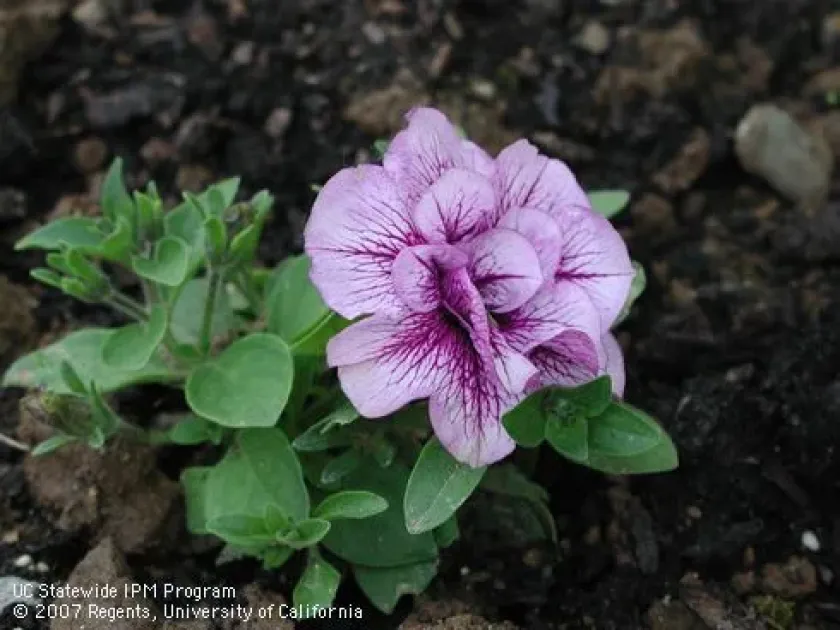
On petunia flowers, the virus manifests as pigmentation disorders, appearing as color-breaking stripes, blotches, or spots that differ from the original variety.
When infecting vegetable crops like peppers, the disease leads to stunted growth, shortened internodes, and the development of small, malformed fruits.
Systemic infection makes the entire plant appear weak; shoot tips may twist, and the overall development of the bush effectively halts.
Pathogen
The disease is caused by the Petunia asteroid mosaic virus (PeAMV), which is a member of the Tombusvirus genus.
It is an RNA virus characterized by its ability to replicate rapidly within host plant cells, interfering with the plant's normal metabolic processes.
The virus shows high environmental stability, allowing it to persist in soil and crop debris for an extended period.
It has a wide host range, infecting not only petunias but also various Solanaceous vegetables, including peppers and tomatoes.
Infection spreads primarily through contaminated soil, water, and mechanical transmission during pruning or handling with non-disinfected tools.
Conditions for development
Viral spread intensifies under high soil moisture conditions, as the virus particles move freely within the soil solution toward the root systems.
Micro-wounds on the root system or stems serve as entry points, facilitating the movement of the pathogen into the plant tissues.
A temperature range of 20–25°C is optimal for rapid viral replication and the quick emergence of primary symptoms.
The use of shared containers and the lack of tool disinfection during transplantation facilitate the rapid spread of the virus within greenhouses.
Crowded planting prevents proper air circulation and creates a favorable microclimate for the spread of the pathogen from infected plants to neighbors.
Why it matters
Petunia asteroid mosaic causes significant economic damage as ornamental plants lose their marketability and cannot be sold.
In vegetable crops like peppers, the disease leads to a substantial reduction in yield as nutrients are diverted to virus replication rather than fruit development.
Viral infection renders plants highly susceptible to secondary pathogens, frequently resulting in premature death of the plants.
Since there are no chemical treatments for infected plants, the only management strategy is the complete removal and destruction of diseased specimens.
The infection poses a risk for long-term production because the virus remains virulent in the soil, jeopardizing future plantings.
Protection
Proactive management begins with strict quality control of seedlings and the use of healthy, virus-free planting material.
Regular disinfection of garden tools—such as shears, knives, and pots—using alcohol solutions or specialized disinfectants is essential to prevent transmission.
It is crucial to remove and destroy any plants suspected of viral infection immediately to prevent contact with healthy plants.
In greenhouses, crop rotation should be practiced, and soil must be sterilized or replaced to eliminate viral accumulation in the growing media.
- Selection of resistant cultivars;
- Monitoring the quality of irrigation water;
- Control of soil-dwelling vectors;
- Strict hygiene protocols during plant maintenance.
Pathogens and affected parts
Affects crops · 1
Discussion
No discussions yet — be the first.