
Description
Symptoms
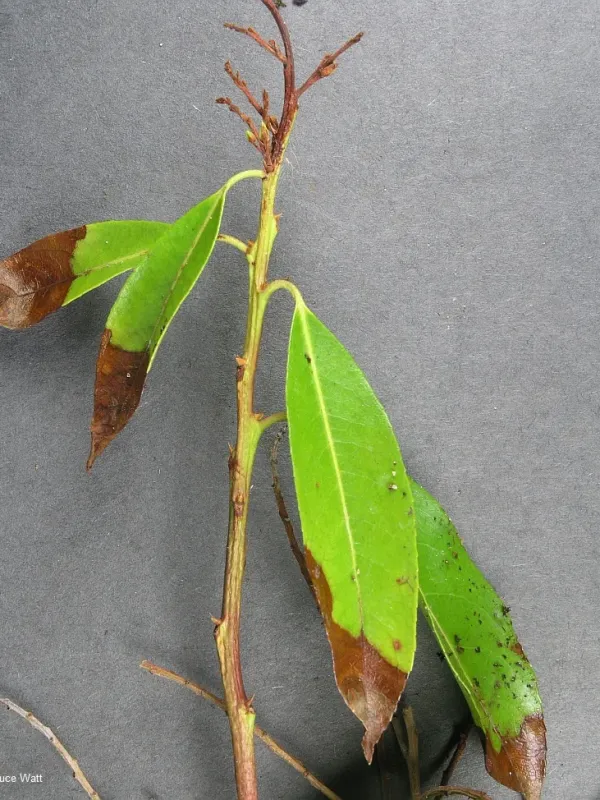
The primary symptom is the appearance of small brown spots that gradually increase in size. These spots often develop a light-colored center surrounded by a dark margin.
As the infection progresses, small black dots appear on the surface of the necrotic lesions; these are the fungal fruiting bodies, which are often visible to the naked eye.
If the disease continues to develop, the affected leaves turn yellow prematurely, dry out, and drop off. In severe cases, individual shoots and branches may die back completely.
In crops such as peanuts and bananas, the disease manifests as extensive necrosis, which significantly reduces the photosynthetic surface area of the foliage.
Visually, the disease is often confused with other leaf spot types, so accurate diagnosis typically requires laboratory microscopic analysis of the fungal spores.
Pathogen
The causative agent of the disease is a group of mitosporic fungi from the genus Pestalotiopsis (Pestalotiopsis spp.). These are widespread plant pathogens that often act as opportunistic parasites.
The fungus invades plant tissues, penetrating intercellular spaces and causing necrotic processes. The fungal mycelium develops within the affected areas, forming characteristic fruiting bodies called pycnidia.
The spores of the pathogen, known as conidia, have a complex structure with characteristic appendages. They spread easily in the environment via rain splashes, wind, and infected plant debris.
It is important to note that Pestalotiopsis species often act as secondary pathogens, attacking crops that are already weakened or damaged by insect pests.
The biology of the fungus allows it to persist for long periods in soil and on fallen leaves, making it highly resilient to adverse environmental conditions.
Conditions for development
The development of the fungus is favored by high humidity, frequent rainfall, and moderately warm temperatures. Stagnant moisture on leaves creates perfect conditions for spore germination.
Weakened plants, suffering from nutrient deficiencies or environmental stress, become highly susceptible to Pestalotiopsis colonization.
Dense plantings with poor air circulation promote rapid disease spread within an agroecosystem by maintaining a microclimate with high relative humidity.
Mechanical tissue damage or traces of insect feeding provide easy entry points for the pathogen's spores to penetrate the host plant.
The peak of disease outbreaks often occurs during wet seasons or following heavy irrigation if proper soil drainage is not maintained.
Why it matters
The damage caused by this disease involves a sharp decline in the plant's photosynthetic activity due to massive infection of the leaf blades.
Infected crops show stunted growth, reduced overall yields, and lower market quality of the produce, which is particularly critical for banana plantations.
In nurseries and during seedling production, the disease can lead to the death of young plants, resulting in significant economic losses for the grower.
Weakening the plant with this pathogen makes it more susceptible to secondary infections, complicating the overall phytosanitary management of the field.
Severe infestations in commercial orchards may require radical measures, including the removal and destruction of entire plants to prevent further spore dispersal.
Protection
The primary preventive measure is adherence to good agricultural practices, ensuring optimal plant spacing and proper air circulation between plants.
It is crucial to perform regular sanitary pruning and destruction of plant debris, as these serve as the primary reservoir for infection in gardens and fields.
The application of copper-based fungicides or systemic products is effective in the early stages of disease development to inhibit fungal spore production.
Maintaining plant immunity through balanced nutrition and the use of micronutrients increases the crop's natural resistance to the pathogen.
- Removal of diseased leaves.
- Ensuring proper soil aeration.
- Timely control of insect pests.
- Application of fungicide treatments as needed.
Pathogens and affected parts
Affects crops · 2
Discussion
No discussions yet — be the first.