

Description
Symptoms
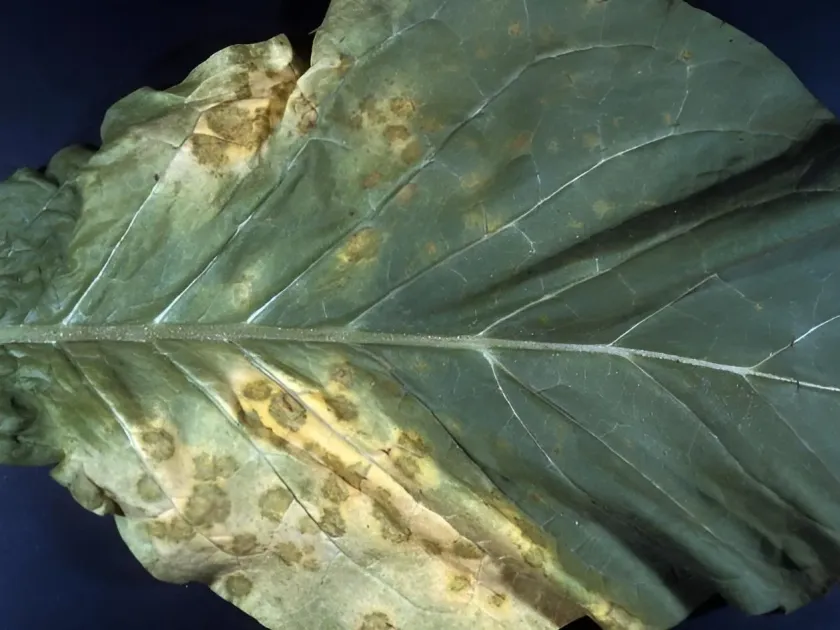
Initial symptoms are characterized by small, chlorotic yellow spots appearing on the upper surface of the leaves.
Under favorable humidity, a visible grayish-blue or violet fungal growth develops on the underside of these infected leaf spots.
Infected areas eventually become necrotic, turning brown and brittle, which leads to leaf tissue degradation and potential plant collapse.
Seedlings are particularly vulnerable, often displaying systemic wilting, leaf twisting, and stunted growth, frequently resulting in mortality.
Mature plants show lesions starting on the lower leaves, gradually progressing upward as the disease cycle continues throughout the growing season.
Pathogen
The causal agent is the oomycete Peronospora hyoscyami, an obligate parasite that specifically infects members of the Solanaceae family.
This pathogen reproduces through sporangia which are dispersed by wind currents, facilitating rapid spread over large geographical areas.
The life cycle involves an asexual phase where sporangia germinate to initiate new infections during suitable environmental conditions.
Oospores serve as the survival structure, allowing the fungus to overwinter in the soil or in infected plant debris for several seasons.
Due to the high genetic variability of the pathogen, new strains can emerge, sometimes overcoming the resistance of previously immune varieties.
Conditions for development
Tobacco downy mildew development is highly favored by moderate temperatures ranging between 15°C and 22°C.
High relative humidity and the presence of free water on leaf surfaces are strictly required for the germination of spores.
Crowded planting conditions prevent proper airflow, trapping moisture and creating the perfect microclimate for an outbreak.
Frequent rainfall, heavy night dews, and prolonged fog events significantly increase the risk of rapid disease expansion across fields.
Hot, dry weather conditions tend to inhibit the spread of the pathogen, acting as a natural check on the disease cycle.
Why it matters
This disease is considered one of the most destructive threats to tobacco production worldwide, capable of devastating entire yields.
The damage to the leaf blade directly impacts the commercial value, as cured leaves exhibit undesirable spots and compromised structure.
Quality parameters such as chemical composition and curing potential are severely degraded, leading to massive financial losses for growers.
Widespread infections can lead to the total destruction of a crop if control measures are not implemented immediately after detection.
Reduction in the leaf surface area prevents normal photosynthesis, resulting in significantly lower dry weight and crop yield.
Protection
The primary defense strategy involves the cultivation of genetically resistant tobacco varieties where available in the target region.
Adhering to strict crop rotation practices helps reduce the soil-borne inoculum pressure of the pathogen over time.
Fungicide applications are essential, requiring a proactive approach before symptoms are observed to protect healthy plant tissue.
- Sanitation and removal of all crop debris post-harvest
- Managing field weeds that may host the pathogen
- Maintaining adequate plant spacing to promote air circulation
- Regular monitoring of fields during cool, wet periods
Integrated pest management programs that combine chemical control with good cultural practices are most effective in suppressing outbreaks.
Content graph
Connections · Tobacco downy mildew
Most often together:
Marketplace
Products · 1
Community
Discussion
No discussions yet — be the first.