
Description
Symptoms
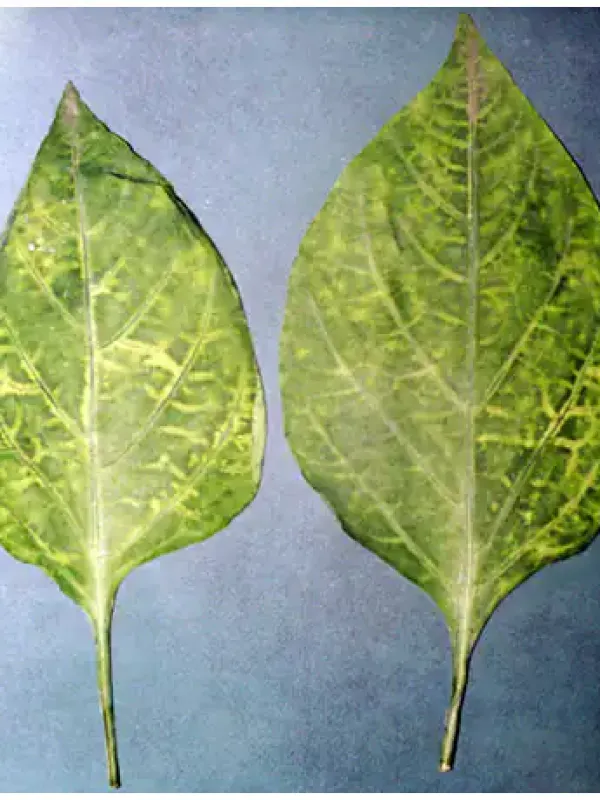
The most prominent symptom is a characteristic chlorotic mottle, often appearing as a bright golden mosaic pattern on the leaves. Infected foliage may show yellow or cream-colored patches, leading to a bleached appearance.
Leaf deformation is common, characterized by crinkling, curling, and wavy margins. In severe cases, the leaves become stunted and twisted, significantly reducing the photosynthetic surface area.
The plant exhibits stunted overall growth, with shortened internodes leading to a bushy, rosette-like appearance at the top of the stem. The entire plant structure is usually compromised.
Fruit symptoms are equally damaging, as peppers may develop mottled yellow and green patterns. The fruit often becomes deformed, reduced in size, and lacks the quality required for commercial marketing.
Flowering is adversely affected, often leading to flower drop and a complete cessation of fruit set. This results in a drastic decline in overall yield for the affected crop.
Pathogen
The disease is caused by the Pepper golden mosaic virus (PepGMV), a member of the Geminiviridae family. This DNA virus primarily targets plants within the Solanaceae family, specifically cultivated peppers.
The virus is transmitted in a semi-persistent manner by the silverleaf whitefly (Bemisia tabaci). The virus circulates within the insect's body without replicating, remaining infectious for several days after the vector feeds on an infected plant.
Mechanical transmission via sap or gardening tools is less common for this specific virus compared to other mosaic viruses, making the whitefly the primary vector for field and greenhouse spread.
The pathogen is highly variable, complicating the breeding of resistant pepper varieties. Viral particles accumulate in the phloem cells, severely disrupting the translocation of nutrients throughout the plant.
Due to its reliance on the whitefly vector, biological control and management of the insect population are critical components of an integrated pest management (IPM) strategy.
Conditions for development
The development of the disease is highly dependent on environmental conditions that favor whitefly reproduction. Temperatures between +25°C and +30°C are optimal for the vector's activity.
High humidity and poor ventilation within greenhouses create a microclimate conducive to rapid whitefly colony expansion, which significantly increases the risk of viral transmission.
Surrounding weed populations act as reservoirs for both the whitefly vector and the virus itself, which can persist in various perennial Solanaceous weeds throughout the year.
Whitefly migration from open fields into protected greenhouse environments is the primary trigger for initial infection outbreaks within a production season.
Poor crop rotation practices and high plant density facilitate the rapid movement of the vector between plants, allowing the virus to spread throughout the entire crop in a very short timeframe.
Why it matters
The primary challenge is that there is no known cure for infected plants. Once the virus has systemically invaded the plant tissues, the individual plant serves as a perpetual source of infection.
Economic losses are severe, stemming from significantly reduced yields and poor fruit quality. The disruption of plant metabolism renders the crop incapable of reaching its full production potential.
Infected plants become stressed and weakened, making them significantly more susceptible to secondary infections, including fungal pathogens and bacterial rots, which often colonize compromised tissues.
The loss of marketability of the deformed and discolored fruit translates into direct financial losses for producers, particularly in large-scale commercial farming operations.
Without proactive control, the disease can devastate an entire greenhouse planting in a single cycle, as the aggressive spread of the virus makes containment extremely difficult.
Protection
The core management strategy is the control of the whitefly population. Systemic insecticides effective against both adults and nymphs are employed according to local regulatory guidelines.
Strict phytosanitary monitoring is essential. Any plant showing symptoms of golden mosaic must be immediately rogue out and destroyed to prevent further spread within the facility.
Installing insect-proof screens with fine mesh on greenhouse vents and doorways is a highly effective barrier method to prevent whitefly entry from the surrounding environment.
Maintaining spatial isolation from older or infected crops and implementing rigorous weed control measures around the production site are mandatory to reduce viral reservoirs.
Producers should prioritize the use of resistant pepper hybrids and strictly enforce quarantine protocols for all new planting materials entering the farm to prevent accidental pathogen introduction.
Pathogens and affected parts
Affects crops · 1
Discussion
No discussions yet — be the first.