
Penicillium rot
Penicillium crustosum
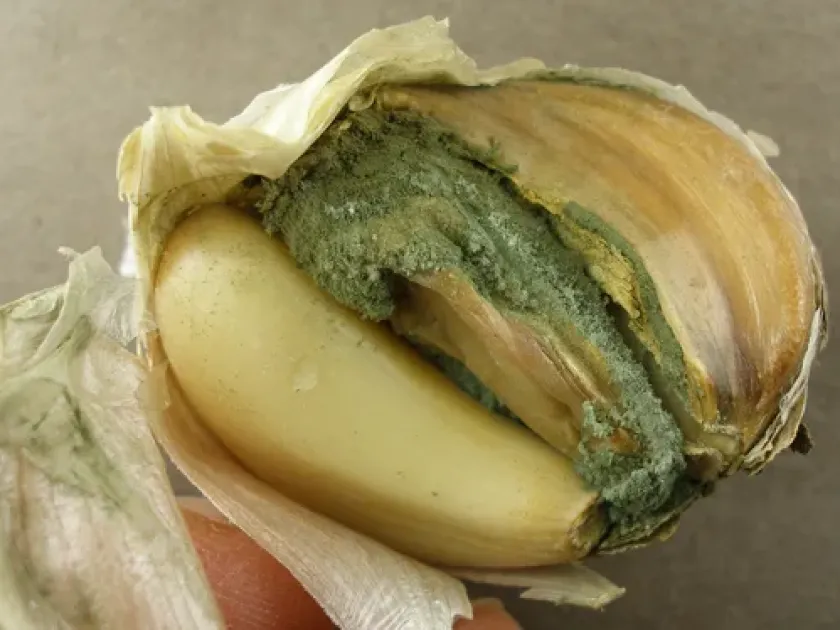
Description
Symptoms
Initial symptoms include the appearance of soft, water-soaked spots on the surface of the fruit or vegetable, which often expand rapidly under favorable conditions.
As the infection progresses, a thick, powdery mold mat develops on the surface. The color of this fungal growth is typically blue-green or grey-green.
The internal tissue of the affected plant part becomes mushy and develops a distinct, unpleasant moldy or earthy odor, characteristic of Penicillium infections.
In many cases, a clear, sharp boundary develops between the rotting infected area and the healthy, unaffected tissue surrounding it.
If left unchecked, the entire fruit will break down into a soft, decayed mass, eventually becoming entirely covered in the spore-producing fungal structures.
Pathogen
The causative agent of this disease is the fungus Penicillium crustosum, a widespread mold that thrives in various environments. It is a highly resilient pathogen capable of surviving as a saprotroph.
This fungus secretes various enzymes that break down plant tissues, facilitating rapid colonization. It is particularly known for producing dangerous mycotoxins during its metabolic activity.
Reproduction is primarily carried out through asexual spores, known as conidia, which are produced in massive, dust-like quantities on the surface of colonized substrates.
Penicillium crustosum is distinct for its ability to persist on debris, soil, and storage surfaces, acting as a constant source of inoculum for upcoming crops.
The fungus can infect a wide range of hosts, including pome fruits, citrus, tubers, and even stored grains, if conditions are conducive to mold growth.
Conditions for development
The development of Penicillium rot is strongly linked to high relative humidity, typically exceeding 85%, which is critical for spore germination and mycelial expansion.
While the fungus can grow across a range of temperatures, the optimal range for the growth of Penicillium crustosum is between 15°C and 25°C.
Mechanical injuries, such as cuts, bruises, or punctures, are the primary entry points for the fungus, making careful harvesting and handling essential.
Poor ventilation in storage facilities creates stagnant pockets of moist air, which act as catalysts for the rapid spread of the mold among stored items.
Contaminated equipment, crates, and storage bins play a significant role in the dissemination of fungal spores throughout the harvest facility.
Why it matters
The primary economic impact of this disease is substantial postharvest loss, often rendering entire batches of produce unmarketable within days.
The presence of mycotoxins produced by Penicillium crustosum makes the infected crops unsafe for human or animal consumption, leading to mandatory disposal.
The disease spreads quickly via airborne spores, meaning that a single infected fruit can compromise an entire container if not detected and removed in time.
Storage-related losses negatively affect supply chain logistics, forcing producers to implement more expensive storage technologies or shorter marketing windows.
Beyond direct economic loss, the aesthetic and physical degradation of the produce leads to a total loss of commercial value and potential reputational damage.
Protection
Effective management begins with sanitation: disinfecting storage rooms, shipping containers, and tools to reduce the overall fungal spore load in the environment.
Reducing mechanical damage during the harvest and sorting process is the most critical cultural practice to prevent the entry of the fungus into the fruit.
Maintaining strict temperature and humidity controls in storage facilities is vital to suppress the growth rate of Penicillium crustosum.
Regular monitoring of stored produce allows for the timely identification and removal of rotted items, preventing the formation of infection focal points.
Using appropriate postharvest fungicides, where legally permitted, can provide an additional layer of protection against colonization and storage rot.
Discussion
No discussions yet — be the first.