
Description
Symptoms
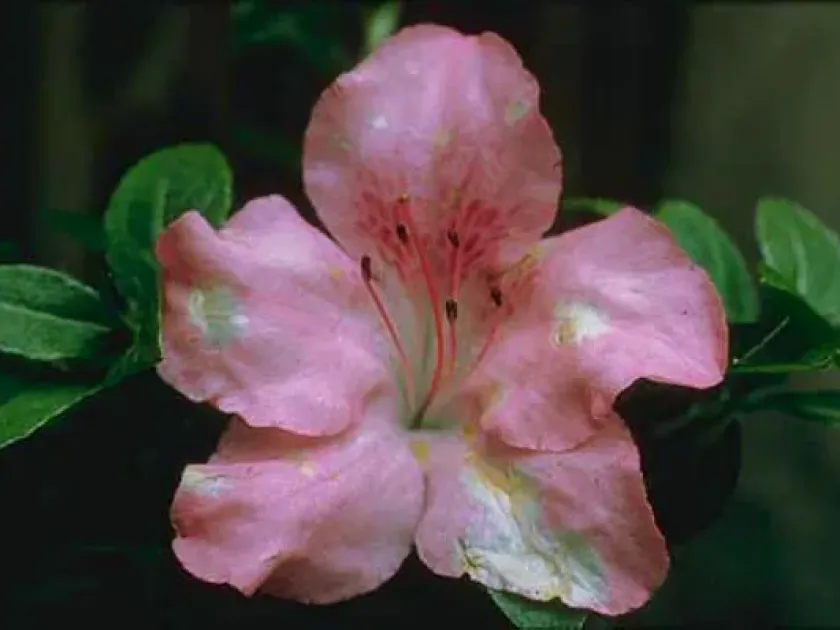
The first symptoms of azalea flower blight are small, circular, water-soaked spots that appear on the petals of opening flowers.
These spots rapidly enlarge and coalesce, causing the petals to become limp, slimy, and eventually collapse entirely.
Under humid conditions, tiny white fungal masses or spore cushions develop on the surface of the withered, infected petals.
The blossoms quickly turn brown or tan and typically remain attached to the shrub, creating a blighted appearance for a long period.
Severe infestations can lead to the infection of unopened buds, effectively preventing the plant from blooming properly throughout the season.
Pathogen
The causative agent of this disease is the fungus Ovulinia azaleae, which is highly host-specific to rhododendrons and azaleas.
The pathogen produces small, hard survival structures called sclerotia, which overwinter in the soil or in leaf litter under the plants.
In spring, these sclerotia produce cup-shaped structures known as apothecia, which release millions of airborne ascospores.
These spores settle on the flowers, germinate in the presence of moisture, and penetrate the petal tissues to initiate the infection cycle.
The fungus is strictly a floral pathogen and does not typically infect leaves, stems, or roots of the rhododendron host.
Conditions for development
The development of Ovulinia azaleae is heavily dependent on high moisture levels and mild temperatures during the flowering period.
Prolonged rainfall or heavy dew during spring creates the ideal environment for spores to land, germinate, and spread rapidly.
Densely planted areas with poor air circulation retain moisture on petals for longer periods, significantly increasing the likelihood of infection.
Overhead irrigation is particularly risky as it splashes spores from the ground onto the flowers and keeps the petals consistently wet.
The disease tends to be much more severe in shaded, humid gardens where the morning dew does not evaporate quickly.
Why it matters
The primary damage caused by flower blight is the total loss of the aesthetic value of azalea plants during their peak blooming season.
The infection progresses extremely quickly, and an entire display of flowers can be ruined within 48 to 72 hours under favorable weather.
Because the blighted flowers remain attached to the shrub, they continue to serve as a persistent source of inoculum for other nearby flowers.
Frequent annual infections can weaken the vigor of the rhododendron plants and make them more susceptible to other environmental stressors.
For professional nurseries and botanical gardens, this disease can lead to massive commercial losses and the ruin of seasonal exhibits.
Protection
The most effective strategy is the immediate removal and destruction of any infected blooms to reduce the spore load in the immediate environment.
Sanitation is key; removing old leaves and applying fresh mulch under the shrubs helps bury sclerotia and prevent them from producing spores.
Applying protective fungicides at the first sign of color in the buds is essential for managing the disease in high-risk areas.
Ensuring proper spacing and pruning to improve air circulation can significantly decrease the humidity levels around the flower canopy.
- Utilizing systemic fungicides such as those containing azoles.
- Applying contact fungicides like chlorothalonil or mancozeb before blooming.
- Removing and discarding fallen debris from beneath the plants.
Pathogens and affected parts
Affects crops · 1
Discussion
No discussions yet — be the first.