

Disease · viral
Watermelon bud necrosis virus
Orthotospovirus citrullomaculosi
Description
Symptoms
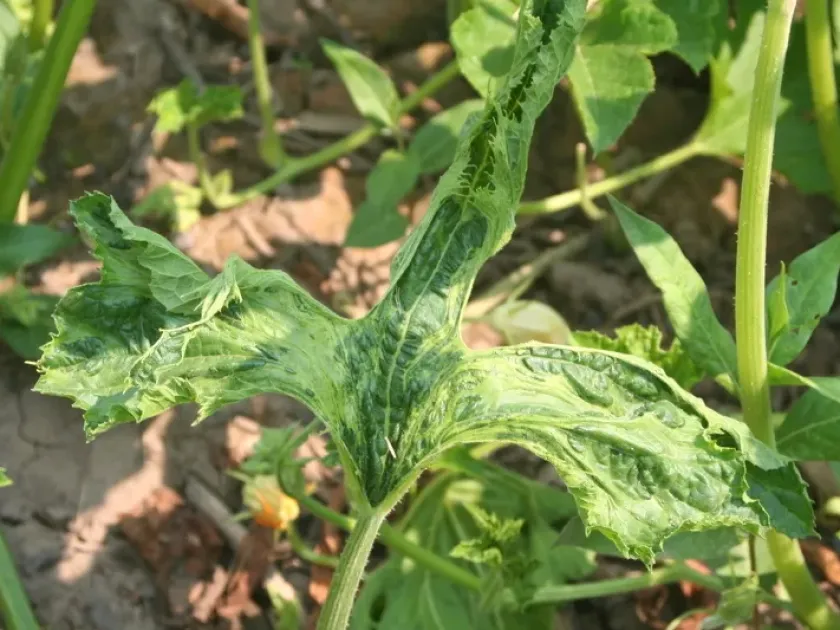
Early symptoms include chlorotic spots or rings on young leaves. As the infection develops, these spots often become necrotic, leading to the distortion and puckering of the foliage.
Terminal bud necrosis is a characteristic sign, where the growing tips of the plant die back, leading to severe stunted growth and a bushy appearance of the affected plant.
Fruits may display irregular, mottled patches or rings, significantly reducing their marketability. In severe cases, the fruit fails to develop properly, becoming misshapen and small.
Plants often exhibit a yellowing (chlorosis) that mimics nutritional deficiency, but unlike deficiencies, this condition spreads rapidly across the plant and does not respond to fertilization.
- Chlorotic or necrotic rings on leaves.
- Necrosis and dieback of the terminal growing buds.
- Stunted growth and reduced leaf size.
- Mottled or ring-spotted pattern on fruit surface.
Pathogen
The causal agent is the Orthotospovirus citrullomaculosi (or related species causing watermelon bud necrosis), belonging to the Tospoviridae family. It is a persistent, thrips-borne virus that poses a significant threat to horticulture.
The virus infects various cucurbits, including watermelon, melon, and cucumber, as well as several weed species that act as permanent reservoirs for the infection during the off-season.
Transmission occurs primarily through the feeding activities of thrips species, such as Thrips palmi. Once an insect acquires the virus, it remains a carrier for the rest of its life, effectively spreading the pathogen.
Upon entering the plant cells, the virus hijacks the host's machinery for replication. The systemic nature of the infection means that once established, the pathogen spreads throughout the entire vascular system of the plant.
Accurate identification requires laboratory analysis such as RT-PCR or ELISA, as field symptoms can be easily confused with other viral diseases like cucumber mosaic virus or zucchini yellow mosaic virus.
Conditions for development
The virus thrives in warm and dry environmental conditions, which are also optimal for the rapid population growth of thrips. High temperatures accelerate the transmission cycle.
The presence of wild host plants, such as Parthenium hysterophorus or other common weeds, around the fields serves as a year-round breeding ground for the vector populations.
In greenhouses, inadequate screening and the lack of sanitation allow thrips to move freely, leading to rapid disease transmission from initial infection points to healthy neighboring plants.
The survival of the virus depends on the persistence of its vectors. In tropical and subtropical climates, the cycle continues throughout the year, making seasonal management difficult.
Agricultural practices that promote succulent plant growth, such as excessive fertilization, can attract more thrips, indirectly increasing the pressure of the viral infection on the crop.
Why it matters
The economic impact of the virus is devastating, often resulting in total crop failure in highly infested fields. Since there is no cure, preventing the spread is the only management strategy.
Affected plants show a significant decrease in photosynthetic efficiency, resulting in poor yields and low-quality fruit that is commercially worthless.
Viral infection leaves the plants vulnerable to secondary attacks by fungi and bacteria, as the plant's natural defense mechanisms are severely compromised by the systemic stress.
The loss of potential yield ranges from 30% to over 90% in susceptible varieties grown in regions with high thrips pressure. This imposes a heavy financial burden on farmers.
Beyond direct losses, the cost of managing thrips populations through intensive insecticide use increases the overall production cost and may lead to environmental and resistance issues.
Protection
Integrated Pest Management (IPM) is essential, focusing on the strict control of the thrips population. Using systemic insecticides at the first sign of pest activity is crucial.
Sanitation is key: farmers must remove and destroy all infected plants immediately upon detection. Weed control around the field perimeter reduces the primary sources of infection.
Using reflective mulches can help deter thrips from landing on plants in early growth stages. This physical barrier is an effective component of a comprehensive control program.
Crop rotation with non-host crops and avoiding the planting of cucurbits in close proximity to heavily infested areas helps in breaking the virus transmission cycle.
Screening and protective covers are recommended for greenhouse production to physically exclude the vectors. Monitoring populations with sticky traps allows for timely intervention before the virus spreads.
Content graph
Connections · Watermelon bud necrosis virus
Most often together:
Marketplace
Products · 1
Community
Discussion
No discussions yet — be the first.