
Fusarium wilt of potato
Neocosmospora solani
Description
Symptoms
Initial symptoms are typically observed during the flowering stage. The upper leaves may show subtle chlorosis, followed by a slight drooping or curling of the leaflets during the hottest hours of the day.
As the disease progresses, the wilting becomes more permanent. The foliage turns yellow, then brown, and the stems begin to dry out starting from the base of the plant upward.
A diagnostic sign can be seen by cutting the lower stem. The vascular ring appears darkened or necrotic, confirming that the fungus has colonized the plant's nutrient transport system.
Under high humidity conditions, a sparse, salmon-pink or cream-colored fungal mat may develop at the base of the stem near the soil line, indicating active sporulation.
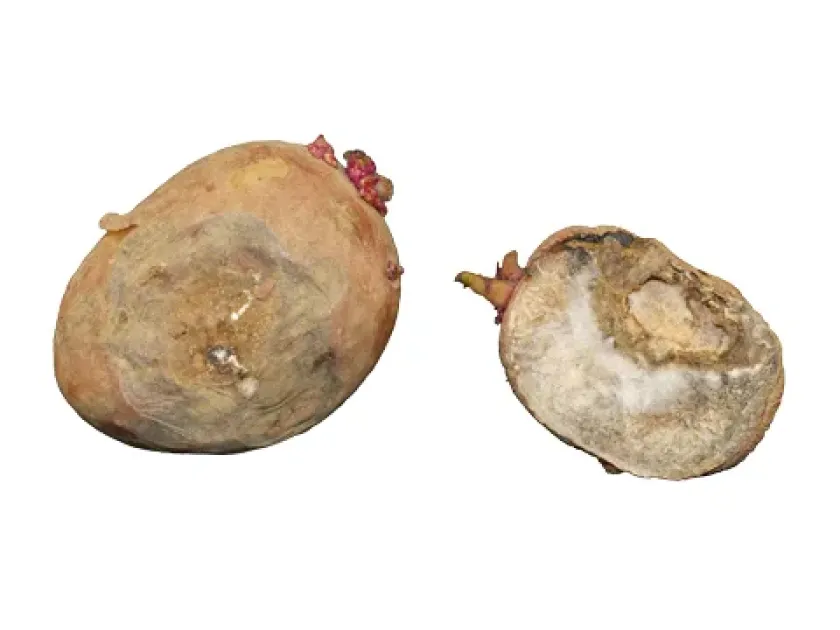
Tubers harvested from infected plants often display dry rot symptoms: sunken lesions on the skin, internal browning of the flesh, and the formation of cavities filled with white or pinkish mycelium.
Pathogen
The causative agent of potato Fusarium wilt is the soil-borne fungus Neocosmospora solani (formerly classified within the Fusarium solani species complex). This pathogen is known for its ability to survive in the soil for several years.
The fungus infects potato plants primarily through the root system. Once inside, it enters the vascular bundles, where it proliferates, eventually blocking the xylem vessels and preventing water transport.
Beyond physical blockage, the pathogen produces secondary metabolites and toxins that induce chlorosis and necrosis in the host plant tissues, leading to systemic wilting.
Neocosmospora solani is a polyphagous pathogen, affecting not only potatoes but also various other Solanaceous vegetables, including tomatoes, peppers, and eggplants, as well as several legumes.
Infection is transmitted via contaminated seed tubers, infested soil adhering to farm equipment, or through irrigation water that carries fungal spores across fields.
Conditions for development
Fusarium wilt thrives in warm climates, with optimal growth temperatures for the pathogen ranging between +25°C and +30°C. This makes the disease more prevalent in mid-to-late summer.
Fluctuating soil moisture levels, particularly periods of drought followed by heavy rainfall, place the potato plants under stress, making them significantly more susceptible to fungal entry.
Soils with poor structure or those that remain waterlogged for periods encourage the spread of the pathogen, as the fungus relies on water movement for the distribution of its conidia.
Intensive cropping cycles without proper crop rotation lead to an accumulation of Neocosmospora solani inoculums in the soil, creating a permanent risk for future plantings.
Mechanical damage to roots, often caused by soil pests like wireworms or nematodes, provides the fungus with easy access points, accelerating the infection process in the root zone.
Why it matters
The primary harm caused by Fusarium wilt is the premature senescence of the canopy, which drastically limits tuber development and results in substantial yield losses.
Infected tubers have a significantly lower market value and are often unfit for consumption due to the development of dry rot, which compromises their structural integrity and flavor.
Storage losses are severe, as the dry rot caused by this pathogen can spread throughout a storage facility, quickly turning entire batches of stored potatoes into waste.
The presence of this fungus in the soil limits the agricultural utility of the field, as it requires long intervals between planting susceptible crops to reduce infection pressure.
Economic damage is further compounded by the necessity of costly chemical treatments and the loss of potential income due to poor crop quality and reduced storage lifespan.
Protection
The use of certified, disease-free seed tubers is the most critical step in preventing the introduction of Neocosmospora solani into clean agricultural land.
Implementing a long-term crop rotation strategy—incorporating non-host plants such as grasses or cereals—is essential to reduce the population density of the pathogen in the soil.
Treating seed potatoes with systemic fungicides before planting provides a protective barrier against soil-borne pathogens during the critical early stages of development.
Regular field scouting and the immediate roguing (removal) of symptomatic plants can help decrease the spread of spores to healthy neighboring plants.
- Maintain balanced N-P-K fertilization to promote plant vigor.
- Use drip irrigation to manage moisture and reduce foliage wetting.
- Clean and disinfect farm machinery after working in infected areas.
- Improve soil aeration through proper cultivation practices.
Discussion
No discussions yet — be the first.