
Fusarium wilt of potato
Fusarium solani
Description
Symptoms
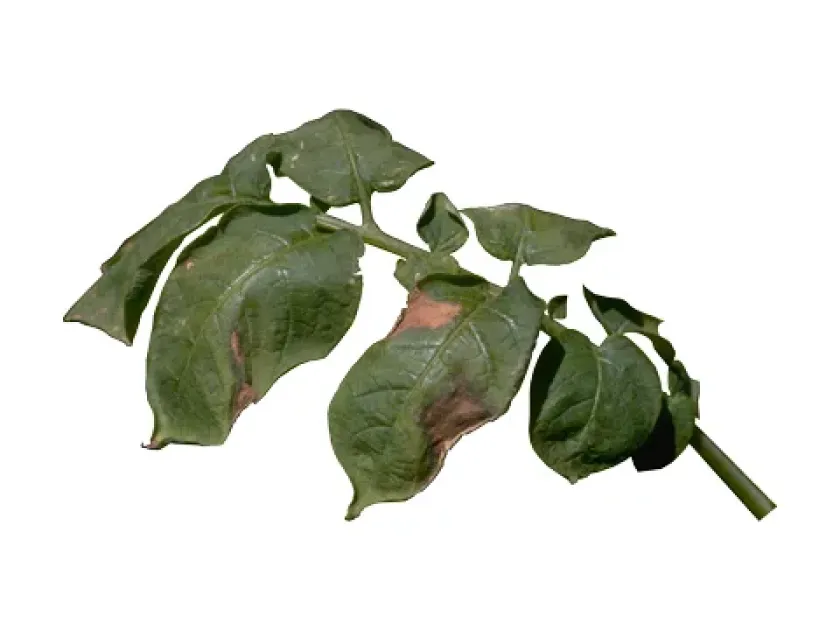
Initial symptoms are often observed during the flowering stage, starting with leaf yellowing and curling at the top of the plant. The foliage appears dull and may lose turgor during the heat of the day.
As the disease progresses, the wilt becomes permanent, and lower leaves dry out and drop. A cross-section of the lower stem will reveal a distinctive brown vascular discoloration, confirming the presence of the pathogen.
In tubers, the infection is recognized as dry rot. These are sunken, dark spots on the skin that, when cut open, reveal internal cavities filled with fluffy white or pinkish fungal mycelium.
During storage, tubers infected with Fusarium often shrink and mummify. If left untreated, the dry rot spreads rapidly from infected tubers to healthy ones, causing significant losses.
- wilting and curling of upper leaves;
- brownish vascular tissue inside the stem;
- sunken lesions on tuber surfaces;
- dry, crumbly rot inside the potato;
- fuzz-like mycelium in storage cavities.
Pathogen
The causal agent of Fusarium wilt in potatoes is the fungus Fusarium solani (and other Fusarium species). This soil-borne pathogen can survive in soil debris for several years as hardy chlamydospores, waiting for the right conditions to infect host plants.
The fungus has a wide host range, attacking various crops including tomatoes, peppers, and beans. On potatoes, the pathogen typically enters through root damage or stolons, colonizing the vascular system of the plant.
Once inside the vascular tissue, Fusarium solani secretes phytotoxins that obstruct water transport and cause the plant to wilt. The colonization of stems and tubers happens progressively as the mycelium spreads internally.
This pathogen thrives in environmental conditions that stress the plant, making it particularly dangerous in regions with intensive monocropping where the soil inoculum level is high.
The ability of this fungus to persist in agricultural equipment, seeds, and soil makes it a difficult pathogen to eradicate once a field becomes heavily infested.
Conditions for development
The development of Fusarium wilt is strongly linked to soil temperatures between 22°C and 28°C. High soil moisture combined with poor drainage creates an ideal environment for spore germination.
Soil compaction and poor aeration further exacerbate the disease. Plants grown in stressed soil are significantly more prone to root infection by the fungus compared to those in well-drained, loose soil.
Harvesting wounds and bruising are critical factors. If tubers are handled roughly during harvest, the likelihood of Fusarium dry rot entering the tubers increases exponentially.
High humidity within potato storage facilities (above 85%) without adequate ventilation facilitates the spread of spores from infected tubers to healthy ones, leading to storage outbreaks.
Previous cropping history plays a major role; fields with a legacy of intensive potato or tomato farming often harbor high concentrations of the fungus, leading to rapid infection of new crops.
Why it matters
Fusarium wilt and the associated dry rot are among the most destructive potato diseases globally, potentially causing yield losses of up to 50% in severe cases.
The quality of the harvest is severely compromised, with infected tubers often showing shriveling and internal decay that makes them unfit for sale or consumption.
The production of mycotoxins by the fungus poses potential health risks for human and animal consumption. This necessitates strict culling of all symptomatic tubers during grading.
Economic impact includes not only the immediate loss of yield but also the long-term devaluation of land, which may require years of fallowing or rotation to reduce inoculum levels.
The disease complicates the logistics of storage and shipping, as a single infected crate can ruin the entire lot, leading to increased labor costs for sorting and disposal.
Protection
Integrated pest management is key. Crop rotation with non-host plants like cereals or grasses for at least 4 years is the most effective way to reduce soil-borne pathogen populations.
Using certified, disease-free seed potatoes and treating them with appropriate fungicides prior to planting helps protect the crop during its vulnerable early growth stages.
Gentle harvest practices are essential to prevent tuber injuries. Ensuring tubers are properly cured and kept dry before entering long-term storage is vital for preventing post-harvest decay.
Storage management must include maintaining a cool, consistent temperature (2-4°C) and ensuring active airflow to prevent the buildup of humidity that favors fungal growth.
Maintaining plant health through optimal fertilization—specifically avoiding excess nitrogen—helps the plant build a stronger defense mechanism against fungal penetration.
Discussion
No discussions yet — be the first.