
Description
Symptoms
The most prominent symptom is the wilting and dieback of branches. Leaves on affected parts become chlorotic, brown, and often hang on the branch after dying.
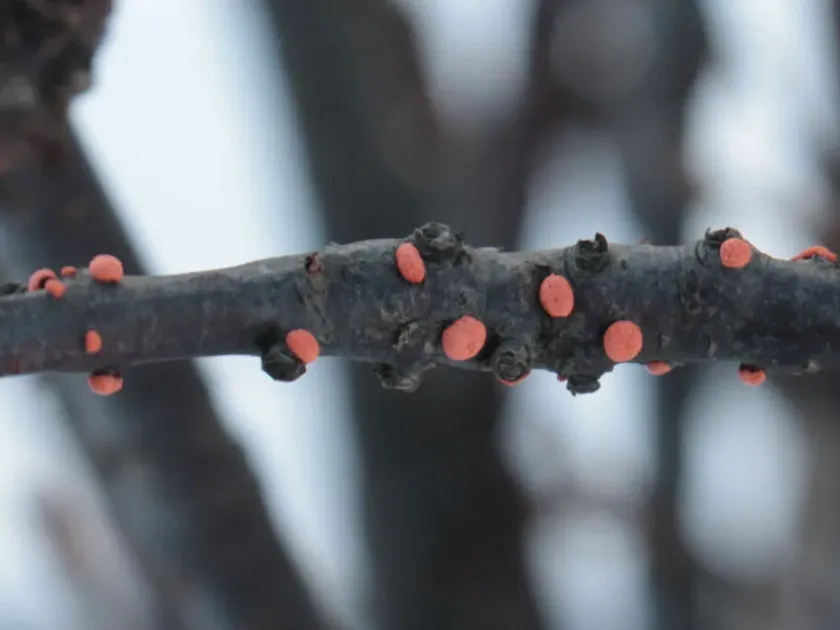
Bright coral-colored, pinhead-sized fungal fruiting bodies appear on the bark of infected branches. As they age, these structures darken and can become almost black.
The bark at the site of infection eventually becomes necrotic, sinks in, and may crack open. Below the bark, the wood turns soft and decayed due to the breakdown of cellulose and lignin.
As the necrosis progresses, the tree loses its ability to transport water and nutrients to the distal parts of the branches, leading to complete dieback of entire canopy sections.
Symptoms often coincide with signs of poor general vigor, stunted growth, and a significantly reduced harvest quality or quantity in susceptible apple trees.
Pathogen
The disease is caused by the ascomycete fungus Nectria cinnabarina, also known as the coral spot fungus. It is a wound parasite that commonly infects woody plants, including apple trees, through bark damage.
This fungus acts as both a parasite and a saprophyte, meaning it can survive on decaying organic matter before infecting living, stressed, or injured tissues of host plants.
The fungus produces distinctive bright red or orange sporodochia on the bark surface. These structures house spores that serve as the primary source of spread during wet weather conditions.
Infection entry is facilitated by frost cracks, sunburns, pruning wounds, or damage caused by pests. Once inside, the fungal mycelium colonizes the vascular tissues of the host.
The pathogen overwinters as mycelium and fruiting bodies in infected branches or stems, remaining viable throughout the year and reactivating during favorable conditions.
Conditions for development
High humidity and rainfall are the primary drivers of Nectria cinnabarina spread. Moisture is essential for the germination of spores and their dispersal.
Trees that are poorly pruned or lack air circulation in their crowns are more susceptible to the disease due to prolonged periods of moisture on the bark surface.
Environmental stressors, such as drought, nutrient deficiency, or cold damage, weaken the tree's defensive response, making it easier for the fungus to establish an infection.
Neglected orchards or those with high levels of deadwood are hotspots for the fungus, as it thrives on abandoned woody debris, which then serves as a reservoir for spores.
Warm spring and autumn weather combined with wet conditions maximizes the production and transmission of conidia to new sites on the tree.
Why it matters
Nectria branch necrosis is a destructive disease that can lead to the death of limbs or even the entire tree if the infection reaches the main trunk.
The economic impact is significant, resulting in loss of yield, costly canopy reduction, and in severe cases, the necessity to grub out entire trees.
Once established in an orchard, the fungus is persistent and difficult to eradicate, necessitating continuous monitoring and strict sanitation practices.
Structural integrity is also a concern, as infected wood becomes brittle and prone to breaking during high winds or heavy crop loads, posing a risk to the orchard's safety.
Young trees are particularly vulnerable, as a single severe infection site on the trunk can girdle the tree, causing rapid decline and mortality.
Protection
Effective control starts with rigorous sanitation: prune out all affected branches at least 10–15 cm into healthy wood and dispose of them by burning or deep burial.
Always disinfect pruning tools with a 70% alcohol solution or a bleach-based disinfectant after each cut to prevent the accidental transfer of fungal spores.
Apply wound-healing treatments (pruning sealants) immediately after making large cuts to prevent the entry of airborne spores into exposed wood.
Use copper-based fungicides as a preventative measure during dormant periods or before the onset of the spring rainy season to reduce the overall fungal spore load.
Maintain tree health through balanced fertilization and proper water management to boost the natural immune response and ensure robust bark development.
Pathogens and affected parts
Affects crops · 1
Discussion
No discussions yet — be the first.