
Description
Symptoms
Raspberry mosaic typically manifests as a variegated leaf pattern, featuring patches of yellow, light green, and dark green throughout the leaf blade.
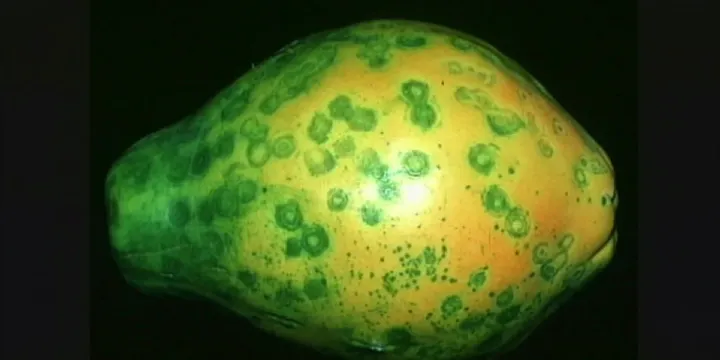
Ringspot symptoms are characterized by distinct concentric circles, wavy lines, or arching patterns appearing on the foliage as the plant enters active growth.
Infected plants often exhibit stunted growth, with shortened internodes and a general reduction in overall plant vigor and physical size.
Leaves on diseased plants may become curled, distorted, or significantly smaller than those on healthy canes, negatively impacting photosynthesis.
Severe infestations lead to premature defoliation in late summer, weakening the plant's ability to store energy for the following season's growth.
Pathogen
These diseases are caused by systemic viruses, such as Raspberry mosaic virus and Tomato ringspot virus, which invade the plant's vascular tissue.
The virus acts as an obligate parasite, reprogramming the plant's cellular machinery to replicate viral particles at the expense of host resources.
Transmission occurs primarily through biological vectors, with aphids being the most common insect responsible for spreading the mosaic virus.
Soil-borne nematodes, such as Xiphinema species, act as vectors for the ringspot virus by feeding on roots and injecting viral particles into the plant.
Once established within the phloem, the virus moves throughout the entire plant, making localized treatment impossible after initial infection.
Conditions for development
The development of viral diseases is highly correlated with the presence of insect vectors that thrive in warm, humid environmental conditions.
Poor field hygiene, including the presence of wild brambles or weed species nearby, provides a reservoir for the viruses to persist and multiply.
Using infected stock during propagation is the most common reason for the rapid establishment of these diseases in new commercial raspberry fields.
Wet soil conditions favor the movement of nematodes, facilitating the spread of soil-borne viruses between the roots of adjacent raspberry bushes.
High plant density and lack of proper canopy management can increase vector activity, leading to faster transmission rates across the planting.
Why it matters
The primary economic impact is a dramatic decline in fruit yield, often resulting in small, crumbly, and unmarketable berries that lack flavor.
Persistent viral infection causes the gradual decline of the plant, reducing its lifespan and requiring premature removal of the entire plantation.
Infected plants show decreased resistance to abiotic stressors, such as extreme frost or drought, which often leads to higher winter mortality rates.
Viruses cause genetic degradation of the cultivar, meaning even if the plant survives, it no longer produces fruits of the desired quality or size.
The lack of curative chemical treatments means that once a plantation is heavily infected, the only management option is total destruction of the crop.
Protection
The first line of defense is strictly using certified virus-free planting stock obtained from reputable, specialized propagation facilities.
Implement a rigorous rogueing program, where any plants showing symptoms are immediately dug out and destroyed to prevent spreading to healthy neighbors.
Maintain aggressive control of insect populations, particularly aphids, through the integrated use of insecticides and biological control agents.
Pre-planting soil testing for nematode populations is essential, and if necessary, use soil fumigation or crop rotation to break the infection cycle.
- Sanitize all pruning tools regularly with a bleach solution to avoid mechanical transmission.
- Remove wild raspberry and blackberry plants from the field borders to eliminate infection sources.
- Promote plant health through balanced fertilization and irrigation to support natural defenses.
Pathogens and affected parts
Affects crops · 1
Discussion
No discussions yet — be the first.