
Birch rust
Melampsoridium betulinum
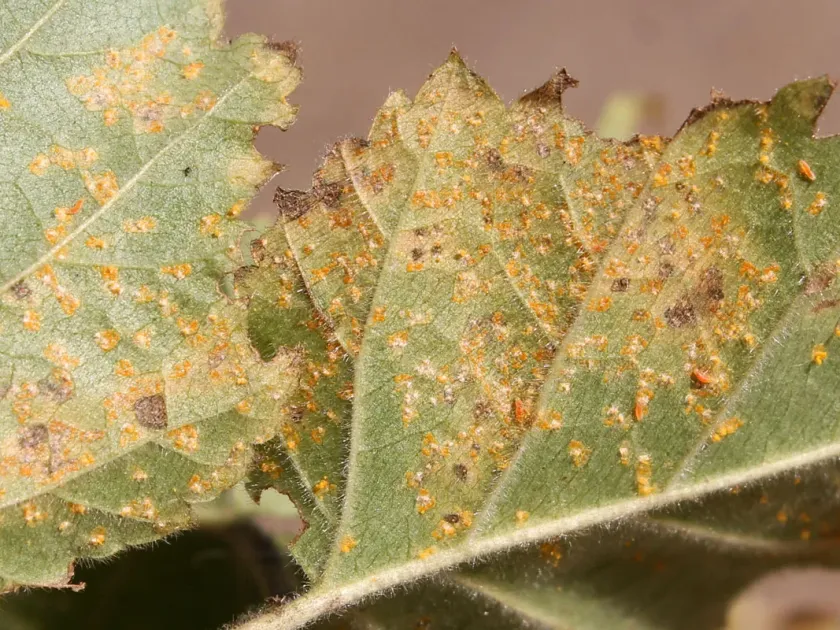
Description
Symptoms
The first symptoms appear in mid-summer as small, circular, yellowish-orange pustules on the underside of the leaves. These pustules contain the urediniospores of the fungus, which are easily released when touched.
On the upper side of the infected leaves, small chlorotic spots or patches of yellow tissue emerge. These reflect the internal colonization by the fungus and are a clear indication of a localized infection.
As the disease progresses, the number of pustules increases, often covering the entire lower surface of the leaf. By late summer, these pustules transition to a dark brown or black color, signaling the formation of overwintering structures.
In cases of heavy infestation, the affected leaves turn yellow and brown prematurely. The tree may suffer from severe leaf drop, which often begins much earlier than the natural autumn senescence.
The presence of orange dust (spores) on the foliage is the most reliable visual indicator of birch rust, allowing for quick identification and timely intervention by gardeners or arborists.
Pathogen
Birch rust is caused by the fungus Melampsoridium betulinum, a member of the Basidiomycetes phylum. This pathogen is an obligate parasite, meaning it requires the living tissue of its host plant to survive and complete its biological lifecycle.
The lifecycle of this fungus involves the production of several types of spores. During the summer, it produces urediniospores, which appear as orange dust and allow the fungus to spread rapidly between birch trees via wind and air currents.
As the season progresses, the fungus transitions to the production of teliospores, which are darker and serve as the overwintering stage of the pathogen. These spores typically persist in the fallen birch leaves on the forest floor.
The fungus penetrates the leaf surface, forming mycelia that colonize the internal tissue. This invasive growth disrupts the plant's nutrient distribution and photosynthetic capabilities, leading to visible damage on the foliage.
Given its ability to produce multiple generations of spores within a single growing season, Melampsoridium betulinum can cause significant local outbreaks if weather conditions remain favourable for its development.
Conditions for development
Birch rust thrives in conditions characterized by high relative humidity, frequent rainfall, and extended periods of dew. Moisture is essential for spore germination and successful infection of the leaf tissue.
Moderate temperatures, typically ranging between +15 and +22 degrees Celsius, are optimal for the rapid spread of the fungus. Warm, humid summers often lead to the most severe outbreaks of the disease.
Poor air circulation, often caused by overly dense planting or lack of proper pruning, creates a microclimate that traps moisture within the canopy, making the trees more susceptible to fungal colonization.
Trees that are already stressed due to environmental factors, such as drought, nutrient deficiency, or urban pollution, exhibit higher susceptibility to infection compared to healthy, well-maintained birch trees.
The accumulation of fallen leaves from the previous year is a critical factor, as it serves as the primary reservoir for the pathogen. Without proper sanitation, the cycle of infection continues year after year.
Why it matters
The primary damage caused by birch rust is the significant reduction in photosynthetic leaf area. This diminishes the tree's ability to produce energy, weakening it and potentially limiting its growth and vitality.
Premature leaf drop prevents the tree from properly preparing for dormancy, leaving the branches and buds more vulnerable to cold damage and frost during the winter months.
Long-term infestation can lead to the gradual dieback of the tree's crown. While mature trees may tolerate the disease for several years, their growth rate and overall resilience are steadily degraded.
Young saplings are at the highest risk, as the stress caused by the fungus can severely stunt their development or lead to total failure to survive under harsh winter conditions.
From an aesthetic perspective, birch rust is highly damaging to park and landscape environments, as it creates an unsightly appearance and causes the premature loss of foliage during the active season.
Protection
Effective sanitation is the cornerstone of control. Removing and destroying all fallen leaves in the autumn is essential to eliminate the overwintering spores and break the disease cycle.
Proper pruning to improve canopy airflow is a highly effective preventive measure. By reducing the humidity within the tree crown, the environment becomes less favorable for fungal spore germination.
When necessary, systemic fungicides, particularly those containing copper or triazoles, can be used. Applications should be performed promptly as soon as the first signs of the orange pustules appear.
Maintaining vigorous tree growth through appropriate fertilization and adequate watering can boost the natural immunity of the birch, allowing it to better withstand or recover from minor infections.
When planning new landscaping projects, selecting resistant varieties or species of birch is recommended, as this significantly reduces the need for chemical intervention and ensures long-term tree health.
Discussion
No discussions yet — be the first.