
Tsuga rust
Melampsora farlowii
Description
Symptoms
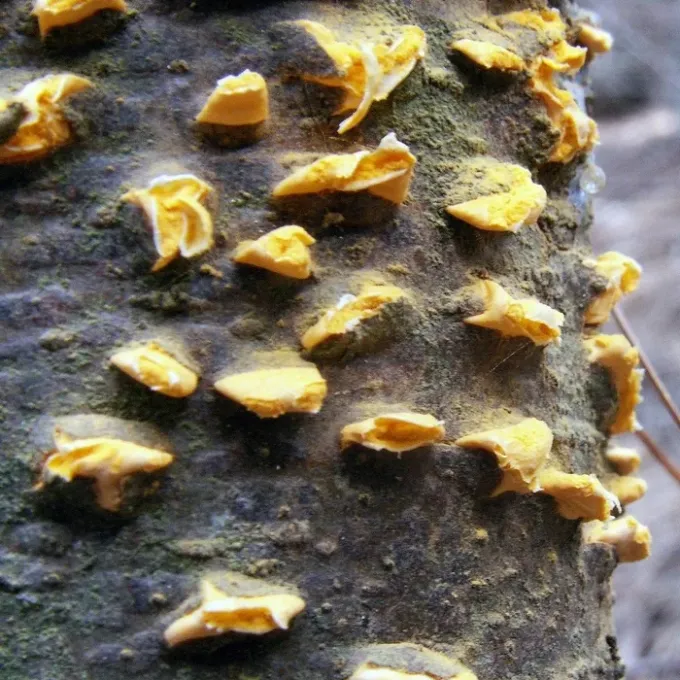
The most distinctive signs are small, yellow-to-orange pustules appearing on the underside of the needles. These structures are the visible fruitings of the rust fungus.
As the infection progresses, needles may turn chlorotic, then brown, and finally drop from the branch prematurely. This causes visible thinning of the tree's foliage.
Young shoots may exhibit unnatural twisting or localized necrosis, as the fungus actively interferes with the hormonal balance and structural integrity of the developing wood.
By late summer, the infected needles might show dark, crusty spots, representing the winter stage of the fungus before the needle falls to the forest floor.
- Yellow or orange pustules on the abaxial side of needles.
- Chlorosis and necrosis of infected foliage.
- Premature needle shedding and thinning crown.
- Distortion of young, succulent shoots.
Pathogen
The causative agent of this disease is the fungus Melampsora farlowii. It is a specialized, obligate parasite that specifically targets members of the Tsuga (hemlock) genus.
The fungus exists primarily as mycelium within the tissues of the host plant, deriving nutrients through specialized structures called haustoria. Its biological cycle is highly adapted to the hemlock's growth stages.
Reproduction occurs through the formation of spores, which are released into the environment. These spores are capable of traveling significant distances via wind currents or splashing rain.
As a biotroph, the pathogen does not immediately kill its host but severely weakens it by disrupting photosynthetic pathways and exhausting the tree's metabolic resources.
Research confirms that Melampsora farlowii can successfully overwinter in infected needle litter, which serves as the primary reservoir for annual re-infection of new spring growth.
Conditions for development
High relative humidity and extended periods of leaf wetness are critical requirements for the successful germination and penetration of rust spores into the plant tissue.
Optimal temperatures for the development of Melampsora farlowii typically range between 15°C and 22°C, which coincide with the tree's active growing season.
Poor airflow, often caused by overly dense planting or improper pruning, increases humidity levels within the canopy, facilitating rapid fungal proliferation.
Rainy spring seasons are particularly dangerous, as water splashes move spores from the ground-level litter onto the lower, susceptible branches of the hemlock.
Environmental stress, such as drought or poor soil aeration, can reduce the tree's natural resistance, making it significantly more susceptible to a severe rust outbreak.
Why it matters
The primary impact is the loss of aesthetic value, which is particularly devastating for ornamental landscapes where hemlocks are prized for their lush, evergreen appearance.
Chronic infection leads to significant reductions in the tree's growth rate. Long-term defoliation forces the tree to expend stored reserves, leading to a general decline in vigor.
Repeated exposure to the disease year after year may eventually lead to branch dieback and, in vulnerable young specimens, total tree mortality.
For tree nurseries, this disease causes significant economic loss due to the strict quarantine and marketability standards that prevent the sale of symptomatic plants.
The disease also leaves trees susceptible to secondary pathogens and wood-boring insects, which exploit the weakened tree to cause further structural damage.
Protection
Sanitation is the most effective management tool. Removing and destroying fallen needles prevents the fungus from overwintering and reduces the inoculum load for the next year.
Implementing proper spacing and thinning of the canopy improves air circulation, which helps keep the foliage dry and inhibits fungal spore germination.
If chemical intervention is necessary, fungicides containing copper or systemic active ingredients can be applied during the early stages of spring growth to protect new needles.
Avoid overhead irrigation, especially during the cool and humid parts of the day, as this mimics the wet conditions the fungus needs to thrive.
Maintaining tree health through proper fertilization and watering supports the plant’s innate defenses, making it better equipped to survive and recover from light infections.
Discussion
No discussions yet — be the first.