

Description
Symptoms
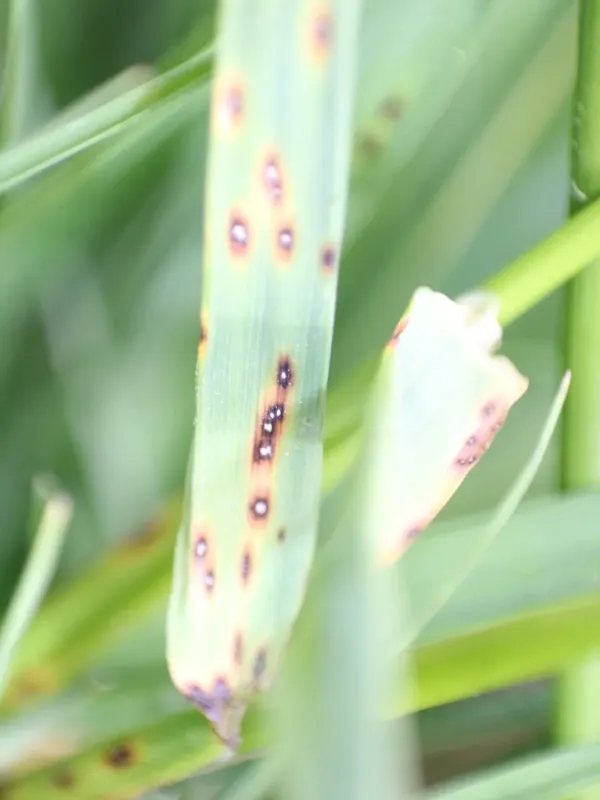
The initial symptoms appear as small, light-colored spots on the leaf surface. Over time, these spots expand, often developing a darker border that distinguishes the infected area from healthy tissue.
As the disease progresses, the lesions may coalesce, leading to large necrotic areas on the leaves. This causes the foliage to wither prematurely and lose its vibrant green color.
A distinctive feature of the disease is the presence of white or grayish spore masses on the underside of the leaves. These patches of sporulation are a clear indicator of Mastigosporium infection.
Severely infected plants often show dieback starting from the tips of the leaves. In dense stands, this can result in a scorched appearance across the entire field or pasture.
- Light-colored, circular leaf spots
- Dark, defined lesion margins
- Whitish sporulation patches underneath
- Premature leaf yellowing and necrosis
- Stunted growth of the grass canopy
Pathogen
The disease is caused by the fungus Mastigosporium album, an anamorphic pathogen known for attacking various species of perennial grasses. It belongs to the group of hyphomycetes that target leaves specifically.
The pathogen overwinters primarily in the form of mycelium or conidia on infected plant debris left in the field. As temperatures rise in spring, the fungus resumes its biological activity.
Conidia are dispersed through wind and rain splash, landing on new healthy foliage. This process allows the fungus to spread rapidly across large areas of grassland or turf.
Once it lands on a host, the fungus penetrates the plant tissues through stomata or wounds. Inside the leaf, it consumes cellular contents, leading to the formation of necrotic spots.
The lifecycle is completed when new conidia are produced on the surface of the lesions. Under favorable conditions, this cycle can repeat multiple times during the growing season.
Conditions for development
Environmental conditions play a crucial role in the development of the disease. Cool and moist weather is considered the most favorable condition for the pathogen to thrive.
High relative humidity and frequent rainfall ensure the leaves remain wet for extended periods, which is necessary for conidial germination and host infection.
Dense grass canopy acts as a trap for moisture, creating a microclimate that prevents leaves from drying out. This stagnation provides an ideal environment for the fungus to spread.
Temperatures ranging from 15°C to 20°C are generally considered optimal for the pathogen's growth. Extremes in temperature can slow down the infection rate.
Poor soil drainage and low-lying areas often experience the highest disease pressure. Waterlogged soils can weaken the plant, making it more vulnerable to fungal attacks.
Why it matters
Mastigosporium leaf spot significantly reduces the yield of forage grasses. The loss of leaf surface area directly impacts the biomass production required for grazing and hay.
The nutritional quality of the grass is diminished due to the infection. Protein and sugar content may decrease, affecting the health and growth of livestock feeding on the pasture.
In turfgrass applications, the disease creates unattractive aesthetic damage, making the lawn or sports field look unhealthy and patchy. This often requires expensive remedial actions.
Persistent infection weakens the grass plants, reducing their ability to survive harsh winters. This leads to stand thinning and the eventual encroachment of weeds into the field.
The overall vigor of the grass is suppressed, delaying recovery times after mowing or grazing. This necessitates more frequent interventions and potentially higher inputs for farm management.
Protection
Effective management begins with good agronomic practices, such as frequent mowing to remove infected foliage. This reduces the amount of pathogen inoculum present in the field.
Selecting and planting resistant grass varieties is a proactive measure that can minimize the damage. Breeding efforts focus on developing cultivars with high tolerance to fungal pathogens.
Ensuring balanced soil fertility, particularly with adequate potassium, helps plants withstand infection. Strong cell walls make it harder for the pathogen to penetrate the leaf tissue.
In cases of severe infestation, the application of systemic fungicides may be required. Proper timing and adherence to label instructions are critical for effective disease control.
Improving field drainage and reducing stand density can prevent the moisture buildup that favors the disease. Maintaining a healthy, vigorous crop is the best defense against fungal outbreaks.
Reference
Connections · Mastigosporium leaf spot
Most often together:
Marketplace
Products · 1
Community
Discussion
No discussions yet — be the first.