
Description
Symptoms
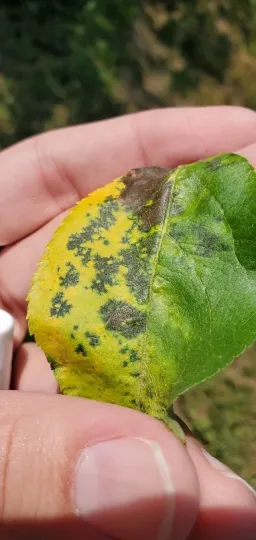
Early symptoms appear in mid-summer as small, circular, grayish-brown or dark brown spots on the leaves, often surrounded by a darker, distinct margin.
As the infection progresses, these spots expand and coalesce, eventually covering a large portion of the leaf surface, leading to tissue necrosis and drying.
Small black dots, known as acervuli, become visible on the infected spots. These are the fruiting bodies of the fungus that produce conidia for further spread.
A definitive sign of the disease is premature yellowing and heavy leaf drop, which can begin as early as August, leaving the apple branches bare before autumn.
While foliage is the primary target, severe infections may occasionally affect young shoots, causing necrotic lesions that hinder the tree's overall development.
Pathogen
The causal agent of Marssonina blotch is the fungus Diplocarpon mali (anamorph: Marssonina mali). It is a highly specialized pathogen that primarily targets the foliage of domesticated apple trees.
The fungus overwinters in the form of apothecia on fallen leaves. In spring, as temperatures rise and humidity increases, these structures release ascospores that initiate primary infections in the orchard.
During the growing season, the pathogen propagates through conidia. These spores are spread by rain splashes and wind, facilitating the rapid development of secondary infections across the canopy.
Diplocarpon mali is characterized by its ability to thrive in humid conditions, making it a serious threat in regions with high precipitation during the summer months.
The biology of the pathogen is closely tied to apple phenology, allowing it to rapidly colonize leaf tissue and disrupt the plant's essential physiological processes.
Conditions for development
High humidity and frequent rainfall are the most critical environmental factors promoting the spread and infection cycles of Diplocarpon mali.
The fungus thrives at temperatures ranging from +18°C to +25°C. In such conditions, spore germination and mycelial growth occur very rapidly.
Orchards with dense, poorly pruned canopies are significantly more susceptible to outbreaks due to restricted air circulation and prolonged leaf wetness.
The presence of overwintering inoculum in leaf litter is a major driver of the disease cycle; therefore, garden sanitation is vital for preventing new infections.
Dew and fog that persist on the leaves for long periods create a favorable microclimate, enabling the fungus to infect trees even in otherwise moderate weather.
Why it matters
The primary impact of Marssonina blotch is premature defoliation, which severely limits the tree's ability to photosynthesize and store energy for the next season.
This loss of leaf area weakens the trees, leading to poor fruit bud formation and a significant reduction in potential yield for the following year.
Affected apple trees become increasingly vulnerable to winter injury and cold temperatures because they enter dormancy in a compromised physiological state.
Persistent infections lead to general tree decline, making them more susceptible to opportunistic pests and secondary pathogens that further damage the plant.
Economic damage is substantial, encompassing not only lost crop volume but also the increased costs associated with repeated fungicide applications and orchard recovery.
Protection
Effective orchard sanitation is the first line of defense: raking and removing or burying fallen leaves helps to eliminate the fungus's primary overwintering sites.
Proper pruning practices are essential to open up the canopy, allowing for better sunlight penetration and air movement, which keeps the foliage dry.
Fungicide programs incorporating strobilurins, triazoles, or copper-based compounds are effective in managing the pathogen when applied at the right time.
Protective sprays should commence shortly after the petal-fall stage, with follow-up applications during wet periods to suppress secondary spore production.
Selecting disease-resistant cultivars and ensuring adequate spacing between trees can significantly reduce the pressure of Marssonina blotch in the orchard.
Pathogens and affected parts
Affects crops · 1
Discussion
No discussions yet — be the first.