
Brown spot of birch
Marssonina betulae
Description
Symptoms
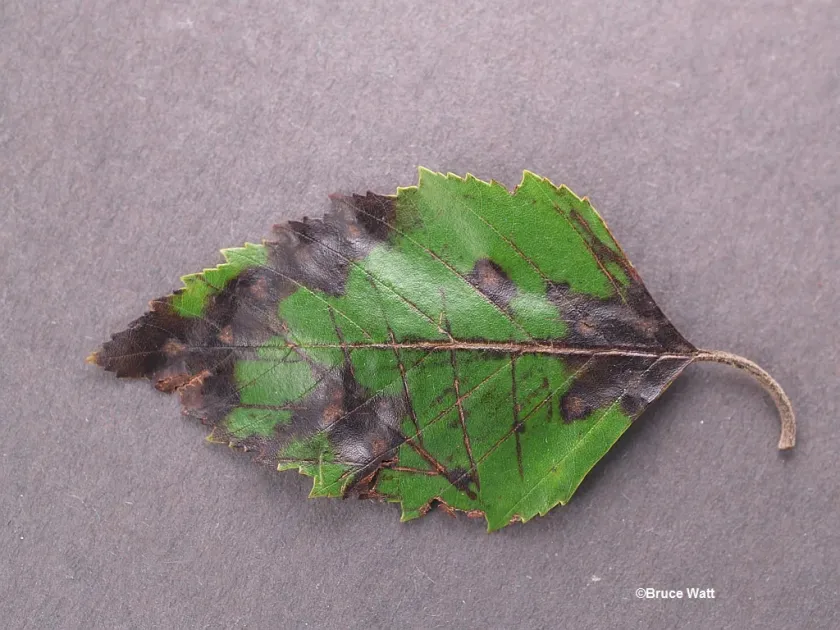
The first signs of the disease usually appear mid-summer. Small, irregular or circular spots emerge, ranging in color from reddish-brown to dark brown, often surrounded by a slightly darker border.
Small, raised pustules (acervuli) develop on the undersides of the leaves within these spots. These pustules represent the site of spore production and can sometimes appear as a creamy or whitish mass under high humidity.
As the disease progresses, these lesions merge, covering significant portions of the leaf surface. This causes the affected areas to necrotize and the leaf tissue to yellow and eventually die.
Premature leaf drop is a hallmark sign of severe infection. Trees may lose a large percentage of their foliage well before the natural autumn senescence, leading to a thin and sickly canopy appearance.
While the disease primarily affects leaves, extreme cases may show small lesions on young succulent shoots, though this is less common and usually occurs only under high infectious pressure.
Pathogen
The causative agent of this disease is the fungus Marssonina betulae (often referred to as Gloeosporium betulae). It is a pathogen belonging to the Ascomycota division that specifically targets species of the birch genus (Betula).
The fungus produces small fruiting bodies called acervuli under the epidermis of the host leaves. Once mature, these structures rupture the leaf surface, releasing masses of spores that are spread by rain splashes and wind currents.
It overwinters primarily in fallen leaves on the ground. In the spring, the sexual stage of the fungus (Drepanopeziza betulae) produces ascospores, which initiate the primary infection on newly developing foliage.
The pathogen is highly dependent on environmental moisture. It thrives in humid conditions and often manifests more aggressively in dense tree stands where airflow is restricted and leaves stay wet for longer durations.
As the fungal mycelium colonizes the leaf tissue, it disrupts normal plant functions. The infection typically progresses from the lower parts of the canopy upwards, reflecting the proximity to the primary source of inoculum on the forest floor.
Conditions for development
High humidity and consistent rainfall are the primary drivers of disease development. The fungus requires free moisture on leaf surfaces to allow its spores to germinate and infect the tissue.
Temperatures ranging from 18°C to 24°C (64°F–75°F) are optimal for the growth of Marssonina betulae. Consequently, warm and wet summers typically result in significant outbreaks.
Densely planted birch stands create a stagnant microclimate where humidity remains elevated for longer periods, facilitating rapid infection. Poor ventilation in the canopy prevents the foliage from drying out quickly after rain.
The accumulation of uncleaned leaf litter acts as the primary reservoir for the fungus. If leaves remain beneath the trees, the pathogen will successfully overwinter and cause re-infection the following year.
Trees weakened by other stresses, such as drought, nutrient deficiency, or insect infestations, exhibit less resistance to the fungus, making them more susceptible to the disease.
Why it matters
The primary harm is the premature loss of photosynthetic surface area. Without sufficient foliage, the tree cannot produce enough energy, which significantly hinders its growth and vigor.
Affected trees often enter the winter dormant period with insufficient carbohydrate reserves. This reduced energy reserve makes them more prone to winter damage and freeze-thaw injuries.
The aesthetic value of birch trees is drastically reduced, which is a major concern in urban landscaping and park management. A tree losing its leaves in July or August is no longer an effective landscape element.
Chronic annual infections lead to systemic weakening of the tree. Over time, this makes the birch highly vulnerable to opportunistic pathogens and wood-boring insects, potentially leading to tree decline.
In nursery settings, Brown Spot of Birch can severely delay the growth of young saplings, rendering them unfit for sale and resulting in economic losses for the grower.
Protection
Strict sanitation is the most effective prevention strategy. Collecting and destroying fallen leaves in the autumn removes the primary source of the fungus for the next season.
Proper spacing and canopy management are crucial. Thinning out branches to improve air circulation helps the leaves dry faster, which directly inhibits the ability of the fungus to infect new tissue.
Fungicide applications may be necessary in high-value landscapes or nurseries. Treatments should start early in the season, particularly during wet weather periods, using copper-based or systemic fungicides.
Maintaining tree health through proper fertilization and watering supports the tree's natural defense mechanisms, helping it withstand the fungal pressure.
- Removal and destruction of infected leaf litter.
- Canopy thinning to increase ventilation.
- Application of copper fungicides during spring and summer.
- Systemic fungicide treatments in severe cases.
- Monitoring trees during prolonged wet spells.
Discussion
No discussions yet — be the first.