
Lophodermium needle cast of rhododendron
Lophodermium schweinitzii
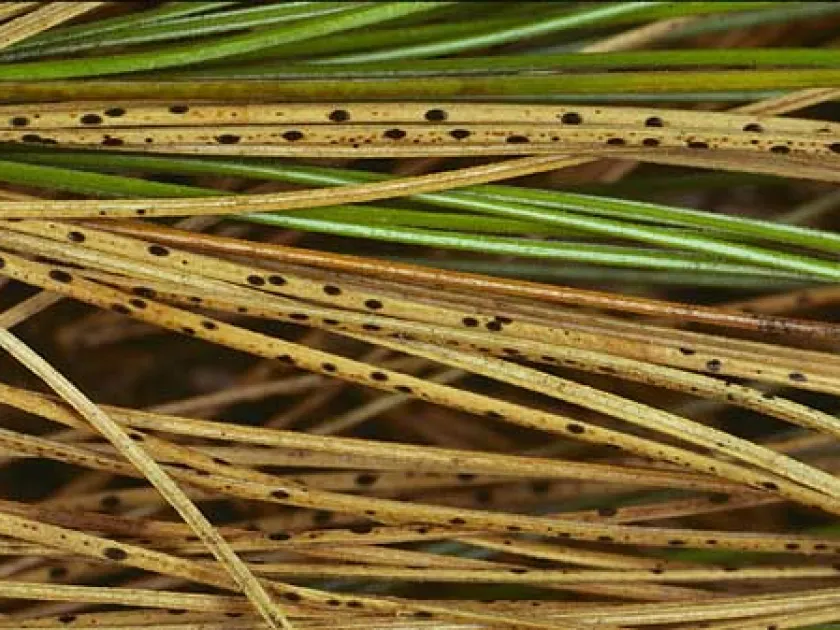
Description
Symptoms
The primary symptom of Lophodermium needle cast is the appearance of small, irregular brown or reddish-brown spots on the leaves. Often, these spots are surrounded by a distinct yellow chlorotic halo.
Over time, the center of the infected spots fades to a grayish or bleached color. In these areas, the black fruiting bodies of the fungus may become visible as tiny, pinhead-sized dots.
As the infection progresses, individual spots often coalesce, covering large portions of the leaf blade, which causes the entire leaf to wither and prematurely drop from the branch.
Affected plants often display a generally stunted appearance, with decreased vigor and a lack of the characteristic vibrant green luster expected in healthy rhododendron foliage.
In advanced stages, the foliage loss can be severe, leaving the plant with bare or thin branches, which significantly compromises its health and ornamental value.
Pathogen
The causative agent of this disease is the ascomycete fungus Lophodermium schweinitzii. It is a specialized pathogen that primarily targets evergreen plants within the Ericaceae family, most notably rhododendrons and azaleas.
The life cycle of the fungus involves the development of apothecia, which are small black fruiting bodies that emerge on necrotic leaf tissues. These structures produce spores that are disseminated by rain and wind to infect healthy foliage.
The pathogen typically invades host tissues through stomata or existing wounds. Once inside, the fungal mycelium colonizes the mesophyll, eventually leading to the death of the leaf cells and tissues.
The fungus survives the winter as mycelium within fallen leaves or on infected stems that remain attached to the plant, serving as a persistent source of inoculum for the following season.
This disease is classified as a necrotic leaf spot, which disrupts the plant's photosynthetic capacity and can cause significant foliage loss if not properly managed.
Conditions for development
High humidity and prolonged periods of wet weather are the most critical factors favoring the development and spread of this disease. Moisture on leaf surfaces is essential for spore germination.
Moderate temperatures, generally ranging from 15°C to 22°C (59°F to 72°F), provide the optimal environment for the fungus to colonize and damage the host plant tissues efficiently.
Poor air circulation, often caused by overcrowding or planting in sheltered, shaded areas without adequate wind flow, keeps the foliage wet for extended periods, facilitating infection.
Plants under stress from poor soil conditions, inadequate nutrition, or improper planting depth are significantly more susceptible to infection by Lophodermium species.
In nursery or greenhouse settings, overhead irrigation systems can create microclimates that promote the rapid movement of spores and the development of the disease across the plant population.
Why it matters
The primary impact of Lophodermium needle cast is the severe reduction of photosynthetic leaf area, which slows the plant’s growth and weakens its overall energy reserves.
Reduced vigor often leads to poor flower bud set, resulting in sparse or diminished flowering, which is a major concern for ornamental gardeners and growers of azaleas.
Infection compromises the plant's natural defenses, making it more prone to secondary infections by other opportunistic pathogens and increasing sensitivity to winter cold damage.
The aesthetic damage caused by leaf spotting and premature defoliation renders the plants unsuitable for landscape use and reduces their commercial value in nursery settings.
If left untreated, chronic infections can lead to the steady decline of the plant, eventual branch dieback, and in extreme cases, the total death of the specimen.
Protection
Rigorous sanitation is the most effective management strategy; this includes the prompt removal and destruction of all fallen leaves and infected plant debris to reduce the inoculum source.
Proper plant spacing and regular pruning are essential to improve air circulation within the canopy, ensuring that foliage dries quickly after rain and reducing the duration of leaf wetness.
Fungicidal applications, such as copper-based sprays or systemic triazole fungicides, are recommended as a preventive measure during periods of frequent rainfall and high infection risk.
Avoid overhead irrigation techniques whenever possible; prioritize ground-level or drip irrigation to keep the foliage dry and create an unfavorable environment for fungal spores.
Maintaining a healthy, stress-free plant environment through balanced fertilization and proper mulching supports the rhododendron's natural resistance and improves recovery from fungal threats.
Pathogens and affected parts
Affects crops · 1
Discussion
No discussions yet — be the first.