

Description
Symptoms
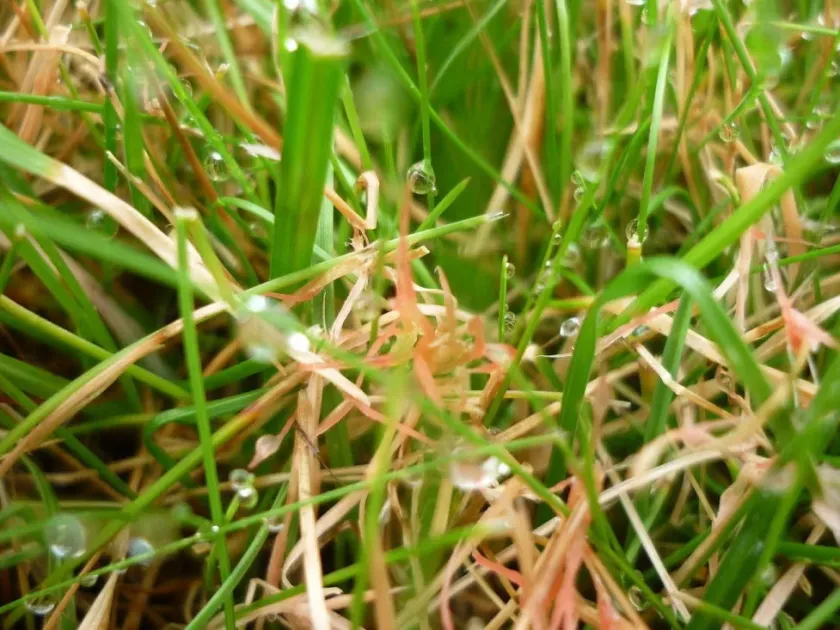
Pink patch manifests as irregular, diffuse patches of pink or orange-pink discolored grass appearing throughout the lawn.
Upon close inspection, you can observe a thin, light pink mycelium web covering the grass blades and sheaths, especially during high-humidity periods.
Affected areas show gradual yellowing of the foliage, eventually progressing to a brown, bleached color as the grass tissues die back.
Unlike other fungal diseases, pink patch does not produce distinct fruiting structures like sclerotia, making it look like a smooth, matted fungal cover.
In neglected lawns, these patches tend to merge over time, creating large, unsightly areas of damaged turf that lack vigor and color.
Pathogen
The causative agent of this disease is the basidiomycete fungus Limonomyces roseipellis, which specifically targets various turfgrass species.
This fungus survives as mycelium within the thatch layer and soil, allowing it to become active as soon as environmental conditions become favorable.
It acts as a parasite that utilizes the nutrients from the grass blades, leading to tissue degradation and inhibiting the plant's photosynthetic ability.
Spread of the pathogen occurs through the movement of infected plant debris, contaminated tools, water runoff, and even foot traffic across the lawn.
The biological cycle of the fungus is strictly dependent on moisture, which is necessary for the mycelium to spread from infected to healthy grass blades.
Conditions for development
The disease thrives in cool, wet weather, particularly when temperatures range between 15°C and 20°C (approx. 60–70°F) with frequent rain or high humidity.
Poor soil drainage and low-lying areas where water collects provide the moist environment required for rapid fungal development and colonization.
Inadequate air circulation caused by thick, overgrown turf or nearby dense vegetation keeps the canopy moist for longer durations, promoting infection.
Irrigation practices, such as watering late in the evening, prevent the grass from drying out overnight and significantly increase the risk of an outbreak.
Nutrient stress, especially a deficiency in nitrogen or potassium, can make turfgrasses more susceptible to the encroachment of the pathogen.
Why it matters
The primary concern with Pink patch is the loss of aesthetic quality, which is critical for lawns, sports fields, and ornamental landscapes.
Continued fungal activity weakens the root system and reduces the density of the turf, creating opportunities for invasive weeds to establish themselves.
If left untreated, the thinning of the lawn can become severe, requiring extensive overseeding or even full renovation of the damaged sections.
Plants affected by the fungus are more vulnerable to secondary stresses, including heat, drought, and attacks from other pests or diseases.
Economic damage is often linked to the need for chemical control, labor-intensive maintenance, and the potential loss of high-value turf installations.
Protection
Effective management begins with improving lawn cultural practices, such as increasing aeration to reduce soil compaction and improving drainage.
Maintaining a balanced fertility program is essential, as it helps the grass recover faster and improves its natural defense mechanisms against fungal attacks.
- Remove grass clippings after mowing to eliminate potential sources of fungal spores.
- Prune nearby trees and shrubs to allow more sunlight and better airflow across the turf.
- Water in the early morning to ensure the grass dries quickly during the day.
For severe infections, application of systemic fungicides labeled for lawn use can provide effective control and stop the spread of the mycelium.
Prevention involves selecting resistant grass varieties and ensuring proper spacing during initial planting to maintain a healthy, aerated sward.
Content graph
Connections · Pink patch
Most often together:
Marketplace
Products · 1
Community
Discussion
No discussions yet — be the first.