
Cherry rust
Leucotelium cerasi
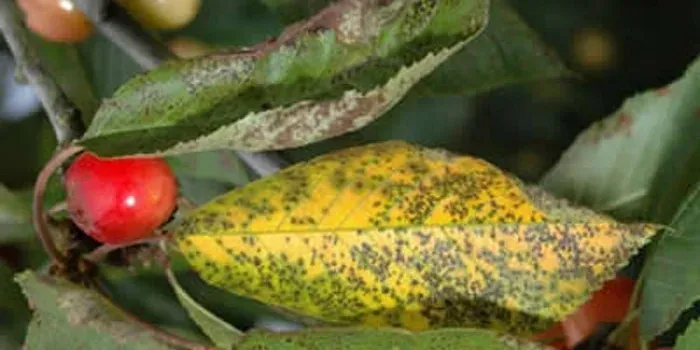
Description
Symptoms
The primary external sign of the disease is the appearance of characteristic yellowish-brown or rusty-colored spots on the upper side of the leaf blade.
Over time, raised orange or brown cushions form on the underside of the leaf at the infection sites, which are clusters of fungal spores.
With massive development of the disease, these spots may merge, covering a significant area of the leaf, leading to changes in natural color and shape.
Affected leaves lose their ability to perform photosynthesis, begin to deform and curl, which becomes noticeable by mid-summer.
In neglected cases, premature yellowing and mass defoliation occur, which significantly weakens the tree before it enters the winter period.
Pathogen
The causative agent of the disease is the specialized fungal pathogen Leucotelium cerasi (formerly known as Tranzschelia pruni-spinosae var. cerasi), which belongs to the Basidiomycota phylum.
It is an obligate parasite that undergoes a complex development cycle, primarily affecting stone fruit crops of the Prunus genus.
The infection persists as resting spores on fallen plant debris, from which primary infection of healthy tree tissues occurs in the spring.
During the growing season, the fungus spreads via urediniospores, which are easily carried by wind, raindrops, or insects to neighboring plants.
The fungus leads a parasitic lifestyle, feeding on the juices of leaf tissues, which disrupts metabolism and the physiological functions of the plant.
Conditions for development
The disease development is favored by humid and moderately warm weather, typical for the second half of summer in most climatic zones.
Abundant dew, fog, and frequent rains create ideal conditions for spore germination and rapid infection of new parts of the leaf canopy.
Dense tree crowns that hinder normal air circulation and foliage drying significantly accelerate the epiphytotic spread of the pathogen.
Insufficient maintenance of tree basins and the presence of uncleaned last year's foliage increase the infectious load in the orchard.
Periods of alternating hot, dry weather with sudden cold spells and rainfall can also provoke outbreaks in orchards with weakened immune systems.
Why it matters
Rust causes serious damage to yields, as premature defoliation deprives the tree of nutrients necessary for fruit maturation.
Disruption of sugar accumulation and other organic substances leads to a decline in taste and the commercial quality of the cherries.
Loss of the foliage canopy in the second half of summer negatively affects the formation of fruit buds for the following year's harvest.
Trees weakened by the disease become extremely vulnerable to low winter temperatures, which often leads to frost damage or branch mortality.
Prolonged chronic infection exhausts the tree, promoting secondary infections and significantly reducing the productive lifespan of the orchard.
Protection
The priority control measure is the thorough removal and destruction (burning or composting) of all fallen leaves in autumn to reduce the infection background.
It is necessary to carry out regular sanitary and structural pruning of the crown, ensuring free access of light and air to all branches.
An effective method is early spring treatment of trees and the soil beneath them with copper-based fungicides before bud break.
- Use of modern systemic fungicides during the growing season at the first signs of the disease.
- Adherence to agricultural practices: timely fertilization, weed control, and proper irrigation to boost the tree's natural immunity.
Application of contact fungicides for preventative purposes before the onset of weather conditions most favorable for fungal development.
Discussion
No discussions yet — be the first.