
Description
Symptoms
The initial symptom of infection is the yellowing of lower leaves, which gradually turn brown and wilt, eventually affecting the entire crown of the palm.
Necrotic areas appear on the stem, particularly near the base. These areas soften and often emit a strong, unpleasant smell characteristic of decay.
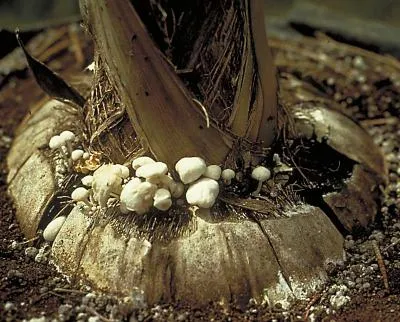
White fungal mycelium becomes visible on the stem surface, and during periods of high humidity, tiny, delicate fruiting bodies of the fungus may emerge.
Growth of the spear leaf (the youngest leaf) ceases, and the crown becomes thin, causing a significant loss of photosynthetic capacity.
As the rot progresses, fruit production is entirely halted, and any remaining immature nuts drop prematurely from the palms.
Pathogen
The disease is caused by the fungus Marasmiellus cocophilus, a basidiomycete responsible for significant destruction of coconut palm tissues.
This pathogen functions primarily as a saprophyte, but it can switch to a parasitic mode when the palm's vigor is compromised or under favorable conditions.
The life cycle involves the production of basidiospores, which are spread by wind and rain splashes to infect neighboring healthy trees.
The fungal mycelium invades the stem, breaking down structural tissues and disrupting the vascular system, which hinders the upward movement of water and nutrients.
The fungus is highly resilient, capable of surviving in dead plant matter, which allows it to persist in the plantation environment for extended periods.
Conditions for development
Lethal stem rot thrives in tropical regions where high temperatures and persistent humidity provide the ideal environment for fungal development.
Rainfall is a critical factor, as it facilitates the dispersal of spores and maintains the wet conditions necessary for the fungus to penetrate the palm.
Overcrowded plantations are more prone to outbreaks because the lack of air circulation creates a stagnant microclimate that traps moisture on the stems.
Wounds caused by harvesting tools or natural leaf fall provide entry points for the pathogen to establish itself within the palm stem.
Poor plantation hygiene, such as leaving infected logs or organic debris on the ground, significantly increases the risk of soil-borne transmission.
Why it matters
The disease is considered extremely destructive, as it inevitably leads to the death of the infected palm once the infection reaches the stem core.
Lethal stem rot can cause devastating economic impacts on large-scale coconut plantations by significantly reducing the total yield of copra.
Infected trees become structurally unstable, which increases the risk of trees falling, potentially endangering workers and destroying surrounding infrastructure.
Rapid spread of the fungus can lead to complete plantation failure, requiring long-term quarantine and total replanting efforts to restore productivity.
The difficulty of early diagnosis means that by the time visible symptoms appear, the internal damage is often irreversible.
Protection
The primary control measure involves the immediate eradication of symptomatic palms, including the complete removal and burning of the stem and root system.
Applying copper-based fungicides to the base of healthy trees can offer a protective barrier against the pathogen in at-risk areas.
Maintain proper spacing between palms to ensure maximum airflow, which reduces the moisture trapped near the stem surface.
Implement strict hygiene practices, such as sanitizing all harvesting tools with bleach after every use to prevent the mechanical transmission of spores.
- Regular monitoring of plantation health to catch symptoms early.
- Avoiding unnecessary injuries to the bark during farm operations.
- Removing debris to minimize potential fungal reservoirs on the plantation floor.
Pathogens and affected parts
Affects crops · 1
Discussion
No discussions yet — be the first.