
Description
Symptoms
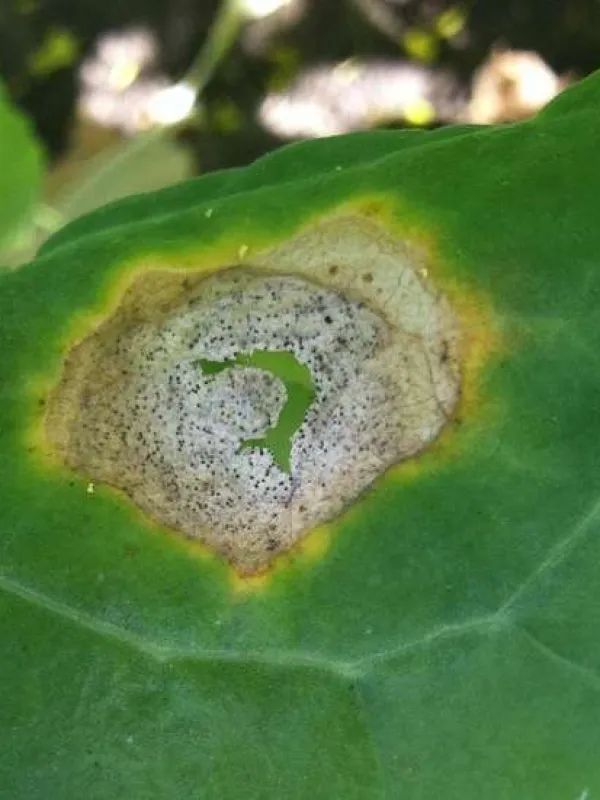
The primary symptom of Leptosphaeria infection is the development of distinct spots on leaves and stems. These spots often display a light, necrotic center with a darker brown or black border.
The most reliable sign of the disease is the appearance of small, black, pinhead-sized structures known as pycnidia scattered across the necrotic tissue within the spots.
When infecting hemp, the disease can manifest as basal stem rot or leaf spotting. Stem lesions may eventually lead to weakening, breakage, and reduced fiber quality in the harvested crop.
Infected leaves often turn yellow, curl at the margins, and may drop prematurely. Under conditions of high humidity, a sparse grey fungal mycelium might become visible around the spots.
Symptom expression can vary depending on the host's resistance level and the specific fungal species involved, but the combination of necrosis and dark pycnidia remains the hallmark of the infection.
Pathogen
The disease is caused by various species of the fungus Leptosphaeria, which belong to the Ascomycota phylum. These pathogens possess a complex life cycle involving both sexual (ascospore) and asexual (conidial) reproductive stages.
These fungi are highly persistent and capable of surviving for long periods in soil, crop residues, and seeds. Different species exhibit host specificity, affecting crops ranging from brassicas to Cannabis sativa (hemp).
Infection is maintained in the form of pycnidia or perithecia on overwintered stems. In the spring, under favorable conditions, the fungus releases spores that are spread by wind, rain splashes, and physical contact with tools or insects.
As facultative parasites, they can shift between living tissue infection and saprophytic growth on decaying plant matter, making them difficult to eradicate from agricultural ecosystems.
The fungus typically invades the host plant through stomata or small wounds caused by mechanical damage or insect feeding, establishing itself within the plant's vascular or cellular systems.
Conditions for development
Leptosphaeria development is highly favored by cool to moderate temperatures and high moisture. The optimal range for spore germination and infection is between +15°C and +22°C.
Prolonged wet weather, including frequent rainfall and high relative humidity (above 85%), significantly accelerates the dispersal and colonization of the host by the fungus.
Dense crop canopies that limit air circulation create a microclimate ideal for the pathogen. Overcrowded fields often experience higher rates of infection due to this trapped moisture.
Poor agronomic practices, such as ignoring crop rotation and planting susceptible varieties in consecutive seasons, allow the pathogen population to build up significantly in the field soil.
Plants weakened by environmental stress, such as frost or drought, or those suffering from nutrient imbalances, are significantly more susceptible to Leptosphaeria outbreaks compared to vigorous, healthy plants.
Why it matters
The economic impact of the disease is substantial, resulting in reduced biomass production and significant degradation of crop quality. It interferes with photosynthesis by damaging leaf tissue.
For industrial hemp, the pathogen causes structural damage to the stems, directly reducing the strength, durability, and commercial value of the bast fibers produced from the crop.
Massive outbreaks can lead to premature leaf drop, which stunts the plant's overall growth and limits its ability to accumulate necessary nutrients, leading to poor yields at harvest.
The fungus produces secondary metabolites that act as toxins, suppressing the plant's natural immune system and physiological functions, further weakening the host and facilitating secondary infections.
In severe cases, entire fields can suffer substantial yield losses, especially if the weather remains favorable for the pathogen during critical stages of plant growth and development.
Protection
Effective management begins with strict crop rotation, ensuring a break of at least three to four years between susceptible crops to allow pathogen populations in the soil to decline.
Cultural practices such as deep plowing and thorough incorporation of crop residues into the soil are vital to accelerate the decomposition of infected tissues and remove overwintering sites.
The use of high-quality, certified seeds is essential, and seed treatment with systemic fungicides can provide crucial protection for seedlings during the early, most vulnerable stages of growth.
Foliar application of fungicides during the growing season is recommended if weather conditions favor the disease. Alternating between different chemical classes is necessary to manage resistance.
- Planting resistant or tolerant cultivars.
- Managing plant density to improve air movement.
- Eliminating weed hosts that harbor the pathogen.
- Providing balanced soil fertility to minimize plant stress.
Pathogens and affected parts
Affects crops · 1
Discussion
No discussions yet — be the first.