
Brown spot needle blight of pine
Lecanosticta acicola
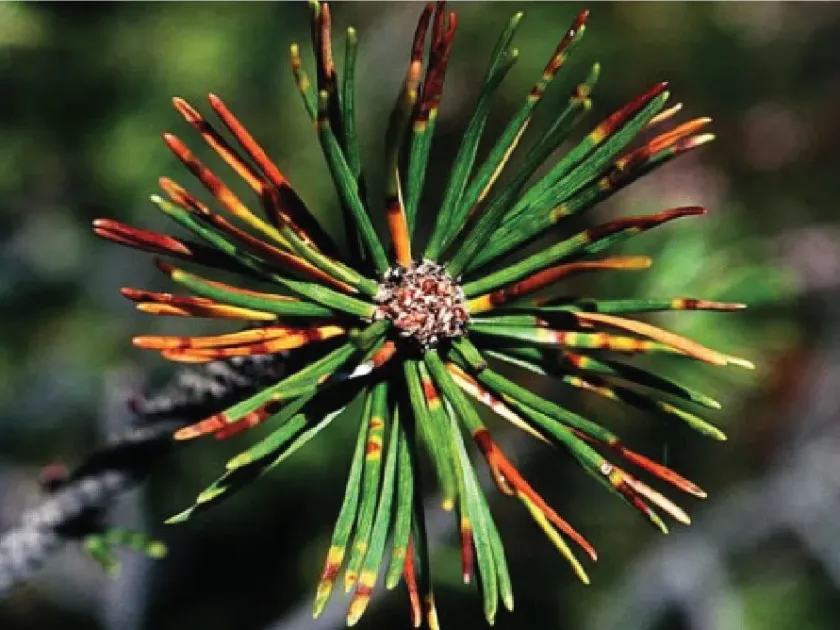
Description
Symptoms
Early symptoms appear as small, chlorotic spots or bands on the needles, which later develop into distinct reddish-brown lesions.
As the infection progresses, the lesions often turn grayish or brown with a dark margin, frequently causing the tip of the needle to die off.
Tiny black fruiting bodies, known as acervuli, emerge through the epidermis of the needles, which are visible to the naked eye upon closer inspection.
Severely infected needles may turn entirely brown, curl, and drop prematurely, leading to thinning of the tree's crown and reduced foliage.
Resin exudation can sometimes be observed on the needles or at the base of the fascicles, which is a common stress response to the infection.
Pathogen
The causative agent of this disease is the fungus Lecanosticta acicola, a pathogen that primarily targets various species of pine trees globally.
The fungus produces conidia, which act as the primary spores for dispersal and infection during periods of rainfall and high humidity.
Lecanosticta acicola persists as mycelium in infected needles and branches, allowing it to survive through the winter in fallen plant debris.
The pathogen life cycle is complex, involving periods of dormancy followed by rapid reproduction when temperatures and moisture levels become favorable.
Once spores land on susceptible needles, they penetrate the plant tissues, leading to the formation of characteristic necrotic spots and lesions.
Conditions for development
The disease thrives in warm and wet environments, with prolonged periods of leaf wetness being essential for successful spore germination.
High humidity and mild temperatures typical of spring and early autumn promote the rapid spread of the pathogen within the canopy.
Densely planted pine stands often suffer more severely because poor air circulation prevents the needles from drying out after rainfall.
Weakened trees, whether due to poor soil fertility, drought stress, or root damage, are significantly more susceptible to successful colonization by the fungus.
The presence of abundant inoculum from previous years' fallen needles provides a constant source of infection for new growth.
Why it matters
Brown spot needle blight significantly impairs the photosynthetic capacity of pine trees by causing premature defoliation.
Chronic infections lead to stunted tree growth, reduced wood volume, and a substantial decrease in the aesthetic value of ornamental and landscape pines.
If left unmanaged, repeated defoliation can cause severe stress, making trees vulnerable to secondary attacks by insects or other opportunistic pathogens.
In nursery settings, the disease causes significant economic losses by rendering stock unsellable and requiring intensive quarantine or destruction.
Large-scale outbreaks can severely impact forest productivity and alter the long-term ecological balance of pine-dominated ecosystems.
Protection
Sanitation is the cornerstone of control: it involves the systematic removal and destruction of all fallen needles and infected branches.
Proper spacing during planting ensures good airflow, which is critical for reducing humidity levels around the needles and inhibiting fungal growth.
Chemical control utilizing copper-based fungicides or systemic treatments like mancozeb can be effective when applied according to the disease cycle.
Integrated Pest Management (IPM) practices, including proper fertilization and irrigation, help maintain tree vigor and improve resistance to infections.
Regular inspections, particularly during wet seasons, are essential for the early detection and timely application of protective treatments.
Discussion
No discussions yet — be the first.