
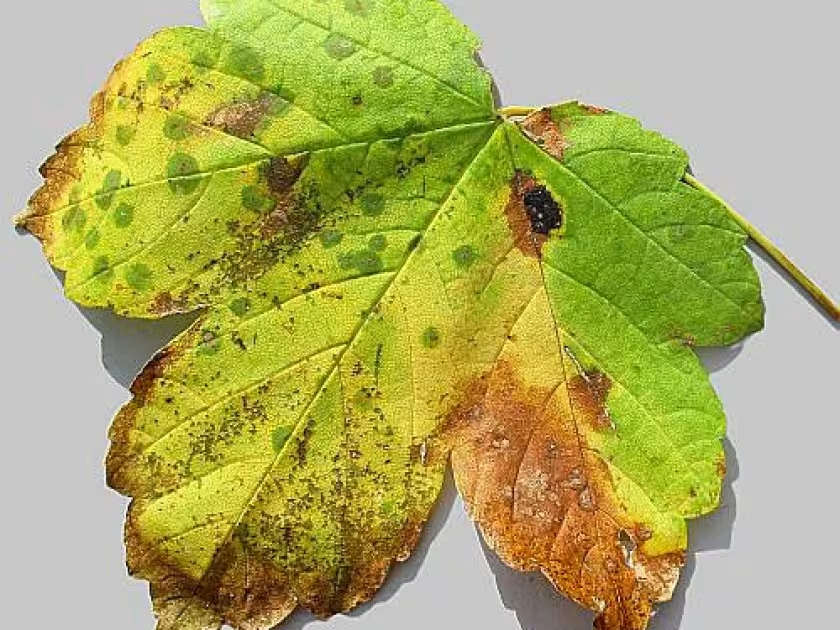
Description
Symptoms
The primary symptom of the disease is the appearance of distinct spots on maize leaves. Initial signs are typically observed on the lower leaves during the active growth phase of the plants.
These spots usually appear as round or oval lesions with a light-colored center and a darker margin. As the infection progresses, the spots may coalesce, covering larger areas of the leaf surface.
Under high humidity, tiny black dots known as pycnidia can be seen in the center of the necrotic spots. These structures serve as a key diagnostic indicator to distinguish Hyalothyridium from other leaf diseases.
Severe infection leads to premature drying and death of the leaves, which significantly weakens the plant. The necrotic areas expand over time, reducing the photosynthetic efficiency of the entire plant.
If the infection spreads to the husks, it can negatively impact the development and quality of the corn ears. Field scouting allows for the early detection and management of disease outbreaks.
Pathogen
The causal agent of Hyalothyridium leaf spot is the fungus Astromella maydis, which belongs to the group of imperfect fungi. This pathogen primarily attacks maize tissues, utilizing them for its nutrition and reproductive cycle.
The life cycle of the fungus involves the formation of pycnidia, where conidia are produced to spread the infection during the growing season. The pathogen shows remarkable persistence, surviving in crop residues over long periods.
The fungus colonizes leaf tissues by entering through stomata or mechanical injuries. The mycelium destroys chlorophyll-containing cells, leading to the formation of necrotic spots that characterize the infection.
Laboratory diagnosis through microscopic examination is essential to identify the fungal fruiting bodies, ensuring accurate disease confirmation. Understanding the biology of the pathogen assists agronomists in planning effective management strategies.
This fungus is well-adapted to temperate climates where maize is a staple crop. Regular crop monitoring is a vital step in maintaining the health and productivity of the fields.
Conditions for development
Moist and moderately warm weather conditions are required for the rapid spread of Hyalothyridium leaf spot. Temperatures between 20 and 25 degrees Celsius are optimal for the pathogen's development.
Prolonged rainfall and high relative humidity facilitate the dispersal of conidia by wind and water splashes. Under these conditions, the incubation period shortens, leading to explosive spread within the crop.
Dense crop stands with poor air circulation create a microclimate that keeps leaves wet for longer periods, significantly increasing the risk of infection. High moisture levels on leaf surfaces are a major driver of the disease.
High levels of crop debris on the soil surface pose a significant risk, as the fungus overwinters in these residues. Conservation tillage systems may require extra attention to manage this disease pressure.
The most vulnerable phase for maize is during the rapid vegetative growth period. Agronomists must prioritize field inspections during these high-risk windows.
Why it matters
The primary damage results from a reduction in the functional leaf area, which hinders photosynthesis. Reduced photosynthetic activity slows down the plant's growth and limits energy for grain development.
Premature leaf senescence disrupts grain filling, which decreases the weight of 1000 kernels and overall yield. Consequently, the farm productivity and final harvest quantity are significantly affected.
The infection exhausts the plant, making it more susceptible to other diseases and pests. Affected maize plants are also more prone to lodging, which complicates the mechanical harvesting process.
Economic losses can be substantial in cases of severe outbreaks. The market quality of the harvested grain may also be reduced, limiting its value and potential uses.
Seeds derived from heavily diseased plants may exhibit poor germination energy, making them unsuitable for reuse in the next planting season.
Protection
Crop rotation is the most effective cultural practice to prevent the accumulation of the pathogen in the soil. A rotation interval of several years is recommended to break the infection cycle.
Proper management of crop residues, such as deep plowing, helps accelerate the decomposition of debris where the fungus overwinters. This reduces the primary inoculum source significantly.
Selecting hybrids with known resistance to Hyalothyridium is a key preventative measure. Agronomists should consult local variety trials to choose the most resilient options for their specific region.
Systemic fungicides should be applied if the disease threshold is reached or if environmental conditions favor widespread infection. Proper timing is crucial for effective chemical control.
- Timely application of fungicides during the V6-V8 growth stages.
- Balanced nutrient management, particularly adequate potassium levels.
- Effective removal of maize volunteer plants that harbor the pathogen.
Pathogens and affected parts
Affects crops · 1
Discussion
No discussions yet — be the first.