
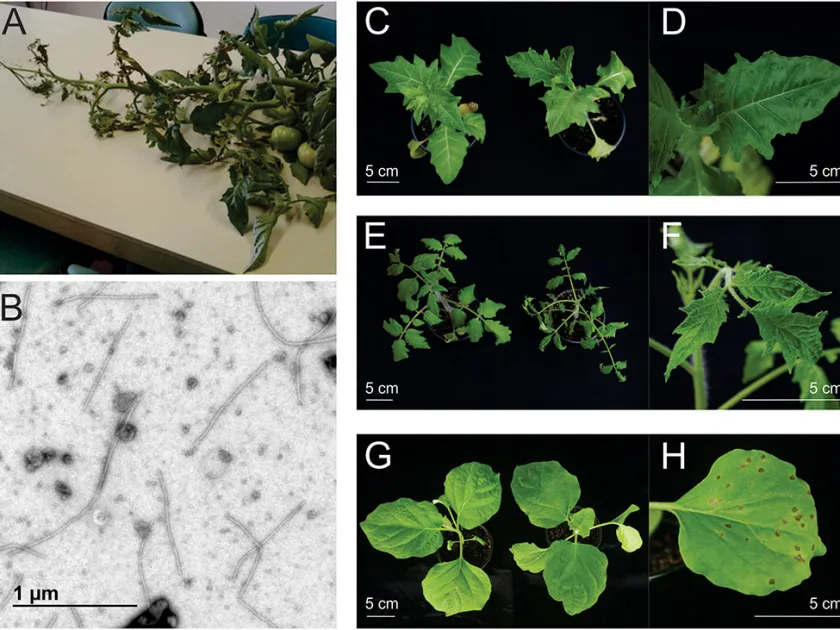
Description
Symptoms
The initial signs of infection are typically identified by a mosaic pattern on the leaves. This is characterized by intermingled patches of light green, yellow, and dark green tissue.
Pepper plants often exhibit noticeable leaf deformation. Leaves may become crinkled, puckered, or smaller than normal, with wavy margins that are a hallmark of this viral attack.
Infected plants show stunted growth with significantly shortened internodes. This results in a bushy, compact habit that is distinctly different from healthy, vigorous specimens.
Fruit symptoms include mottling, chlorotic spots, and general deformation. Fruits are often undersized, which severely impacts their marketability and overall crop yield.
- Mottled or mosaic leaf patterns
- Leaf curling and puckering
- Stunted plant growth
- Reduced flower set and fruit drop
- Poor fruit quality and discoloration
Pathogen
The Henbane mosaic disease is caused by the Henbane mosaic virus (HMV), a member of the Potyvirus genus. It is a significant pathogen that primarily targets plants within the Solanaceae family.
The virus consists of flexuous rod-shaped particles containing a single-stranded RNA genome. It exhibits high environmental stability, allowing it to survive in the roots of perennial weed hosts over winter.
As a systemic pathogen, it spreads throughout the vascular system of the host plant. Once infection is established, the virus hijacks cellular machinery to replicate, leading to metabolic decline.
The virus has a wide host range, which is critical for its survival in agricultural environments. Wild species such as Hyoscyamus niger (black henbane) act as essential reservoirs for the virus.
Transmission occurs primarily through aphid vectors in a non-persistent manner, meaning insects can transmit the virus shortly after feeding on an infected plant.
Conditions for development
The spread of Henbane mosaic is heavily reliant on aphid population density. Warm temperatures and moderate humidity promote rapid aphid multiplication, leading to increased transmission rates.
Agricultural practices play a major role in disease dynamics. Fields located near wild habitats with abundant solanaceous weeds are at a much higher risk of early-season infection.
Dense planting configurations can facilitate the spread of the virus. When leaves overlap, it allows for easier transmission of the pathogen via physical contact and insect movement between plants.
Greenhouse environments often provide perfect conditions for the virus. Without natural aphid predators, the population of vectors can explode, leading to a quick outbreak across the crop.
Mechanical handling during pruning or harvesting acts as a major secondary transmission route, especially if tools are shared between infected and healthy sections of the field.
Why it matters
The primary harm caused by HMV is a significant reduction in marketable yield. Plants affected by the virus cannot produce high-quality fruits, leading to substantial economic losses.
Deformed and discolored fruits often lead to high waste percentages. Even if fruits are harvested, they often fail to meet the standards required for fresh markets or commercial processing.
Viral infection leaves the pepper plants in a weakened physiological state. This makes them highly susceptible to secondary infections by bacteria and fungi, which can lead to plant death.
Long-term soil contamination via infected plant residues can complicate future farming efforts on the same plot, particularly for farmers who rely heavily on solanaceous crops.
Managing the disease is costly and often involves extensive pesticide use for aphid control, which can negatively impact the farm's ecological balance and operational budget.
Protection
Effective control starts with strict aphid management. Utilizing systemic insecticides and monitoring for insect activity can help break the cycle of viral transmission.
Sanitation is paramount; farmers should focus on removing solanaceous weeds (like henbane or nightshade) from the field perimeters to eliminate the primary viral reservoirs.
Implement strict hygiene protocols for staff and equipment. Tools used for pruning or management should be sterilized frequently to prevent mechanical transmission of the virus.
Early identification and culling are crucial. Once symptoms appear, infected plants should be carefully removed and destroyed to limit the spread to neighboring healthy plants.
Using certified disease-free seeds and selecting resistant pepper hybrids are the most sustainable methods for minimizing the risk of Henbane mosaic in professional agriculture.
Pathogens and affected parts
Affects crops · 1
Discussion
No discussions yet — be the first.