
Poison pie
Hebeloma crustuliniforme
Description
Pathogen
Poison pie (scientifically known as Hebeloma crustuliniforme) is a basidiomycete fungus in the Hymenogastraceae family. While often recognized as a mycorrhizal associate in forest ecosystems, it can act as a nuisance in tree nursery environments.
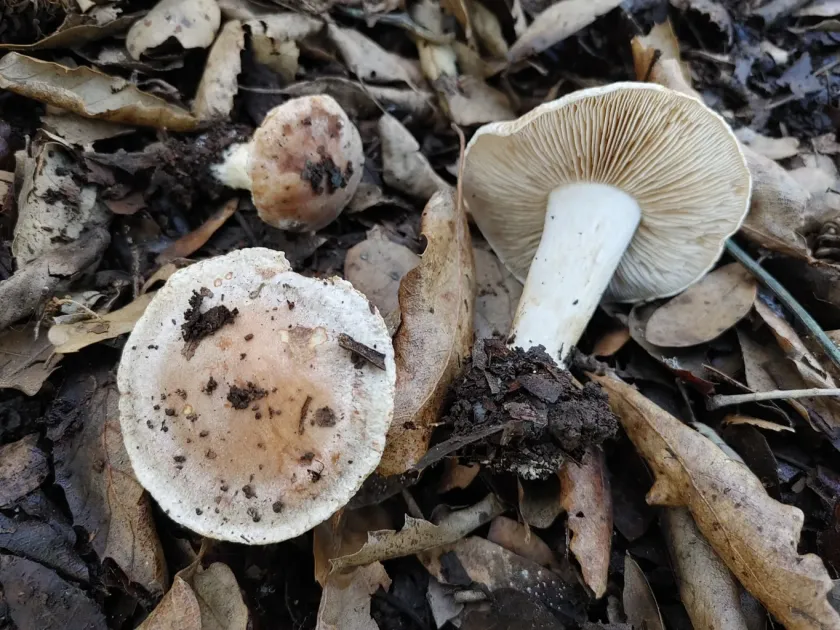
The fungus develops a widespread mycelial network that colonizes the soil and often attaches to the root systems of young seedlings. Its appearance is noted by a convex, tan-colored cap with a darker center and weeping gills.
The name "poison pie" refers to its inedibility and the presence of alkaloids. In forest pathology, it is studied for its ability to dominate soil substrates where moisture is abundant.
Reproduction primarily occurs through spores, which are spread by wind or rain splash. Once established in the soil, the mycelium can persist for several years, even in the absence of a host plant.
Biological studies show that this species is a highly adaptable saprotroph and mycorrhizal fungus, allowing it to survive in diverse soil conditions ranging from disturbed sites to natural forest floors.
Conditions for development
High moisture levels are critical for the growth of Hebeloma crustuliniforme. It thrives in damp environments, particularly in heavy soils that retain water well.
The ideal temperature for the development of fruiting bodies ranges from 15 to 22 degrees Celsius, typically occurring during late summer and autumn months.
Excessive organic matter, such as uncomposted woody debris or rich manure, provides a nutrient-dense substrate that encourages the rapid expansion of mycelial mats.
Dense vegetation or crowded nursery trays create a stagnant microclimate with limited airflow, which promotes the growth and spread of the fungus.
Soil pH plays a significant role; the fungus is frequently found in neutral to slightly acidic soils, often colonizing lands that have been recently reclaimed or disturbed.
Why it matters
The fungus can create dense physical barriers in the soil around seedling roots, which restricts the uptake of water and essential mineral nutrients.
Competition for nitrogen between the fungus and young tree roots often leads to stunted growth, resulting in smaller and less vigorous nursery stock.
The accumulation of fungal metabolites in the rhizosphere can negatively impact root hair health, making seedlings more susceptible to transplant shock.
By crowding out beneficial mycorrhizal species, it can disrupt the natural balance required for the optimal establishment of young plants.
In severe cases, the presence of these fungal mats contributes to reduced uniformity in crop development, increasing labor costs during sorting and grading.
Protection
Cultural control is the most effective approach; this includes maintaining well-draining soil and avoiding the application of partially decomposed organic amendments.
Implementing strict sanitation protocols in nursery beds is essential to prevent the buildup of fungal spores and established mycelial colonies.
Proper crop rotation practices help break the life cycle of soil-borne fungi, ensuring that the same area is not continuously subjected to the same species.
Chemical control with approved fungicides may be necessary in extreme cases, though their application should be carefully timed to avoid harming beneficial soil microbes.
The use of biological control agents, such as beneficial Trichoderma species, can help manage Hebeloma populations by competing for nutrients and space in the rhizosphere.
Discussion
No discussions yet — be the first.