
Description
Symptoms
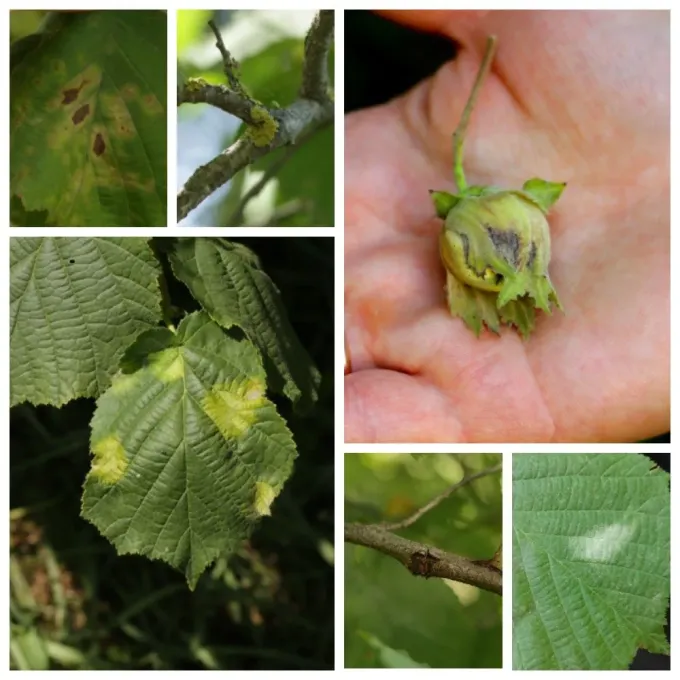
The most distinctive sign of the disease is the mosaic-like pattern on the leaves. This manifests as irregular patches of light green, yellow, or cream-colored tissue that contrast sharply with the normal dark green leaf blade.
In addition to discoloration, leaves often exhibit deformities such as crinkling, cupping, or asymmetrical growth. The structural integrity of the leaf is compromised, often leading to a reduction in its total surface area.
General growth vigor is significantly reduced in infected plants. Internodes tend to become shorter, and the overall canopy develops a stunted, sparse appearance, which clearly distinguishes diseased trees from their healthy neighbors.
Severe infections may lead to premature leaf drop, particularly during periods of high environmental stress. This early defoliation leaves the plant vulnerable and severely limits its ability to accumulate reserves for the following season.
- Mottled or mosaic discoloration on leaves.
- Leaf distortion and curling.
- Stunted shoot growth and shortened internodes.
- Reduced plant vigor and overall crown thinning.
- Premature yellowing and leaf abscission.
Pathogen
Hazelnut mosaic is a systemic viral disease caused by the Hazelnut mosaic virus. It is an obligate parasite that colonizes the vascular tissues of the host plant, effectively disrupting the plant's metabolic and physiological functions.
The virus primarily spreads through vegetative propagation. Using infected scions, suckers, or seedlings for planting is the most common way the disease is introduced into new orchards or nurseries.
Transmission can also occur mechanically during routine orchard operations. If pruning tools are used on infected trees and then applied to healthy ones without proper sanitization, the virus can easily enter through fresh pruning wounds.
The biology of the pathogen makes it difficult to manage, as it remains latent in the plant tissue for long periods. Once a hazelnut tree is infected, the virus spreads throughout its entire system, making complete eradication impossible.
Hazelnut mosaic virus is known for its ability to affect various species within the Corylus genus. This wide host range allows the virus to persist in wild hazelnut populations near cultivated orchards, acting as a constant reservoir for infection.
Conditions for development
The development of Hazelnut mosaic is heavily influenced by the initial health status of the nursery stock. Planting infected material under stress-prone conditions, such as poor soil or drought, often results in rapid symptom progression.
Environmental conditions play a role in how clearly symptoms are expressed. Cooler temperatures during early spring or autumn typically make the mosaic patterns more prominent, whereas high summer temperatures may mask the symptoms.
Insect vectors, including aphids and eriophyid mites, facilitate the spread of the virus within the orchard. These pests acquire the virus while feeding on infected plants and transmit it to healthy ones during their feeding cycles.
Orchard hygiene is a critical environmental factor. In high-humidity environments, sap flow is more active, meaning that if tools are not disinfected during the pruning season, the viral particles are easily transferred to healthy wood.
The presence of nearby wild shrubs or abandoned hazelnut thickets can create a microclimate where the virus thrives. Insects migrating from these reservoirs to the main orchard are often the primary cause of sudden disease outbreaks.
Why it matters
The economic impact of Hazelnut mosaic is primarily driven by reduced yields. Because the virus interferes with photosynthesis, the tree lacks the necessary energy to produce large, healthy nuts, leading to poor crop quality and size.
Infected trees often exhibit diminished resilience to secondary infections. Weakened by the virus, the hazelnut plant becomes more susceptible to opportunistic fungal and bacterial pathogens, which further degrade its health.
Marketability is negatively affected as the nuts produced by infected trees are often malformed, underweight, or nutritionally inferior. This decreases the overall value of the orchard's output and limits the producer's profitability.
Long-term harm involves the gradual decline of the tree's structural integrity. Over several years, limbs may die back, and the overall life expectancy of the hazelnut bush is significantly shortened, forcing early removal.
The loss of capital investment is significant for commercial growers. When a large percentage of trees becomes infected, the costs associated with clearing the land, purchasing new seedlings, and waiting for them to reach maturity are substantial.
Protection
The first line of defense is the rigorous selection of disease-free, certified nursery stock. Purchasing plants from reputable sources that perform routine viral testing is the most effective way to prevent the disease from entering an orchard.
Maintaining strict sanitation protocols during pruning is essential. All cutting tools must be disinfected after every single tree to eliminate the risk of mechanical transmission of the virus.
Effective pest management is crucial. By keeping populations of aphids and mites under control with targeted insecticides or acaricides, growers can significantly reduce the risk of transmission via insect vectors.
Early identification and removal of symptomatic trees are vital. If a plant shows signs of mosaic, it should be rogued out and burned, including the root system, to prevent it from serving as a source of further infection for the rest of the orchard.
Promoting general tree vigor through balanced fertilization and proper irrigation helps the hazelnut trees maintain a more robust internal defense. While there is no cure, well-managed trees often show delayed symptom development compared to neglected ones.
Pathogens and affected parts
Affects crops · 1
Discussion
No discussions yet — be the first.