
Apple cluster cup rust
Gymnosporangium clavariiforme
Description
Symptoms
The first symptoms on apple trees appear in late spring or early summer as small, yellow-orange spots on the upper surface of the leaves. These spots eventually develop tiny black dots known as pycnia.
As the infection progresses, aecia develop on the undersides of these spots. These look like small, cone-shaped or tubular growths that eventually split open, creating a lattice or "cluster cup" appearance.
In severe infections, the fungus can spread to the leaf stems and succulent shoots of the current season. This causes significant deformation, curling, and stunted growth of the affected tissue.
Severely infected leaves often turn yellow and fall prematurely from the tree, which impairs the tree's ability to produce energy through photosynthesis during the critical growth phase.
The bright, rusty appearance of the spore clusters makes this disease very easy to identify visually when walking through the orchard during the active infection period.
Pathogen
The causal agent of this disease is the heteroecious basidiomycete fungus Gymnosporangium clavariiforme. To complete its complex biological life cycle, the fungus requires two alternate hosts: trees of the Rosaceae family, such as apples, and coniferous shrubs, particularly common juniper.
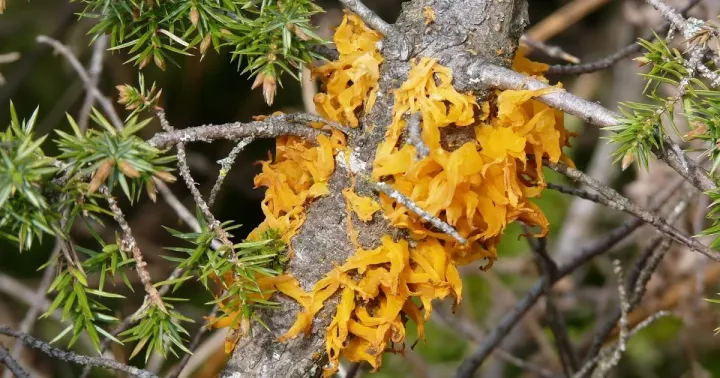
The fungus overwinters in the woody tissues of the juniper host, causing characteristic swellings and deformations. In the spring, after heavy rains, these swellings produce gelatinous orange spore masses known as telia, which release basidiospores.
These basidiospores are wind-dispersed to nearby apple trees, where they infect the leaves, petioles, and young shoots. This leads to the formation of pycnia and later, aecia on the foliage of the apple host.
The pathogen is strictly dependent on the availability of its alternate host to survive. Without the presence of juniper, the cycle is interrupted, making the spread of the disease significantly more difficult.
The fungus is highly specialized, and its biological strategy revolves around alternating between the evergreen host for overwintering and the fruit tree host for vegetative reproduction during the spring and summer months.
Conditions for development
The presence of juniper bushes within a radius of up to 500 meters is the primary factor for disease development. The closer the juniper, the higher the risk of severe infection.
High humidity and consistent rainfall in the spring are essential for the germination of basidiospores. Wet weather provides the necessary moisture for the spores to land and infect the apple tissues.
Temperatures between 15°C and 20°C (approx. 59-68°F) are considered ideal for the rapid development of the fungus once the spores have reached the host plant.
Poor orchard sanitation, specifically lack of pruning, leads to dense canopies. These dense areas trap moisture and prevent sunlight penetration, creating a perfect microclimate for fungal infection.
Extended periods of dew or morning fog also play a crucial role in maintaining the viability of spores on the leaf surface, significantly increasing the probability of successful colonization.
Why it matters
The disease drastically reduces the effective photosynthetic area of the apple tree. This limitation on carbohydrate production weakens the tree’s overall vigor and limits its growth potential.
Fruit set is negatively impacted, leading to smaller, lower-quality apples that may drop early. This directly reduces the commercial yield and value of the crop.
Consistent annual infection depletes the energy reserves of the tree, making it much more susceptible to frost damage during winter months and secondary attacks by other pests or pathogens.
Management costs increase significantly due to the necessity of frequent fungicide applications to protect the orchard and maintain acceptable produce standards.
The cumulative stress of the disease can lead to branch dieback or, in young or sensitive cultivars, the potential decline and eventual death of the entire tree.
Protection
The most effective long-term control method is to remove juniper trees from the vicinity of the apple orchard. Breaking the link between hosts effectively stops the cycle.
Sanitation pruning is essential; all infected branches of apple trees should be removed and destroyed to reduce the inoculum level for the following season.
Preventative applications of copper-based fungicides in the early spring, before bud break, provide a protective barrier against initial spore infections.
During the growing season, if symptoms are detected, the use of systemic fungicides, such as triazoles or strobilurins, can help inhibit further disease progression.
- Regular canopy thinning to improve airflow and light.
- Monitoring both apple trees and junipers for signs of rust.
- Improving tree health through proper fertilization and irrigation.
- Collecting and destroying fallen leaves in autumn to reduce overwintering spores.
Discussion
No discussions yet — be the first.