
Description
Symptoms
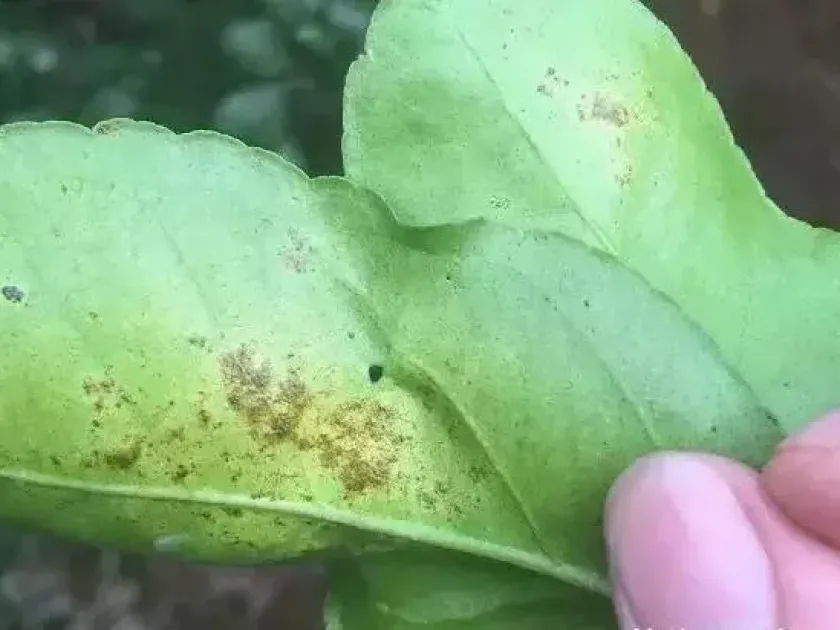
The first symptoms of the disease appear as small yellow-green spots on the upper side of the leaf, which gradually darken as the fungal infection progresses.
On the underside of the leaf, characteristic blister-like eruptions develop, which have an oily or greasy texture and a brown to black coloration.
Severe infestations lead to premature leaf yellowing and heavy leaf drop, which significantly impacts the photosynthetic capacity and overall health of the tree.
Older leaves are typically more susceptible to the infection, exhibiting larger and more defined greasy lesions compared to younger foliage on the same branch.
If left untreated, the cumulative loss of foliage results in tree decline, reduced shoot growth, and a noticeable drop in annual fruit production.
Pathogen
The causative agent of this disease is the ascomycete fungus Amycosphaerella africana, which thrives on various species of citrus plants worldwide.
The fungal mycelium penetrates leaf tissues through stomata, initiating colonization that leads to the development of necrotic spots and tissue hyperplasia.
The pathogen completes its life cycle by producing pseudothecia within the fallen leaves, which act as the primary source of inoculum for subsequent infection cycles.
Conidia and ascospores are disseminated primarily by rainfall splashes and wind currents, making the spread of the disease highly dependent on seasonal weather patterns.
Biologically, the fungus is adapted to survive and replicate efficiently in the humid and warm environments characteristic of major citrus-growing regions.
Conditions for development
High relative humidity and frequent rainfall are the most critical environmental factors that facilitate spore germination and infection establishment.
Warm temperatures, generally ranging from 20 to 28 degrees Celsius, provide the ideal physiological environment for the rapid development of the pathogen.
Dense canopy architecture prevents effective airflow, maintaining a humid microclimate inside the tree that significantly promotes the progress of the infection.
Neglecting to remove fallen leaf debris from the orchard floor allows for the accumulation of fungal structures, which increases the infection pressure in the following seasons.
Poor orchard hygiene and inadequate pruning are significant contributors to the increased severity and rapid spread of greasy spot disease throughout the canopy.
Why it matters
The primary economic harm is caused by premature defoliation, which severely drains the tree's energy reserves and impairs its ability to support high-quality fruit yields.
Stressed trees with reduced leaf area are prone to secondary infections and exhibit a weakened resilience against abiotic stresses, such as cold or drought conditions.
Lower fruit weight, smaller size, and reduced commercial quality are common direct consequences of heavy greasy spot infestation in citrus orchards.
In nursery settings, the disease is particularly harmful as it compromises the vigor and survivability of young trees, leading to high rejection rates before planting.
Continued infection without management practices leads to long-term decline, requiring significant investment in tree rehabilitation or replanting of weakened blocks.
Protection
The most effective management strategy involves thorough sanitation, specifically the removal and destruction of fallen leaves that harbor the fungus over winter.
Applying copper-based fungicides is a standard preventive measure that helps suppress spore germination and protects the foliage from new infections.
Pruning strategies should focus on opening up the canopy to improve ventilation and reduce the duration of leaf wetness, thereby discouraging fungal growth.
Balanced fertilization programs, particularly those ensuring adequate potassium levels, help strengthen the plant's natural defense mechanisms against the pathogen.
- Sanitary collection and disposal of all fallen leaf debris.
- Regular application of copper fungicides as a preventative spray.
- Canopy management via pruning to maximize airflow and sunlight penetration.
Pathogens and affected parts
Affects crops · 1
Discussion
No discussions yet — be the first.