
Description
Symptoms
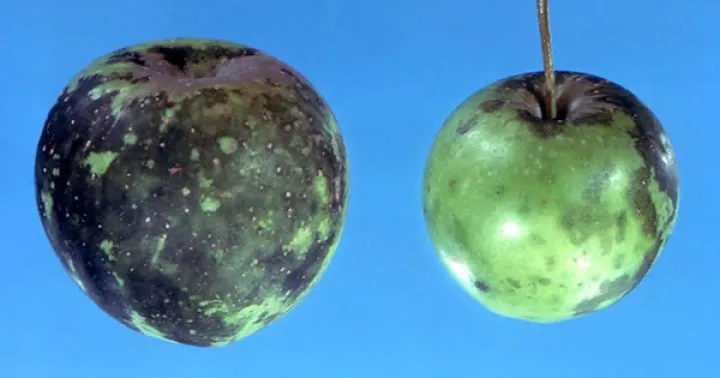
The primary external sign of the disease is the appearance of specific spots on leaves that look like oily or greasy patches.
As the pathogen develops, the color of the spots changes from pale green to dark brown, often displaying a characteristic glossy sheen resembling a drop of oil.
Under high humidity conditions, a weak, barely visible mycelial growth of the fungus may appear on the surface of the affected areas.
On carnations, these spots are often localized near the base of the leaves, gradually spreading to the stem, leading to premature wilting of the foliage.
Tissues in the affected areas eventually become brittle and may crack or disintegrate, creating ragged holes on the leaf blade.
Pathogen
The causative agent of this disease is the ascomycete fungus Zygophiala jamaicensis, which belongs to the group of pathogens that cause leaf spot diseases.
The fungus mainly follows an epiphytic lifestyle, living on the surface of the plant epidermis, but penetrates tissue cells under favorable conditions.
The pathogen reproduces via conidia, which are spread by air currents, rain splashes, or overhead irrigation in greenhouses.
The biology of the pathogen is closely linked to the presence of free moisture on the leaf surface, which is necessary for spore germination and infection.
The pathogen can survive for a long period as mycelium on plant debris left in the soil or greenhouse substrate.
Conditions for development
A key factor in the disease development is high relative humidity, exceeding 80–85 percent for a prolonged period.
Dense plant spacing contributes to the creation of a microclimate with poor ventilation, which significantly accelerates the spread of the infection.
The optimal temperature range for the growth of the fungus is 18–24 degrees Celsius, making the disease dangerous during off-seasons.
Poor greenhouse aeration and the presence of condensation on leaves at night create ideal conditions for the pathogen to colonize new areas.
Improper irrigation practices that lead to constant waterlogging in the root zone also indirectly contribute to weakening the plant's immunity.
Why it matters
Greasy blotch significantly reduces the aesthetic quality of ornamental crops, making the commercial product unsuitable for sale.
With intense infection, the photosynthetic surface of the leaves is reduced, which leads to general inhibition of the plant's growth and development.
The disease provokes premature leaf drop, which drains the plant's energy reserves and reduces its resistance to other stress factors.
In severe cases, the infection can lead to the complete death of individual specimens, especially young seedlings in nurseries.
Economic losses include both direct plant mortality and the costs of additional chemical fungicide treatments.
Protection
The basis of control is adhering to a proper greenhouse ventilation regime that eliminates stagnant moist air.
It is important to promptly remove and destroy all plant debris that could serve as an infection reservoir for the next season.
The use of systemic fungicides effectively suppresses the activity of the pathogen during the early stages of disease development.
- Application of biological preparations for soil treatment.
- Maintenance of optimal plant spacing for better airflow.
- Preventive treatments with copper-based contact fungicides before periods of high humidity.
Regular monitoring of crop health allows for the identification of disease outbreaks at an early stage, enabling containment before mass spread occurs.
Pathogens and affected parts
Affects crops · 1
Discussion
No discussions yet — be the first.