
Description
Symptoms
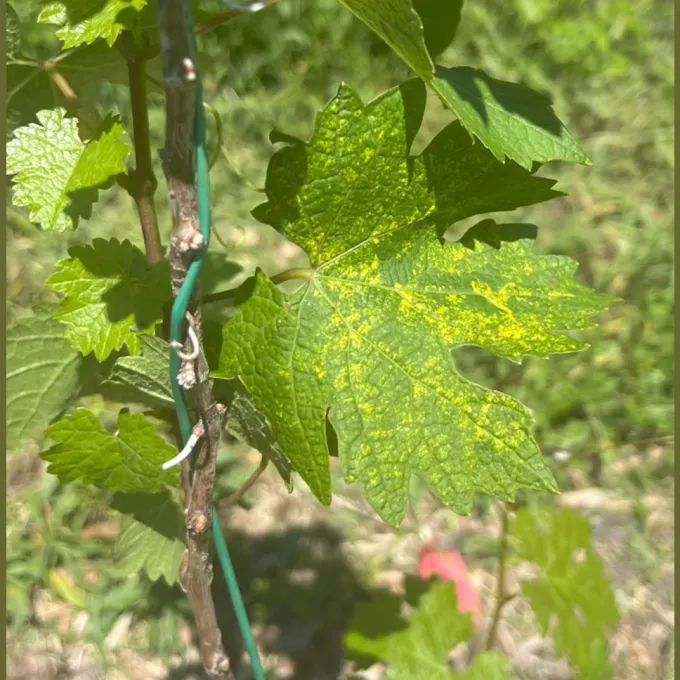
The most visible symptoms are yellow speckles or patches on the leaves, which often appear as small, bright yellow spots distributed across the leaf blade.
These spots frequently appear during the warmer months, causing a mottled appearance that disrupts the efficiency of photosynthesis in the plant.
In addition to spotting, the foliage may exhibit chlorosis, curling, or abnormal development of the leaf margins as the infection progresses throughout the canopy.
Fruit quality is significantly impaired, with berries often showing uneven ripening, reduced sugar accumulation, and a general lack of uniformity in size.
- small yellow dots or spots on leaf surfaces;
- chlorotic areas along the leaf veins;
- overall reduction in vine vigor;
- stunted shoot growth in severe cases.
Pathogen
Grapevine yellow speckle is a significant disease often associated with viroids, such as the Grapevine yellow speckle viroid (GYSVd), which can severely affect vineyard health.
The pathogen is primarily transmitted through vegetative propagation, meaning that infected cuttings or rootstocks are the main source of spreading the disease across new areas.
While mechanical transmission during pruning or grafting is possible, the role of specific insect vectors in spreading related phytoplasma conditions remains a critical study area.
The disease spreads systemically throughout the entire vine, colonizing the vascular tissues and persistently hindering the transport of nutrients and water.
This condition targets the Vitis vinifera species, causing cumulative damage that worsens with each subsequent growing season if not properly managed.
Conditions for development
The severity of symptoms often correlates with environmental temperature; warmer weather typically enhances the visibility and progression of yellow speckle symptoms.
Stress factors such as drought or poor soil management can exacerbate the negative effects of the disease, making the vines more vulnerable to systemic decline.
Since the pathogen is primarily introduced through nursery stock, the initial site conditions are less important than the quality of the plants brought into the vineyard.
However, once introduced, poor vineyard hygiene, including leaving debris or weeds, may provide a breeding ground for vectors that could potentially spread secondary infections.
The pathogen thrives in the sap of the host, meaning that active growth periods are when the physiological impact on the plant is most profound.
Why it matters
The economic impact of yellow speckle is driven by the consistent decline in yield quantity and the degradation of fruit quality required for winemaking.
Chronic infection leads to the long-term weakening of the root system, which reduces the plant's ability to withstand environmental stress and extreme weather.
There is a substantial loss in fruit sugar levels, which is a critical metric for viticulturists, making the grapes unsuitable for high-quality production.
Infected vineyards suffer from reduced longevity, often forcing growers to prematurely replace sections of the vineyard, which carries significant investment costs.
The disease's systemic nature means that once a vine is infected, it remains a permanent source of the viroid, necessitating strict removal protocols.
Protection
The most effective strategy for controlling Grapevine yellow speckle is the exclusive use of certified, virus-tested, and disease-free propagation material.
Strict hygiene protocols should be applied to all pruning and grafting tools to prevent the accidental transfer of sap between infected and healthy vines.
Early identification through laboratory testing (such as PCR) is recommended to identify and remove infected vines before they serve as a source for further spread.
Maintaining strong plant vigor through appropriate fertilization and water management can help the vines tolerate the disease better, though it does not cure it.
Integrated pest management programs help keep the vineyard environment stable and ensure that secondary pests do not further weaken the infected vines.
Pathogens and affected parts
Affects crops · 1
Discussion
No discussions yet — be the first.