
Gloeocercospora leaf spot of cranberry
Gloeocercospora inconspicua
Description
Symptoms
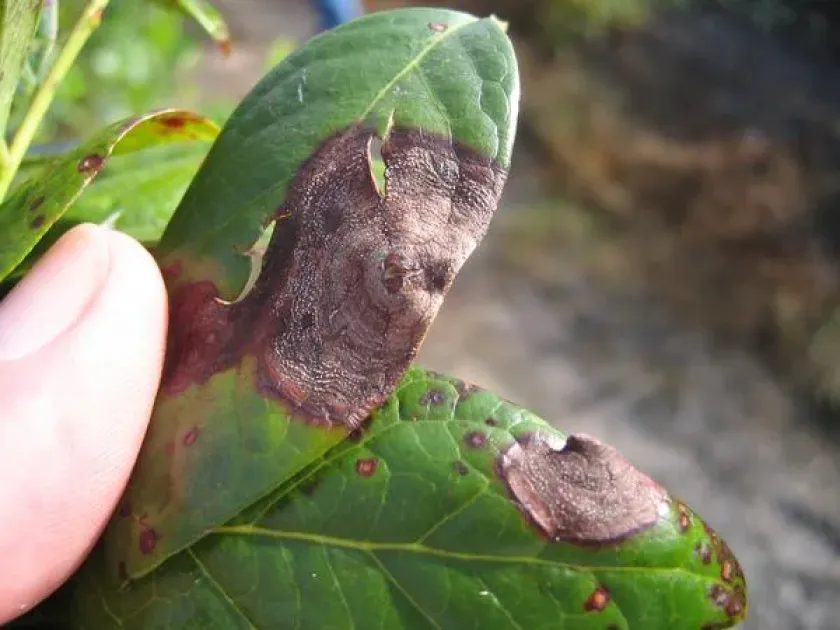
Initial symptoms include the appearance of small, irregular spots on the leaves, which gradually expand and develop a grayish-brown center with a dark, distinct margin.
During periods of high humidity, the undersides of the affected leaves often show pinkish-orange spore clusters, indicating active sporulation of the pathogen.
Severe infection leads to premature leaf drop, which significantly weakens the cranberry vines and reduces their overall photosynthetic efficiency throughout the growing season.
In cases of stem infection, localized lesions can girdle the shoot, leading to yellowing, wilting, and eventual death of the affected plant parts.
- Gray-brown necrotic spots on leaves.
- Pinkish spore masses on the underside of foliage.
- Premature defoliation of the vines.
- Stem lesions and dieback.
- Reduced vigor and stunted growth.
Pathogen
The disease is caused by the fungus Gloeocercospora inconspicua, a pathogenic agent that specifically targets the foliage and shoots of the cranberry plant.
The lifecycle of the pathogen involves the production of conidia, which are often observed as small, slimy, pinkish-orange spots on the surface of infected plant tissues.
The fungus survives the winter dormant period in crop residues, fallen leaves, and diseased stems, making proper sanitation of the planting site essential for management.
Dissemination occurs through wind and splash dispersal of conidia by rain or irrigation water, allowing the fungus to spread rapidly across the cranberry field.
Infection happens when fungal spores land on moist leaf surfaces and germinate, successfully penetrating the plant tissue through natural openings or small wounds.
Conditions for development
The development of Gloeocercospora inconspicua is strongly favored by prolonged wet weather and high relative humidity, which are essential for spore germination.
Optimal temperatures for fungal growth range from 18 to 25 degrees Celsius, matching the most active development phases of the cranberry plant.
Dense canopies that prevent rapid drying of foliage after rainfall create a microclimate that is highly conducive to the spread of the disease.
Excessive application of nitrogen fertilizers produces succulent, soft growth that is more susceptible to fungal colonization and damage.
Poor water management, specifically standing water in poorly drained fields, facilitates the survival of the fungus and provides a reservoir for repeated infection.
Why it matters
The primary economic impact of this disease is a significant reduction in cranberry yield due to the loss of foliage and overall plant stress.
Affected plants exhibit lower winter hardiness, making them more susceptible to cold damage and increasing the risk of stand loss during the winter.
The quality of the berries is also compromised, as weakened plants often produce smaller fruits with lower sugar content and poorer storage stability.
Increased field mortality leaves gaps in the canopy, which interferes with mechanized harvesting and creates conditions for weed competition.
Repeated fungal outbreaks require increased expenditure on fungicides, thereby raising the overall cost of production and reducing farm profitability.
Protection
Effective management begins with good horticultural practices, such as maintaining proper planting density to ensure adequate air circulation and rapid foliage drying.
Sanitation is critical; all plant debris should be removed or managed in the autumn to reduce the primary inoculum load for the upcoming season.
Preventive application of fungicides, particularly those recommended for leaf spot diseases, is essential during periods of heavy rainfall or high humidity.
Optimizing plant nutrition by avoiding excess nitrogen and providing sufficient potassium and phosphorus helps to harden plant tissues against fungal invasion.
Regular scouting of the field allows for early detection of symptomatic vines, enabling targeted treatments that prevent the disease from becoming widespread.
Pathogens and affected parts
Affects crops · 1
Discussion
No discussions yet — be the first.