
Description
Symptoms
Symptoms typically begin as small, reddish-brown spots on the leaves. At this initial stage, they may be easily overlooked or confused with other physiological conditions.
As the infection progresses, the spots expand and turn dark brown or black. A characteristic pale halo often appears around the perimeter of the necrotic tissue.
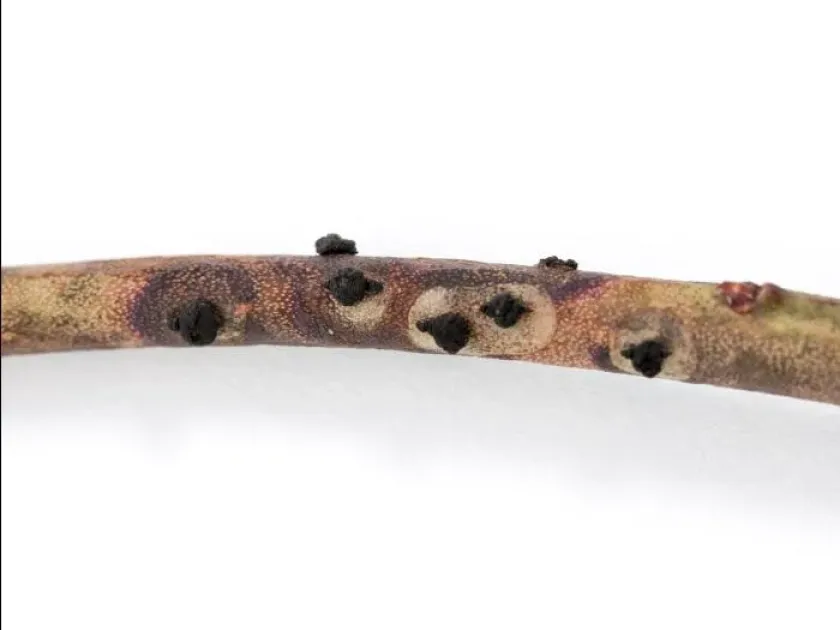
In high-humidity conditions, the surface of the lesions may show the development of small black structures. These are the fruiting bodies of the fungus, confirming an active and ongoing infection.
Severe infestations lead to premature leaf chlorosis and necrosis, causing widespread leaf drop. This significantly reduces the photosynthetic efficiency of the plant.
If the infection spreads to the petioles or young shoots, it causes curling and stunted growth, negatively impacting the architectural integrity of the cranberry plant.
Pathogen
The causal agent of this disease is the fungus Gibbera vacciniicola, an ascomycete that belongs to the group of specialized pathogens attacking Ericaceae family plants, particularly cranberries.
The fungus acts as a parasite that colonizes the plant tissues, developing a mycelium network. It primarily targets the leaves and young green stems, absorbing nutrients and disrupting plant metabolism.
Reproduction is carried out through ascospores, which are released into the environment. These spores are easily transported by wind or splashing water, facilitating the spread of the disease within the planting site.
The pathogen's life cycle is closely linked to overwintering on debris. It survives the dormant period in the form of stroma or fungal structures on fallen leaves, waiting for favorable spring conditions.
Biological resilience allows the fungus to remain viable under various environmental conditions, making it a persistent challenge for cranberry growers if not managed properly.
Conditions for development
The development of Gibbera vacciniicola is strongly favored by cool and wet weather conditions. Prolonged spring rains create an ideal environment for spore germination.
Poor aeration within the cranberry bed, often caused by overcrowding or thick weed coverage, allows humidity to remain high, which promotes fungal colonization of the foliage.
Inadequate soil drainage, leading to water accumulation or high soil moisture levels, significantly increases the risk of the disease. Stagnant moisture prevents the plants from drying off, helping the fungus.
The presence of overwintering inoculum in the form of fallen leaves on the ground is the primary driver of new infections each season, as the fungus waits for the temperature to rise.
Optimal temperatures for the fungus range from 15 to 22 degrees Celsius, which coincides with the period of active vegetative growth and bud formation in cranberries.
Why it matters
The primary impact of Gibbera leaf spot is a reduction in photosynthetic capacity, which directly translates to lower berry yields and poor fruit quality.
Chronic infections weaken the overall health of the plants, making them more susceptible to winter injury and other environmental stressors, ultimately reducing the lifespan of the plantation.
If the infection extends to the floral parts or reproductive structures, fruit set can be significantly impaired, leading to direct crop loss for the grower.
Energy reserves in the roots are depleted as the plant attempts to recover from repeated defoliation, leading to stunted, low-vigor plants that struggle to compete with weeds.
The cumulative effect of these factors leads to a decline in plantation productivity, necessitating expensive management efforts and potential replanting of damaged sections.
Protection
The most important control strategy is good sanitation. Removing and destroying all infected plant debris during the dormant season is essential to break the infection cycle.
Managing plant density and ensuring proper spacing between plants is crucial for improving air circulation and keeping the foliage canopy dry.
Effective weed management is also necessary to prevent humidity buildup and competition, allowing the cranberry vines to stay healthy and resilient.
Fungicide applications are recommended when conditions are highly conducive to the disease. It is vital to alternate chemical classes to prevent the development of resistant fungal strains.
- Apply copper-based fungicides early in the spring as a preventative measure.
- Monitor the field regularly during the growing season for any signs of leaf spot.
- Improve water management through better ditching and field leveling.
Pathogens and affected parts
Affects crops · 1
Discussion
No discussions yet — be the first.