
Description
Symptoms
The hallmark symptom of Geotrichum rot is the softening of infected plant tissues. In crops like sweet potatoes, the rot manifests as water-soaked lesions that quickly lose structural integrity.
A dense, white, or creamy-colored fungal mat typically develops on the surface of the decaying tissue. This mycelial growth is a visible indicator of active sporulation and rapid spread.
Infected tissues often emit a distinctively sour or acidic odor, which is the result of the fermentation processes occurring as the fungus breaks down the plant cells.
In sweet potatoes, the disease progresses from small, sunken areas into deep-seated decay, effectively turning the interior of the tuber into a soft, mushy, or even semi-liquid mass.
As the disease reaches advanced stages, the affected product loses all commercial value and becomes a source of inoculum that can easily spread to healthy tubers in the same storage lot.
Pathogen
The causal agent of this disease is the fungus Galactomyces geotrichum (anamorph Geotrichum candidum). It is a ubiquitous organism found in soils, decaying organic matter, and various agricultural environments.
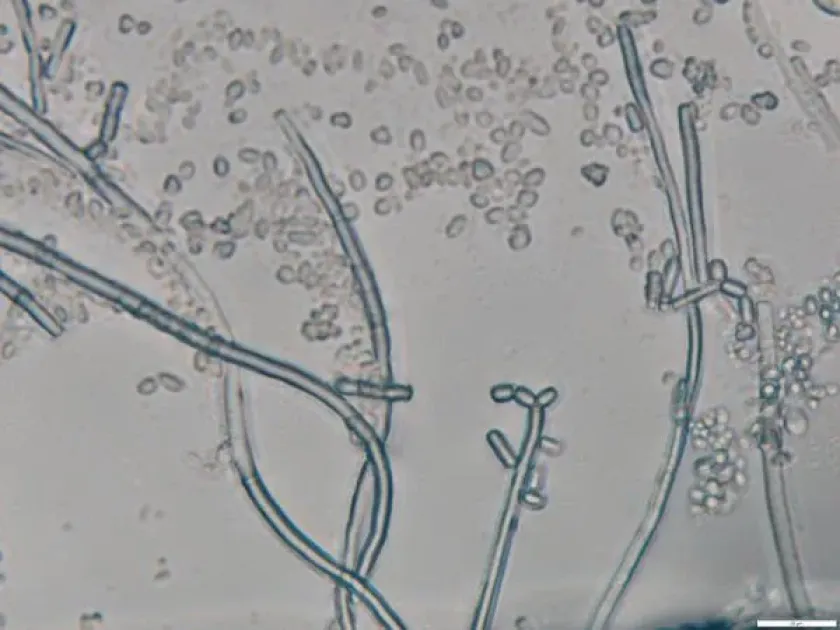
The fungus is characterized by the production of septate hyphae that break apart into arthroconidia. These structures are vital for the survival and rapid dispersal of the pathogen under favorable conditions.
Equipped with potent enzymes, the fungus easily degrades plant cell walls and utilizes nutrients from the host, leading to the rapid liquefaction of plant tissues.
In field conditions, Galactomyces geotrichum often acts as a opportunistic pathogen, thriving when the host plant's tissues are damaged or weakened by environmental stressors.
The biological versatility of this fungus allows it to adapt to diverse ecological conditions, making it a persistent challenge for post-harvest management and crop storage.
Conditions for development
The development of Geotrichum rot is highly dependent on high moisture levels. Relative humidity above 85% is typically required for the rapid germination of fungal spores.
The fungus is thermophilic, exhibiting its highest activity at temperatures ranging from 20°C to 30°C. In such conditions, the disease can spread throughout stored produce in just a matter of days.
Poor ventilation in storage facilities creates pockets of stagnant, humid air, which significantly increases the risk of infection and colonization by the fungus.
Physical injuries to the skin of the harvest, caused during mechanical handling or transportation, provide easy entry points for the pathogen to establish an infection.
Overcrowded storage conditions prevent proper airflow and encourage direct contact between healthy and infected produce, which accelerates the rot cycle within the warehouse.
Why it matters
The primary economic impact of Geotrichum rot is the catastrophic loss of stored produce. In severe cases, entire batches of sweet potatoes can be destroyed in a very short timeframe.
The broad host range of the pathogen, which includes various vegetables and root crops, makes it a multi-faceted threat for agricultural enterprises and food suppliers.
Beyond direct loss, the presence of the pathogen lowers the quality and shelf-life of the remaining inventory, as cross-contamination is virtually inevitable in common storage systems.
The disease poses a significant challenge because initial infections are often microscopic and undetected during the initial sorting process before being stored.
Marketability is completely lost once the decay begins, as the physical degradation and the distinct sour odor make the produce unsuitable for human consumption or processing.
Protection
The cornerstone of management is strict environmental control in storage facilities, focusing on maintaining low humidity and proper temperature regulation to inhibit fungal growth.
Minimizing mechanical damage during harvest and post-harvest handling is critical. Careful sorting to remove any wounded or bruised tubers before storage is a necessary precautionary measure.
Adequate ventilation and sanitation of storage facilities, crates, and transport equipment are essential to disrupt the life cycle of the pathogen and prevent new outbreaks.
Effective crop rotation and land management, such as ensuring proper field drainage, can help reduce the initial inoculum level before the harvest season begins.
- Use of approved post-harvest fungicides where necessary.
- Regular inspections of stored goods to identify and remove early infection spots.
- Drying the harvested produce properly before placing it into long-term storage.
Pathogens and affected parts
Affects crops · 1
Discussion
No discussions yet — be the first.