
Description
Symptoms
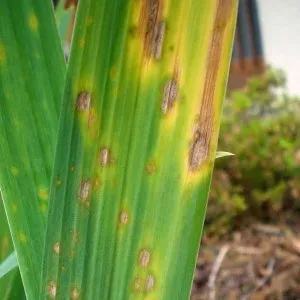
Symptoms appear as small, brownish or purplish spots on the leaves, which gradually expand and develop a distinctive necrotic center with a lighter, gray-brown color.
A diagnostic characteristic is the appearance of tiny, black fruiting bodies (pycnidia) embedded in the center of these necrotic spots, usually visible to the naked eye.
As the disease progresses, spots may coalesce, leading to severe chlorosis and browning of the leaves, eventually resulting in total leaf blight and premature death.
Under high humidity, a fine, grayish mold may cover the spots, representing the fungal sporulation process, which facilitates rapid secondary infection.
In addition to leaves, the fungus can infect stems and flower stalks, causing localized lesions that result in stunted growth and deformed, non-marketable flowers.
Pathogen
The causative agent of carnation leaf spot is the fungus Mycosphaerella dianthi, an ascomycete responsible for significant damage to Dianthus species in both open fields and greenhouses.
The pathogen overwinters as mycelium, pycnidia, or perithecia on infected plant debris, which serves as the primary source of inoculum for the next growing season.
Spore dissemination occurs primarily via wind gusts and splashing water, which carries the conidia from infected tissues to healthy leaves and stems.
The fungus penetrates the plant tissues through stomata or directly through the epidermis, subsequently colonizing the intercellular spaces and disrupting normal physiological functions.
Because the fungus is highly adaptive, it can persist in the soil and on greenhouse structures, making it a persistent threat to commercial carnation cultivation.
Conditions for development
Optimal conditions for Mycosphaerella dianthi are temperatures between +18°C and +25°C, coupled with high humidity or prolonged leaf wetness.
Dense planting schemes restrict airflow, which creates microclimates with increased humidity, allowing the fungus to flourish and spread rapidly among neighboring plants.
Overhead irrigation is a primary contributor to disease outbreaks, as water droplets actively splash fungal spores onto healthy foliage, especially in greenhouse environments.
Poor ventilation systems in greenhouses often fail to lower ambient humidity, which maintains a stable environment for continuous fungal activity throughout the year.
Nutritional imbalances, particularly high nitrogen levels, can lead to succulent plant growth, which is significantly more susceptible to penetration by fungal hyphae.
Why it matters
The disease severely impacts the market value of carnations by rendering leaves unsightly and reducing the overall vitality of the flower stems.
By killing leaf tissue, the fungus significantly reduces the plant's photosynthetic capacity, leading to weaker stems and smaller, poor-quality blossoms.
In cases of severe infestation, total loss of the flower crop can occur, causing substantial financial losses for commercial flower producers.
The presence of Mycosphaerella dianthi also threatens breeding programs and mother plant stocks, as the infection can be easily transmitted during the propagation process.
Weakened plants are prone to additional secondary infections, which further degrade the quality and longevity of cut flowers, causing dissatisfaction among consumers.
Protection
The primary control strategy involves the use of pathogen-free cuttings and strict adherence to hygiene standards within the growing area.
Sanitation practices, including the regular removal and destruction of infected plant material, are essential to reduce the inoculum pressure in the environment.
Chemical control involving systemic or contact fungicides should be applied preventatively, especially during seasons with high humidity or frequent rainfall.
- Switch to drip irrigation to prevent water from splashing onto the foliage.
- Ensure adequate spacing between plants to maximize airflow and minimize humidity.
- Apply fungicides during the early stages of disease development to curb outbreaks.
Regular inspection and sanitation of tools and benches are critical to prevent the mechanical spread of spores within greenhouses.
Pathogens and affected parts
Affects crops · 1
Discussion
No discussions yet — be the first.