
Description
Symptoms
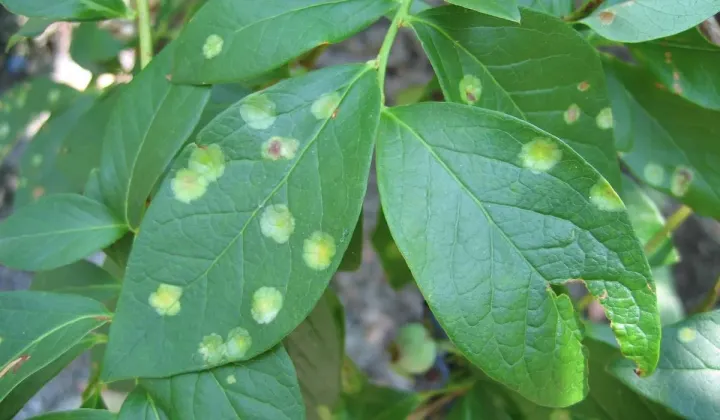
The primary symptom of the infection is the appearance of distinct spots on the leaves and young shoots of the cranberry. At the beginning of the development, these spots exhibit a light, pinkish, or yellowish tint, gradually darkening to brown over time.
A thin, barely noticeable bloom, representing the fungus's sporulation, may be observed on the surface of the affected areas, especially on the underside of the leaves. In these spot areas, the leaf tissue gradually dies, becomes brittle, and thins out.
Cranberry fruits also become covered with various shaped spots upon infection. Infected berries lose their marketability and may prematurely shrivel and dry out directly on the bush.
As the disease progresses, deformation of young leaf blades occurs. The leaves curl, and their growth slows down, leading to the overall weakening of the entire cranberry plant.
In neglected cases, the affected parts of the plant take on a necrotic character. Necroses can cover significant areas of the leaf surface, reducing the photosynthetic activity of the crop.
Pathogen
The pathogen responsible for this disease is Exobasidium maculosum, a basidiomycete fungus. It is a specialized parasite that primarily attacks the tissues of the large-fruited cranberry (Vaccinium macrocarpon).
The biological cycle of the fungus is closely linked to humidity and air temperature. The fungal mycelium develops inside the plant's tissues, gradually destroying the cells of the epidermis and mesophyll.
The fungus is capable of persisting in the debris of affected plants, in the mulch, and in the soil for a long period. This keeps the infectious background stable in the absence of proper plantation sanitation.
The spread of the pathogen occurs mainly through conidia and basidiospores. They are dispersed by air currents, raindrops, and during irrigation, moving to neighboring healthy plants.
The incubation period of the disease depends on external conditions and the susceptibility of the cranberry variety. Under favorable development conditions, the fungus can infect a significant portion of the crop within one season.
Conditions for development
High humidity is the main trigger for the development of the infection. Prolonged rainfall and excessive overhead irrigation create an optimal environment for the germination of fungal spores.
Moderate temperature ranges are most favorable for the activity of Exobasidium maculosum. Cool and humid periods during spring and summer facilitate the rapid spread of the disease.
Dense cranberry plantings hinder proper ventilation, creating a "stagnant" microclimate. Under such conditions, moisture persists on the leaf surface for longer, facilitating infection.
Violation of agricultural practices, specifically the application of excessive nitrogen fertilizers, provokes the growth of soft tissues. These plants become more susceptible to the penetration of fungal pathogens.
Lack of sanitary cleaning of the field from last year's leaves and plant debris serves as a source of primary infection at the beginning of every growing season.
Why it matters
The disease causes direct economic damage by reducing the yield of cranberry plantations. The damage to fruits makes them unsuitable for sale in the fresh market due to the loss of aesthetic quality.
Severe leaf damage leads to a decrease in the plant's nutrient reserves. This negatively affects the formation of fruit buds for the following year's harvest.
Infected bushes become less winter-hardy and struggle to withstand the harsh conditions of the cold season. In the long term, this can lead to partial loss of the planting.
The spread of the spot disease complicates crop maintenance, requiring additional expenses for protective measures and the application of fungicide preparations.
In cases of mass epidemic development, the plantation may lose a significant portion of its productivity, making cranberry cultivation economically unviable.
Protection
The key method of control is the observance of agricultural best practices. It is crucial to remove plant debris in which the fungus overwinters and to conduct regular weeding.
Ensuring good ventilation in the plantation is achieved by correctly selecting the planting scheme. It is necessary to avoid excessive soil moisture and waterlogging.
The use of fungicides based on copper or specific systemic preparations is effective as a preventative measure. Treatments should be carried out before the onset of massive symptom manifestation.
- Application of contact-action fungicides to prevent infection.
- Timely application of phosphorus-potassium fertilizers to boost plant immunity.
- Regular monitoring of bush health for early detection of infection foci.
- Adherence to crop rotation and the use of healthy planting material.
The use of biological control agents can complement the control program during periods when the use of chemical fungicides is restricted due to approaching harvest dates.
Pathogens and affected parts
Affects crops · 1
Discussion
No discussions yet — be the first.