

Bacterial bulb rot
Enterobacter cloacae
Description
Symptoms
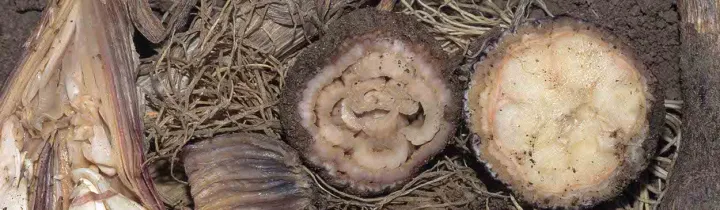
The primary symptom of bacterial bulb rot is the softening of tissues near the neck of the bulb. Upon slicing, the internal scales appear watery, translucent, and often show a yellowish or brownish discoloration.
A distinct and pungent foul odor is a hallmark of this infection. Unlike many fungal diseases, there is typically no visible surface mycelium unless secondary opportunistic fungi have colonized the rotting area.
In the field, infected plants exhibit stunted growth, yellowing, and premature wilting of the foliage. The base of the bulb often softens, which may cause the leaves to detach easily from the bulb plate.
During storage, infected bulbs eventually turn into a mushy, macerated mass. The outer skins may appear healthy for some time, masking the rapid internal decomposition occurring within the bulb.
- Softening and water-soaking of the bulb neck.
- Distinctive foul, putrid odor.
- Translucent or discolored internal scales.
- Premature yellowing and wilting of the tops.
- Rapid internal breakdown of bulb layers.
Pathogen
The causative agent of the disease is the facultative anaerobic bacterium Enterobacter cloacae. This microorganism is a member of the Enterobacteriaceae family and is commonly found in soil environments.
The bacterium acts as an opportunistic pathogen. While it can exist as a saprophyte on plant debris, it readily shifts to a parasitic lifestyle when environmental conditions favor the colonization of onion and garlic tissues.
The pathogen persists in infected bulbs, planting material, and residual crop debris in the soil. Once it enters the plant, it secretes enzymes that break down cell walls, leading to rapid tissue decay.
Enterobacter cloacae is highly adaptable and can survive across a wide range of temperatures. It spreads efficiently through irrigation water, insect pests, and mechanical injuries sustained during cultivation or harvest.
In many cases, the bacterium contributes to mixed infections, often exacerbating the damage caused by other pathogens present in the bulb environment.
Conditions for development
High humidity and wet soil conditions during bulb maturation are the primary drivers of the disease. Excessive rainfall just before harvest significantly increases the probability of pathogen entry through the neck.
Temperature plays a crucial role, with the pathogen thriving between 20°C and 30°C. Fluctuations in storage temperature that lead to condensation on the bulbs create an ideal environment for bacterial proliferation.
Mechanical damage to bulbs, whether caused by harvest machinery or pests like the onion maggot, provides direct entry points for the bacteria. Surface moisture is critical for the bacteria to colonize these wounds.
Poor agricultural practices, such as failing to rotate crops or using infected planting stock, drastically increase the likelihood of the disease establishing itself on a farm.
Inadequate ventilation in storage facilities allows humidity to rise, facilitating the rapid spread of the bacteria from infected bulbs to adjacent healthy ones through contact.
Why it matters
Bacterial bulb rot causes severe economic losses by destroying the marketability of the crop. Infected bulbs are unsuitable for fresh market sale or long-term storage.
The disease leads to substantial weight loss in stored produce due to tissue decomposition. Producers often face the entire loss of batches if the infection is not caught in the early stages.
When used as sets, infected bulbs result in poor stand establishment and weakened plants, which significantly reduces the final yield of the season.
The accumulation of the pathogen in the soil can disrupt long-term cropping plans, necessitating longer intervals between planting onion-family crops on the same site.
The rapid spread of the rot in storage can devastate entire warehouses, making constant monitoring and sorting of the harvested product an essential, yet costly, necessity.
Protection
Effective management begins with strict crop rotation. Avoiding onion and garlic on the same field for at least 3–4 years helps reduce the pathogen load in the soil significantly.
Using certified, disease-free planting material is vital. Thorough inspection of sets before planting can prevent the initial introduction of the bacterium into the field.
Harvesting should occur only during dry conditions to ensure the bulbs are dry. Minimizing mechanical injury during digging and cleaning is essential to prevent wounding the tissues.
Proper curing is the most critical post-harvest step. Ensuring that the neck of the bulb is completely dry and sealed acts as a natural biological barrier against bacterial entry.
In storage, maintaining strict temperature and humidity control is necessary to prevent condensation. Regular inspection and prompt removal of any symptomatic bulbs are required to keep the infection from spreading.
In brief
2
Affects crops
Biology
Pathogens and affected parts
Pathogens
Affected plant parts
bulb
Content graph
Affects crops · 2
Content graph
Connections · Bacterial bulb rot
Most often together:
Marketplace
Products · 1
Community
Discussion
No discussions yet — be the first.