
Brown leaf spot of poplar
Drepanopeziza populi
Description
Symptoms
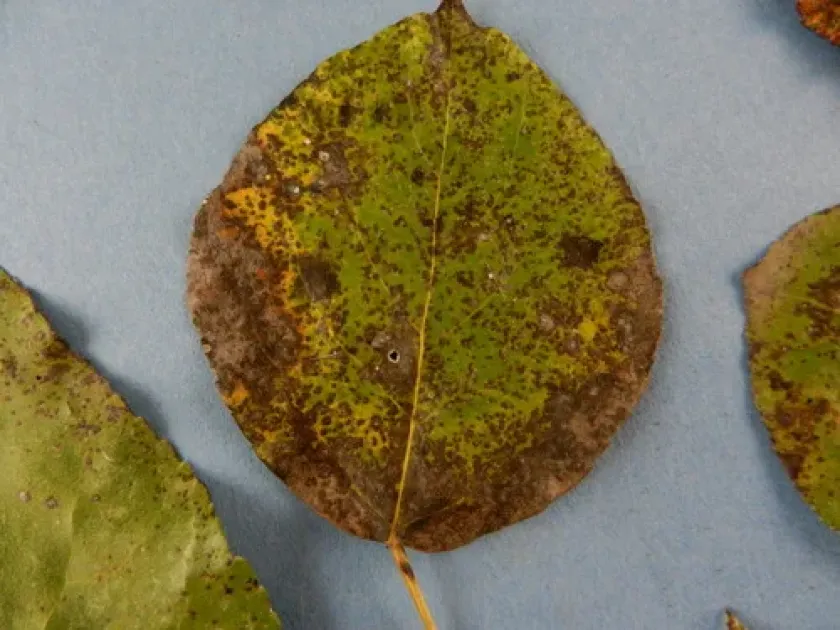
Initial symptoms consist of small, circular to irregular brown spots appearing on the leaf surface, often scattered randomly across the blade.
Over time, these spots can expand and coalesce into larger necrotic areas, frequently surrounded by a darker border that marks the infection zone.
Tiny fruiting structures (apothecia) develop on the undersides of the leaves within the infected spots, appearing as small, dark, raised dots.
Severe infections lead to significant yellowing of the foliage, followed by premature leaf drop, which often begins during the mid-summer months.
The remaining leaves often exhibit stunted growth, distortion, and browning of the margins, which significantly affects the tree's appearance.
Pathogen
The fungus Drepanopeziza populi is the primary pathogen causing brown leaf spot in poplars, belonging to the group of Ascomycetes.
The fungus completes its life cycle by overwintering in fallen, infected leaves on the ground, forming specialized fruiting bodies that contain spores.
In the spring, these spores are released and carried by wind and rain splashes onto emerging young leaves, marking the start of the primary infection.
Throughout the growing season, the pathogen produces secondary conidia that propagate the disease rapidly under humid environmental conditions.
The biological cycle of the fungus is tightly synchronized with the host tree's leaf development, ensuring it targets the most vulnerable tissues.
Conditions for development
Optimal development of the disease occurs during periods of high humidity, frequent rainfall, and moderate temperatures between 18°C and 25°C.
Dense plantings that lack adequate spacing between trees restrict airflow, creating a humid microclimate that favors rapid fungal colonization.
Poorly drained soils or sites with standing water can increase the overall stress on the trees, making them more susceptible to the fungal invasion.
A high accumulation of leaf litter under the trees acts as a constant reservoir for the pathogen, fueling reinfection every year.
Warm and wet springs significantly accelerate the release of ascospores, leading to early onset of the disease and a more severe impact on growth.
Why it matters
The main impact of brown leaf spot is the reduction in photosynthetic area, which limits the tree's ability to produce necessary energy reserves.
Premature leaf loss causes the tree to enter winter in a weakened state, significantly reducing its cold tolerance and overall vigor for the next season.
Repeated yearly infections can lead to severe crown dieback, stunted height growth, and a noticeable decline in the aesthetic quality of the trees.
Poplar plantations affected by this disease show reduced wood increment, which is a major concern for commercial timber production and forestry.
Trees weakened by the fungus are far more prone to secondary attacks by wood-boring insects and other opportunistic pathogens.
Protection
Sanitation is the most critical control measure, requiring the systematic removal and destruction of all fallen leaves at the end of the season.
Proper crown management through thinning and pruning can enhance air circulation and reduce the duration of leaf wetness after rain.
Chemical control using authorized fungicides may be necessary in nursery settings or urban landscape areas where the disease pressure is high.
Selecting disease-resistant poplar clones or hybrids is the most effective long-term strategy for preventing large-scale outbreaks in new plantations.
- Regular monitoring of tree health during early spring.
- Application of preventative copper-based fungicides when conditions are favorable for spread.
- Improving soil fertility and health to increase the tree's natural defense mechanisms.
Discussion
No discussions yet — be the first.