
Description
Symptoms
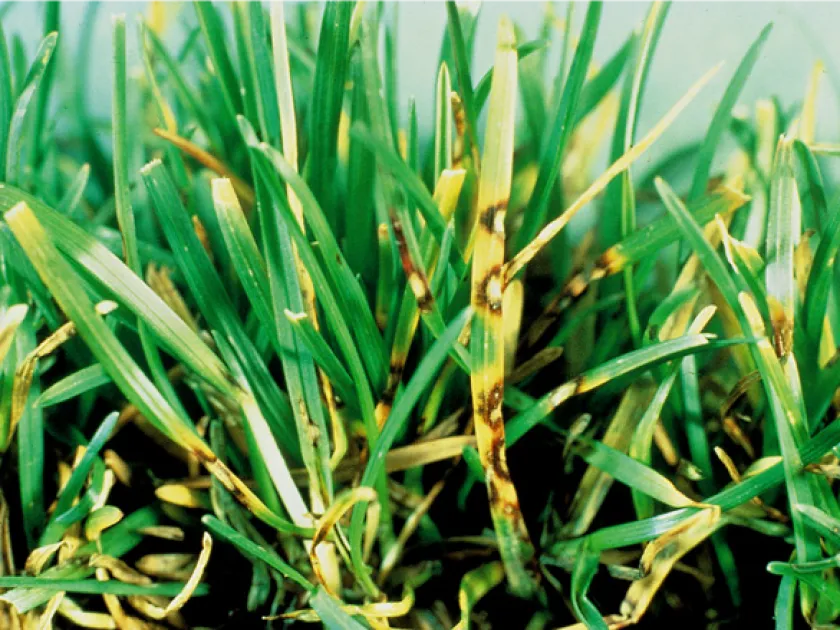
The disease typically starts with small, water-soaked spots on the leaves that gradually expand into distinct elliptical or spindle-shaped lesions.
These necrotic spots often turn tan or dark brown and are frequently surrounded by a yellow chlorotic halo, which serves as a key diagnostic indicator in the field.
Under humid conditions, a velvety olive-black or dark gray fungal growth appears on the lesions, representing the massive production of conidia by the pathogen.
As the disease progresses, individual spots may coalesce to cover larger areas of the leaf blade, eventually leading to tissue necrosis, premature senescence, and leaf drop.
On soybean pods, symptoms appear as irregular sunken spots, which can result in pod shriveling, reduced seed development, or infection of the seeds themselves.
Pathogen
The causal agent of this disease is the anamorphic fungus Exserohilum rostratum, with the teleomorph stage known as Setosphaeria rostrata (Ascomycetes).
The fungus produces dark, thick-walled mycelium and large multicelled conidia that are easily dispersed by wind, splashing rain, and mechanical equipment.
Setosphaeria rostrata has a very broad host range, infecting various graminaceous plants and broadleaf crops, including significant losses in soybeans.
The pathogen survives between growing seasons as dormant mycelium or spores on crop debris, in the soil, and within or on the surface of infected seeds.
Genetic diversity within the pathogen population, supported by both asexual and sexual reproduction cycles, allows the fungus to adapt effectively to different environments.
Conditions for development
The disease thrives under warm and humid conditions, with the fungus optimally developing at temperatures between +25°C and +30°C and high relative humidity.
Frequent rainfall and persistent leaf wetness are critical factors, as they facilitate spore germination and the infection of healthy plant tissues.
Dense planting patterns can reduce air circulation within the canopy, leading to a moist microclimate that favors the rapid spread of the pathogen.
Plants stressed by nutrient deficiencies, poor soil management, or previous pest damage are generally more susceptible to infection by Setosphaeria rostrata.
Extended periods of morning dew or heavy fog keep the foliage wet for prolonged durations, significantly increasing the probability of successful fungal penetration.
Why it matters
The primary damage caused by Drechsleria leaf spot is the reduction of the photosynthetic leaf area, which severely restricts the plant's energy production capacity.
Significant infestations lead to lower grain filling, smaller seed size, and a decrease in the overall mass of harvested seeds, reducing final yield.
Infection compromises seed quality, affecting germination rates and seedling vigor, which carries the pathogen over into the next planting cycle.
Stem infections can weaken the structural integrity of the crop, causing lodging, which makes mechanical harvesting difficult and increases pre-harvest yield loss.
Under favorable environmental conditions, the disease can reach epidemic proportions, causing losses ranging from 20% to over 30% in susceptible cultivars.
Protection
The foundation of effective control is the use of high-quality, certified pathogen-free seeds treated with appropriate systemic fungicides.
A strict crop rotation program is essential, as it helps break the pathogen's life cycle by eliminating the host plants required for its development in the soil.
Cultural practices such as deep tillage to incorporate crop residues help speed up the decomposition process and reduce the primary inoculum level.
Providing optimal balanced plant nutrition, especially sufficient potassium, helps improve the physiological defenses of the crop against fungal pathogens.
- Foliar fungicide applications during the early stages of disease development.
- Monitoring fields regularly to detect and manage localized outbreaks early.
- Implementing weed control to eliminate alternative hosts that harbor the pathogen.
Pathogens and affected parts
Affects crops · 1
Discussion
No discussions yet — be the first.