
Description
Symptoms
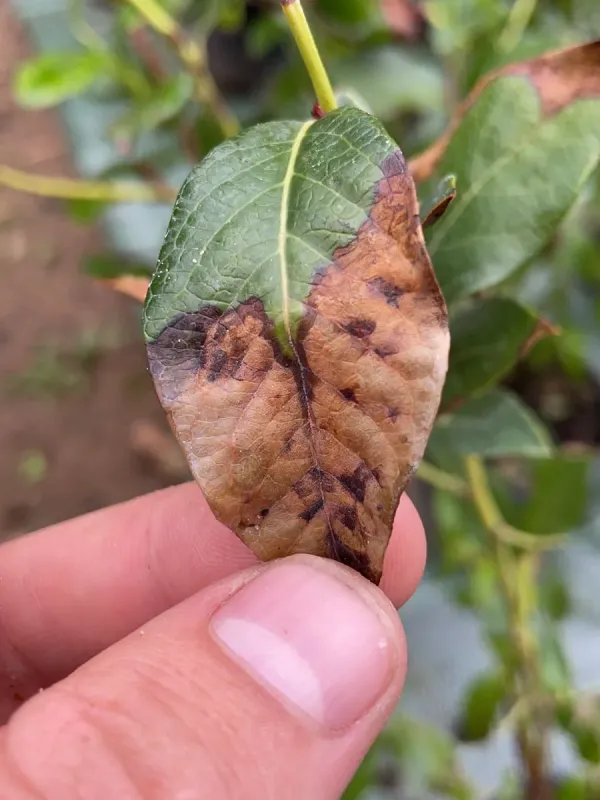
The symptoms of the disease appear mainly on the cranberry leaves in the form of specific spots. Initially, they are circular and small in size, often featuring a dark center surrounded by a lighter halo.
As the disease progresses, the spots expand and turn a characteristic grayish-brown color, giving the plant a distressed appearance. The "double" contour of the spot is a unique feature that defines this condition.
In the center of older spots, small black dots may appear, which are pycnidia, the fruiting bodies of the fungus. These structures serve as a critical diagnostic indicator for microscopic identification.
Severe infection leads to premature yellowing, withering, and mass leaf drop. This significantly weakens the bush, subsequently hindering its ability to perform photosynthesis effectively.
Symptoms on stems are less common but possible; under high humidity, necrotic areas may develop on the bark. This restricts sap flow and may lead to the death of individual branches.
Pathogen
The causative agent of the disease is the ascomycete fungus Dothichiza caroliniana (synonym Phyllosticta elongata). It is an obligate parasite closely associated with the lifecycle of the large-fruited cranberry.
The fungus survives the winter in infected plant debris, fallen leaves, and on cranberry stems. Primary infection typically occurs in the spring via fungal spores.
Pathogen reproduction is carried out through conidia, which are spread by rain splashes, wind, or agricultural activities. Throughout the season, the fungus produces multiple generations of infectious propagules.
The fungal mycelium penetrates plant tissues through stomata or micro-injuries in the cuticle. Inside the tissues, parasitic mycelia develop, absorbing nutrients from the host plant.
The biological characteristics of this species include high adaptability to changing environmental conditions, which makes management on commercial plantations challenging.
Conditions for development
The primary factor contributing to the development of Dothichiza leaf spot is high humidity in the air and on leaf surfaces. Water stagnation on the plantation creates an ideal environment for spore germination.
The optimal temperature for active fungal development ranges from +18 to +24 degrees Celsius. During this period, the pathogen exhibits maximum aggressiveness.
Dense plantings that restrict proper air ventilation within the canopy promote the retention of moisture on the leaves, significantly accelerating the spread of the infection.
Improper irrigation practices, especially overhead watering in the evening, result in moisture remaining on the leaves overnight. This creates a favorable microclimate for conidia germination.
Lack of sunlight in crowded plantings weakens the cranberry's immune system, making it more susceptible to fungal infection. Healthy, well-ventilated areas are affected much less frequently.
Why it matters
The main damage involves a sharp reduction in leaf surface area, which leads to the suppression of cranberry bush growth. Heavily infected plants appear weak and chlorotic.
Due to impaired photosynthesis, the accumulation of nutrients in overwintering buds slows down. This reduces the yield potential for the following season, as the plant fails to set enough flower buds.
Leaf damage reduces the market quality of the crop and, in some cases, can lead to underdeveloped fruit. Berries on weakened plants are often stunted and lose their taste quality.
Weakened plants are more prone to secondary infections and pests. This creates a "snowball effect" where the plant suffers from a complex of pathogens rather than just a single spot disease.
On large commercial plantations, the mass spread of Dothichiza leaf spot can lead to the loss of significant portions of the crop, necessitating costly replanting efforts.
Protection
The most important preventative measure is the removal and destruction of all plant debris, fallen leaves, and dry stems. Since the fungus overwinters in these materials, plantation hygiene is vital.
It is necessary to strictly adhere to planting density guidelines to ensure adequate airflow. Good air circulation prevents moisture stagnation and reduces the probability of infection.
The use of chemical fungicides based on copper or specific organic compounds is an effective method during epiphytotic periods. Treatments are best applied before symptoms become widespread.
Timely and proper irrigation, avoiding foliage wetness at night, significantly reduces the risk of fungal development. Drip irrigation is preferred over overhead watering.
Regular monitoring of the plantation allows for the detection of the disease at early stages. Identified infection pockets should be immediately contained by removing affected parts or performing localized fungicide treatments.
Pathogens and affected parts
Affects crops · 1
Discussion
No discussions yet — be the first.