
Description
Symptoms
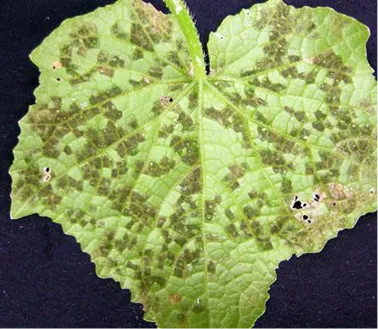
The primary symptoms manifest as small, water-soaked, angular spots on the foliage. These spots are restricted by the veins of the leaf, giving them a distinct geometric shape.
In humid conditions, a cloudy, milky bacterial ooze appears on the underside of the leaves. As this substance dries, it forms a crusty white residue on the leaf surface.
Over time, the affected areas become necrotic, turning brown and eventually dropping out. This creates a perforated, "shot-hole" appearance on the foliage.
Fruit infections appear as small, circular, water-soaked lesions. These spots can lead to fruit decay and are often entry points for secondary soft rot bacteria.
Severe infestations cause wilting and premature leaf drop, which significantly weakens the plant and arrests its growth.
Pathogen
The causal agent of this disease is the bacterium Pseudomonas syringae pv. lachrymans. It is a highly contagious pathogen that affects various cucurbits, including cucumbers, watermelons, and squashes.
The bacteria overwinter in crop residues, on seeds, and on greenhouse structural surfaces. They possess high environmental resilience, allowing them to remain active for several months.
Transmission primarily occurs via water splashes (rain or irrigation), insect vectors, and contact with contaminated tools or clothing during crop management.
Once introduced, the bacteria enter the plant tissue through stomata or mechanical wounds. The infection quickly spreads through the vascular system and intercellular spaces.
The life cycle of this pathogen is strictly dependent on moisture availability. It thrives when the plant surface remains wet for extended periods.
Conditions for development
The disease flourishes under high relative humidity (above 85%) and moderate temperatures ranging from 19°C to 28°C (66°F to 82°F).
Prolonged leaf wetness, often caused by heavy dew, fog, or frequent overhead irrigation, is the primary driver of disease epidemics in vegetable crops.
Improper greenhouse management, such as lack of ventilation and high plant density, leads to stagnant air and increased humidity, creating perfect conditions for outbreaks.
Excessive nitrogen fertilizer promotes rapid, lush growth, which is softer and more vulnerable to bacterial penetration compared to balanced, hardened growth.
Environmental stress, such as sudden shifts in weather or mechanical injuries during weeding, makes plants more susceptible to the initial bacterial attack.
Why it matters
Angular leaf spot is considered a major economic threat, capable of reducing yield by over 50% in untreated fields or greenhouse environments.
The reduction in functional leaf area impairs the plant's ability to produce sugars, leading to stunted fruit development and decreased harvest quality.
Marketable yield is compromised because the fruit develops unsightly lesions, making it unacceptable for retail or long-term storage due to rapid spoilage.
The disease can kill seedlings, causing significant gaps in the field that require costly replanting and delay the overall harvesting timeline.
Due to the ability of the pathogen to spread quickly across an entire crop, angular leaf spot requires immediate intervention once detected to prevent total loss.
Protection
Effective management begins with using pathogen-free, certified seeds. Heat treatment or chemical disinfection of seeds prior to planting is highly recommended.
Crop rotation is essential; rotate with non-cucurbit crops for at least 3 years to break the infection cycle. Remove and destroy all plant debris immediately after harvest.
In greenhouses, ensure adequate ventilation and spacing to keep humidity low and foliage dry. Opt for drip irrigation instead of overhead watering to keep leaf surfaces dry.
Copper-based bactericides and biological controls are the primary chemical interventions used to suppress bacterial growth on foliage.
- Remove infected leaves promptly.
- Disinfect tools between rows.
- Monitor crops frequently during wet periods.
- Apply balanced fertilization to strengthen plant immunity.
Pathogens and affected parts
Affects crops · 1
Discussion
No discussions yet — be the first.