
Description
Symptoms
The primary symptom is the formation of a hard, dense layer on the soil surface that acts as a physical barrier preventing seedling emergence.
In soybean crops, this manifests as hypocotyls that are bent, twisted, or thickened as they struggle to penetrate the hardened surface layer.
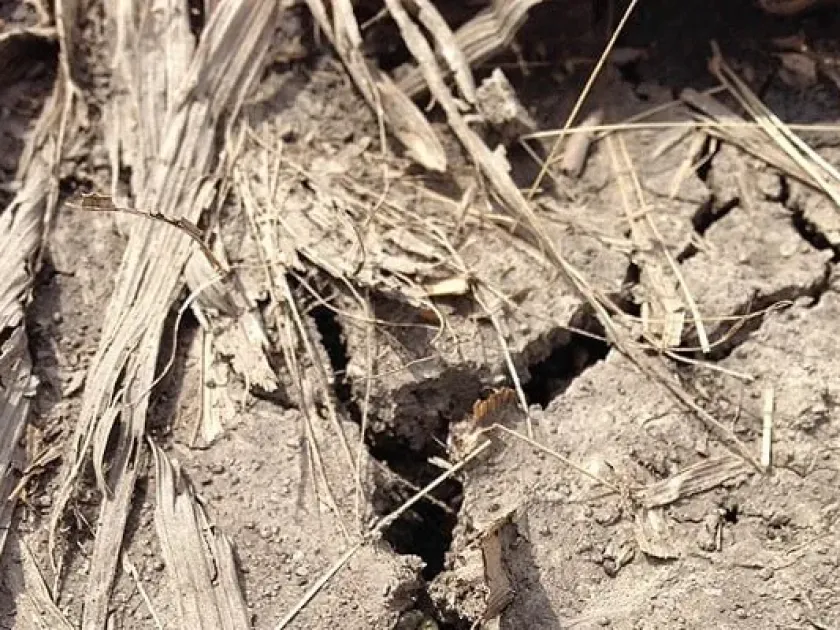
The soil surface appears smooth, sealed, and often exhibits cracks, indicating the presence of a compacted layer that lacks proper aeration.
Emerging seedlings often show signs of mechanical injury, such as damaged cotyledons, which significantly stunts their subsequent growth rate.
Visually, the field shows irregular patches with poor emergence, often resulting in lower plant populations than intended for the specific crop variety.
Pathogen
Soil crust is not a biological disease in the sense of being caused by fungi, bacteria, or viruses, but rather a physical impediment to plant growth.
It is caused by the breakdown of soil aggregates when exposed to water, followed by rapid drying, which binds soil particles into a solid mass.
The physical composition of the soil, particularly high levels of silt and clay, plays a crucial role in the development of these hardened surface layers.
From an agronomic perspective, it creates a physiological disorder by restricting oxygen and water exchange between the seed and the atmosphere.
This physical locking process prevents the radicle and shoot from establishing themselves properly in the soil, often leading to total seedling failure.
Conditions for development
Soil crusting is most severe in soils with low organic matter content, as they lack the binding agents necessary to maintain soil structure.
High-intensity rainfall occurring shortly after sowing, followed by intense solar radiation and wind, is the classic recipe for crust formation.
Heavy, silt-heavy soils are naturally more prone to sealing after moisture, making them high-risk environments for sensitive crops like soybeans.
Compaction caused by heavy agricultural machinery during primary and secondary tillage significantly exacerbates the hardening process of the surface.
The lack of crop residue or mulch on the soil surface leaves the earth vulnerable to the kinetic energy of raindrops, which breaks down soil structure.
Why it matters
The main impact is a significant reduction in plant stand density, which often necessitates costly replanting of the affected field areas.
Struggling seedlings often suffer from secondary fungal infections because the mechanical stress creates wounds that serve as entry points for pathogens.
The delay in emergence results in uneven crop development, making the timing of herbicide applications and other field operations extremely difficult.
Plants that do manage to emerge after overcoming the crust often have stunted root systems, making them less drought-tolerant later in the season.
Reduced vigor and lower plant populations lead to a direct decrease in potential grain yield, impacting the overall profitability of the farm.
Protection
Pre-emergence harrowing with rotary hoes is a highly effective mechanical method for breaking the crust without damaging delicate seedlings.
Long-term soil health management, including the addition of organic matter and crop rotation, helps build more stable soil aggregates resistant to sealing.
Selecting appropriate seeding depth based on soil moisture conditions ensures that seedlings have the vigor needed to emerge quickly.
No-till or reduced tillage practices leave soil structure intact and utilize residue to buffer the surface against raindrop impact.
- Use of specialized seed drill attachments.
- Regular soil testing to optimize organic matter levels.
- Scheduling field operations to avoid compaction under wet conditions.
Pathogens and affected parts
Affects crops · 1
Discussion
No discussions yet — be the first.